
AI chatbot for conversation, work, research, coding, and content creation.
Brain Rot
0Popularity
About Brain Rot
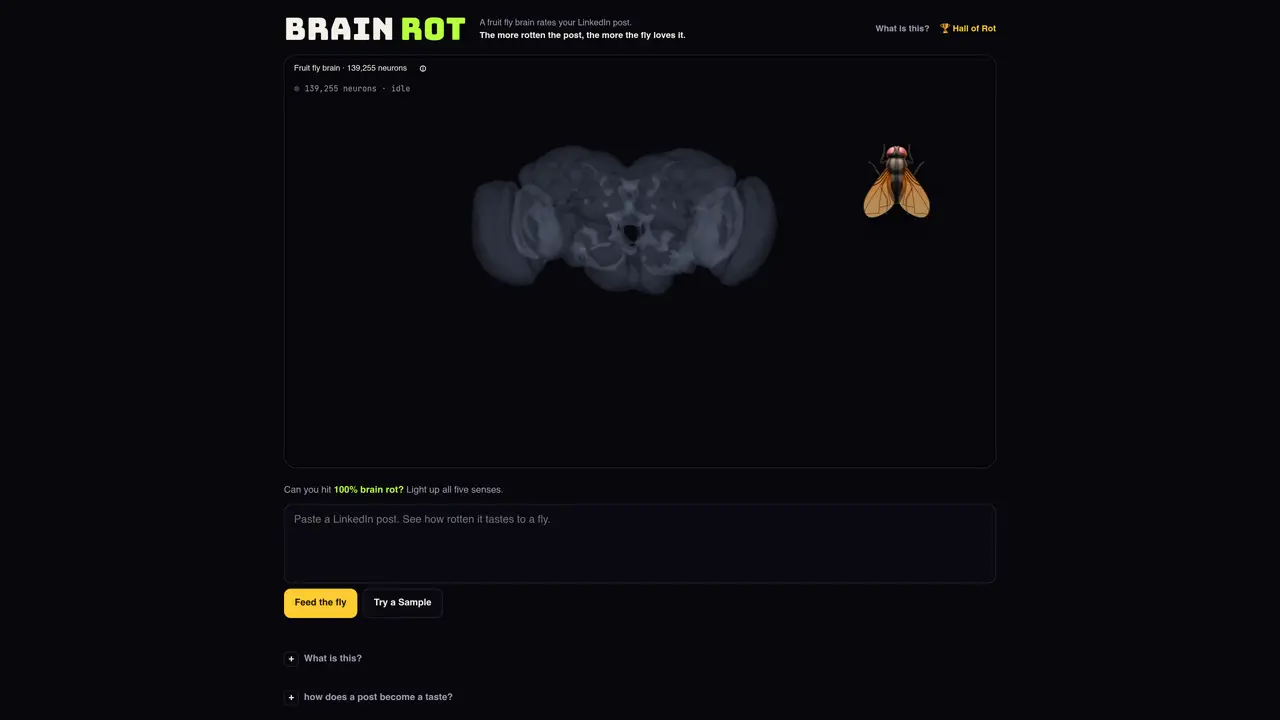
Brain Rot uses a real neural simulation of a fruit fly brain to evaluate LinkedIn posts. The tool maps the post’s content to five sensory inputs—sugar, bitter, smell, hearing, and sight—each linked to specific neurons. The simulation measures the activation of the MN9 motor neuron, which extends the fly’s proboscis in response to sugar (positive) or bitter (negative) stimuli. Posts are scored based on the simulated neural response, with higher scores requiring a combination of sensory stimulation, vocabulary variety, and bait patterns. The 3D visualization shows the actual neurons that fired during the simulation, colored by which sense they correspond to. Users can edit their posts to maximize the score, with the option to submit high-scoring posts to a public Hall of Rot. The tool is built using FlyWire’s connectome and a validated neural model from a 2024 Nature paper.
Key features
- Neural simulation of a fruit fly brain (139,255 neurons)
- Five sensory inputs mapped to post content
- Real-time score calculation based on MN9 neuron activation
- 3D visualization of neuron firing in Neuroglancer
- Post editing and score optimization
- Hall of Rot for public submission of high-scoring posts
- Downloadable neuron activation images
- LinkedIn integration for sharing results
Use cases
- Evaluating LinkedIn posts for engagement potential
- Optimizing post content to maximize sensory stimulation
- Comparing post versions to achieve higher scores
Pros
- Uses a real neural simulation of a fruit fly brain
- Maps LinkedIn post content to five distinct sensory inputs
- Provides a 3D visualization of neuron activation
- Allows post editing to optimize the score
- Public Hall of Rot for voluntarily submitted high-scoring posts
Cons
- Requires LinkedIn post content for evaluation
- No free tier or alternative input methods mentioned
- Limited to LinkedIn posts as input
- Simulation results depend on specific neural model constraints
Frequently asked questions about Brain Rot
What does Brain Rot do?
Brain Rot uses a simulated fruit fly brain to evaluate LinkedIn posts by mapping their content to five sensory inputs—sugar, bitter, smell, hearing, and sight—each linked to specific neurons. The tool scores posts based on the activation of the MN9 motor neuron, which responds to positive or negative stimuli.
Who is Brain Rot for?
Brain Rot is designed for LinkedIn users who want to optimize their posts for engagement and visibility. It is particularly useful for professionals, marketers, and content creators looking to refine their messaging.
How does the scoring system work?
The score is determined by the simulated neural response of the fruit fly brain, which is influenced by the post’s length, vocabulary variety, and the presence of specific bait patterns. Higher scores require a combination of sensory stimulation across all five senses.
Can I edit my post after seeing the score?
Yes, users can edit their posts to maximize the score. The tool allows them to feed the edited post back into the simulation to update the results.
What happens if I submit my post to the Hall of Rot?
Submitting a post to the Hall of Rot makes it publicly visible. The post is judged by the simulated fruit fly brain, and only the submitter can choose to add it to the Hall of Rot.
How are the neurons visualized in the tool?
The 3D visualization shows the actual neurons that fired during the simulation, colored by which sense they correspond to. The outline represents the entire brain, while only active pathways light up.