
OpenAI builds and deploys advanced AI models like GPT-4o for autonomous agents and workflows.

Oberhahn
$49/mStarting price
916Monthly visits
0Popularity
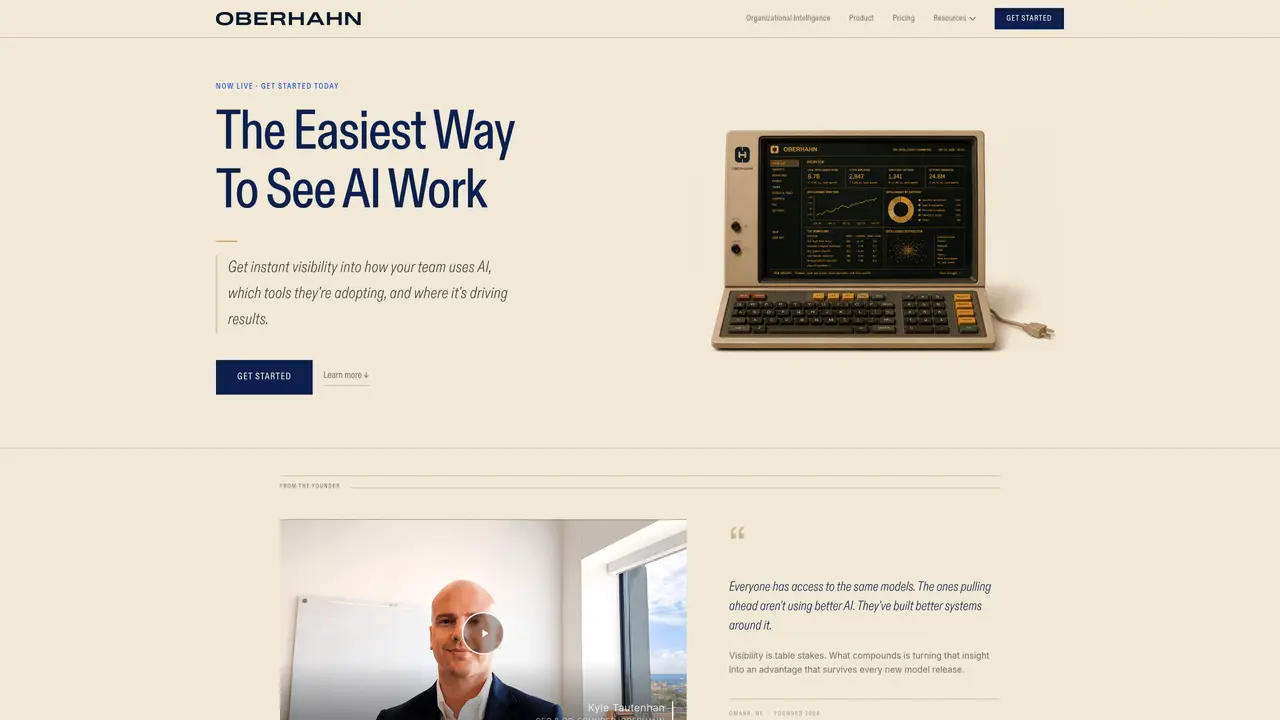
About Oberhahn
Oberhahn provides visibility into how teams use AI tools, models, and workflows across an organization. It traces each workflow from its origin to adoption by other teams, showing who created it, which model was used, and the cost per session. The platform surfaces patterns of reuse and identifies high-impact opportunities such as cost savings or efficiency gains. Alerts and rules can be configured to guide safe propagation of knowledge and prevent unauthorized spread. Oberhahn connects to existing stacks including Linear, Jira, GitHub, OpenAI, Anthropic, and others to attribute activity without requiring human intervention. The tool is designed to help organizations turn isolated wins into standardized practices that compound over time.
Key features
- Visibility into AI workflows across teams
- Attribution of workflows to creators and models
- Cost tracking per session and workflow
- Momentum tracking for scaling workflows
- Opportunity identification for cost and efficiency gains
- Alerts for unauthorized workflow spread
- Integration with Linear, Jira, GitHub, OpenAI, Anthropic
- Standardization of best practices across teams
Use cases
- Standardizing high-impact AI workflows across engineering teams
- Tracking and optimizing AI tool adoption in support organizations
- Identifying and scaling cost-saving AI workflows company-wide
Pros
- Tracks AI workflows from origin to adoption across teams
- Identifies reusable workflows and high-impact opportunities
- Connects to major AI tools and development platforms
- Provides alerts and rules for safe knowledge propagation
- Offers visibility into cost, performance, and reuse patterns
Cons
- No free tier beyond 30-day trial
- Limited to 100 people on the Manager plan
- Enterprise features require contacting sales
- No explicit support for non-English workflows mentioned
Frequently asked questions about Oberhahn
What does Oberhahn do?
Oberhahn provides visibility into how teams use AI tools, models, and workflows across an organization. It traces workflows from their origin to adoption by other teams, showing who created them, which models were used, and the cost per session.
Who is Oberhahn designed for?
The tool is designed for organizations looking to turn isolated AI wins into standardized practices that compound over time. It helps teams identify high-impact opportunities such as cost savings, efficiency gains, and safe knowledge propagation.
How does Oberhahn integrate with existing tools?
Oberhahn connects to existing stacks including Linear, Jira, GitHub, OpenAI, Anthropic, GitHub Copilot, Cursor, Devin, Salesforce, Google Gemini, LangChain, Datadog, Notion, and Slack to attribute activity without requiring human intervention.
Can Oberhahn help identify cost-saving opportunities?
Yes, Oberhahn surfaces patterns of reuse and identifies high-impact opportunities such as cost savings or efficiency gains by analyzing workflow performance and adoption across teams.
How does Oberhahn ensure safe propagation of AI workflows?
Oberhahn allows users to configure alerts and rules to guide the safe propagation of knowledge and prevent unauthorized spread of workflows beyond approved teams or scopes.
How do I get started with Oberhahn?
Users can start by connecting their first data source to Oberhahn, which provides instant visibility into AI workflows and results. The platform offers a free trial period to begin seeing results immediately.
Oberhahn Website Engagement
Last Update: 9 days ago
Total Monthly Visits
0
Bounce Rate
0%
Visit Duration (avg)
0.00s
Pages Per Visit
0
Country Rank
—
Unknown
Global Rank
0