
OpenAI builds and deploys advanced AI models like GPT-4o for autonomous agents and workflows.

SellerAI
$1Starting price
2.6KMonthly visits
7Popularity
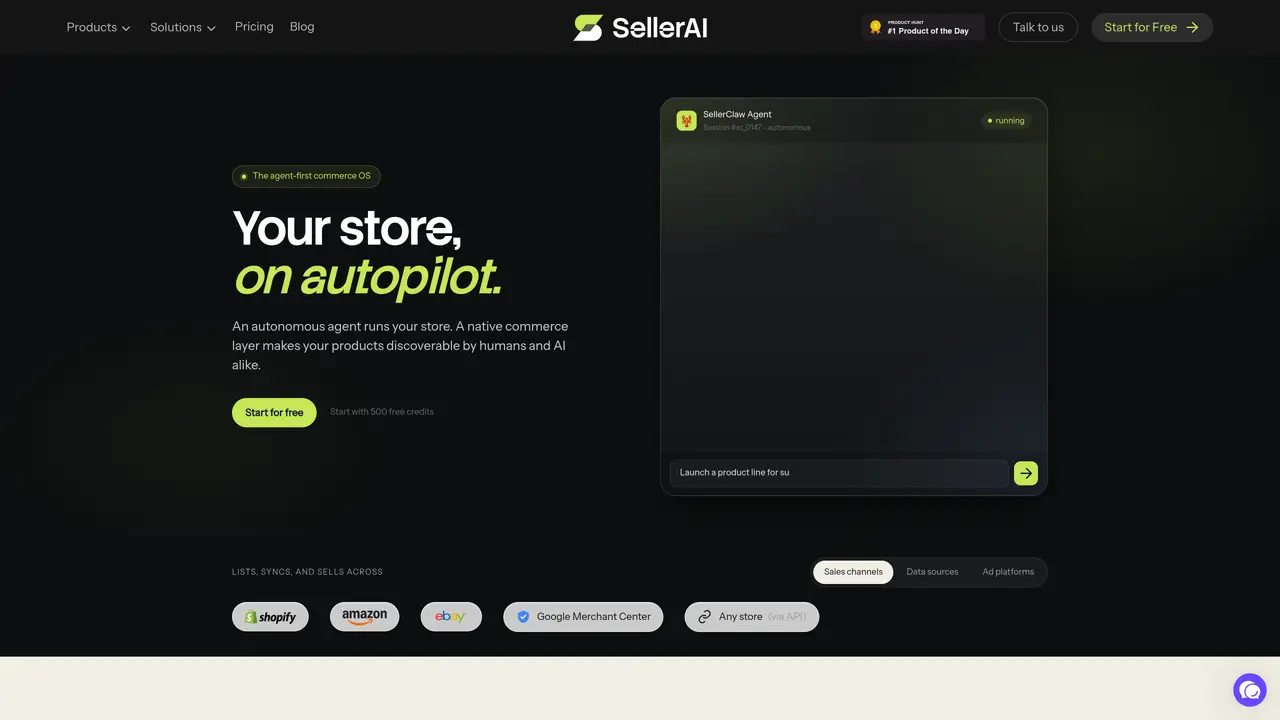
About SellerAI
SellerAI positions itself as an agent-first commerce operating system for ecommerce brands. It combines an autonomous operator, SellerClaw, that can run existing stores across channels, with SellerCart, a store builder built for an AI-native future. Together they target end-to-end automation of daily ecommerce work, from sourcing and listings to ads, fulfillment, and customer support, while also making products directly discoverable and purchasable through AI shopping interfaces. Key Features: SellerClaw Autonomous Operator: Multi-agent system that runs Shopify, eBay, Amazon, and other stores with minimal human input. End-to-End Workflows: Handles product sourcing, supplier vetting, listing creation, ads, pricing, order handling, and customer support. SellerCart Store Builder (Coming Soon): AI-native storefront with built-in payments, tax handling, and cross-border compliance. Agentic Commerce Protocols: Native ACP and UCP support so products can be found and bought via ChatGPT, Google AI Mode, Gemini, and similar channels. Deep Integrations and Extensibility: Connects to ERPs, PIMs, 3PLs, ad platforms, and internal tools through APIs, MCP servers, webhooks, and OAuth2. Browser Automation: Uses a browser agent for systems without APIs, handling logins, form filling, and 2FA flows like a human operator. Observability and Guardrails: Every agent action is logged and reviewable, with configurable approval policies and autonomy levels. Cloud and Self-hosted Options: Hosted SaaS plus an open-source, self-hostable flavor for teams that want more control. SellerAI is suitable for ecommerce brands looking to automate their daily work, including dropshippers, private label brands, resellers, wholesalers, and enterprise ecommerce teams. It can also be used by agencies running multi-brand ecommerce operations as a shared agent layer; adopted by technical teams as an orchestration hub tying internal tools, warehouses, and marketing systems together.
Key features
- Autonomous operator for Shopify, eBay, Amazon, and other stores
- End-to-end workflows for product sourcing, supplier vetting, listing creation, ads, pricing, order handling, and customer support
- AI-native storefront with built-in payments, tax handling, and cross-border compliance (coming soon)
- Agentic commerce protocols for AI shopping interfaces
- Deep integrations and extensibility through APIs, MCP servers, webhooks, and OAuth2
- Browser automation for systems without APIs
- Observability and guardrails with configurable approval policies and autonomy levels
Use cases
- Dropshippers: automate product sourcing, supplier vetting, listing creation, and ads
- Private label brands: analyze cohorts, iterate creatives, adjust pricing and inventory automatically
- Resellers and wholesalers: turn invoices and supplier lists into structured product pages
Pros
- Autonomous multi-agent system that operates existing ecommerce stores with minimal human input across platforms like Shopify, eBay, and Amazon
- End-to-end automation of daily ecommerce operations including sourcing, listings, ads, fulfillment, and customer support
- Native store builder (SellerCart) designed for AI-native commerce, enabling product discoverability via AI shopping interfaces like ChatGPT and Google AI Mode
- Deep integrations with ERPs, PIMs, 3PLs, ad platforms, and internal tools through APIs, MCP servers, webhooks, and OAuth2
- Flexible deployment options including cloud-hosted SaaS and self-hosted open-source versions with configurable autonomy levels and observability features
Cons
- SellerCart store builder is listed as 'coming soon,' limiting immediate access to its AI-native commerce features
- Browser automation for systems without APIs may introduce complexity and potential reliability issues compared to native API integrations
- Requires technical setup for self-hosted deployments and custom integrations, which may pose challenges for non-technical users
- Agentic commerce protocols (ACP, UCP) are still emerging, and adoption by major AI platforms may vary or evolve over time
Frequently asked questions about SellerAI
What is SellerAI and what does it do?
SellerAI is an agent-first commerce operating system designed to automate ecommerce operations. It consists of two products: SellerClaw, an autonomous operator that manages existing stores across channels, and SellerCart, a store builder built for AI-native commerce. Together, they handle tasks such as product sourcing, listings, ads, fulfillment, and customer support while enabling products to be discoverable and purchasable through AI shopping interfaces.
Who is SellerAI suitable for?
SellerAI is designed for a wide range of ecommerce sellers, including dropshippers, private label brands, resellers, wholesalers, and enterprise teams. It is also suitable for agencies managing multi-brand operations and technical teams using it as an orchestration hub for internal tools and systems.
How does SellerClaw work?
SellerClaw operates as a multi-agent system that runs stores on platforms like Shopify, eBay, and Amazon with minimal human input. It handles product sourcing, supplier vetting, listing creation, ad management, order fulfillment, and customer support by reasoning through tasks and taking autonomous actions.
What is SellerCart and when will it be available?
SellerCart is an AI-native store builder designed for the agentic web, enabling products to be discoverable and purchasable through AI interfaces like ChatGPT and Google AI Mode. It includes built-in payments, global tax compliance, and agentic commerce protocols. SellerCart is currently in development, with a waitlist available for early access.
Does SellerAI integrate with other tools and platforms?
Yes, SellerAI offers deep integrations and extensibility through APIs, MCP servers, webhooks, and OAuth2. It can connect to ERPs, PIMs, 3PLs, ad platforms, and internal tools. For systems without APIs, SellerClaw uses browser automation to perform tasks like logging in, filling forms, and handling 2FA flows.
Can SellerAI be self-hosted?
Yes, SellerAI offers both cloud-hosted and self-hosted options. The self-hosted version provides teams with more control over their operations and data, while the cloud-hosted version offers a managed service experience.
SellerAI Website Engagement
Last Update: 9 days ago
Total Monthly Visits
0
Bounce Rate
0%
Visit Duration (avg)
0.00s
Pages Per Visit
0
Country Rank
0
United States
Global Rank
0
Monthly Traffic
Traffic Sources
Traffic Share By Country
- United States68.2%
- Turkey31.8%