
OpenAI builds and deploys advanced AI models like GPT-4o for autonomous agents and workflows.

Vendo
FreeStarting price
37KMonthly visits
26Popularity
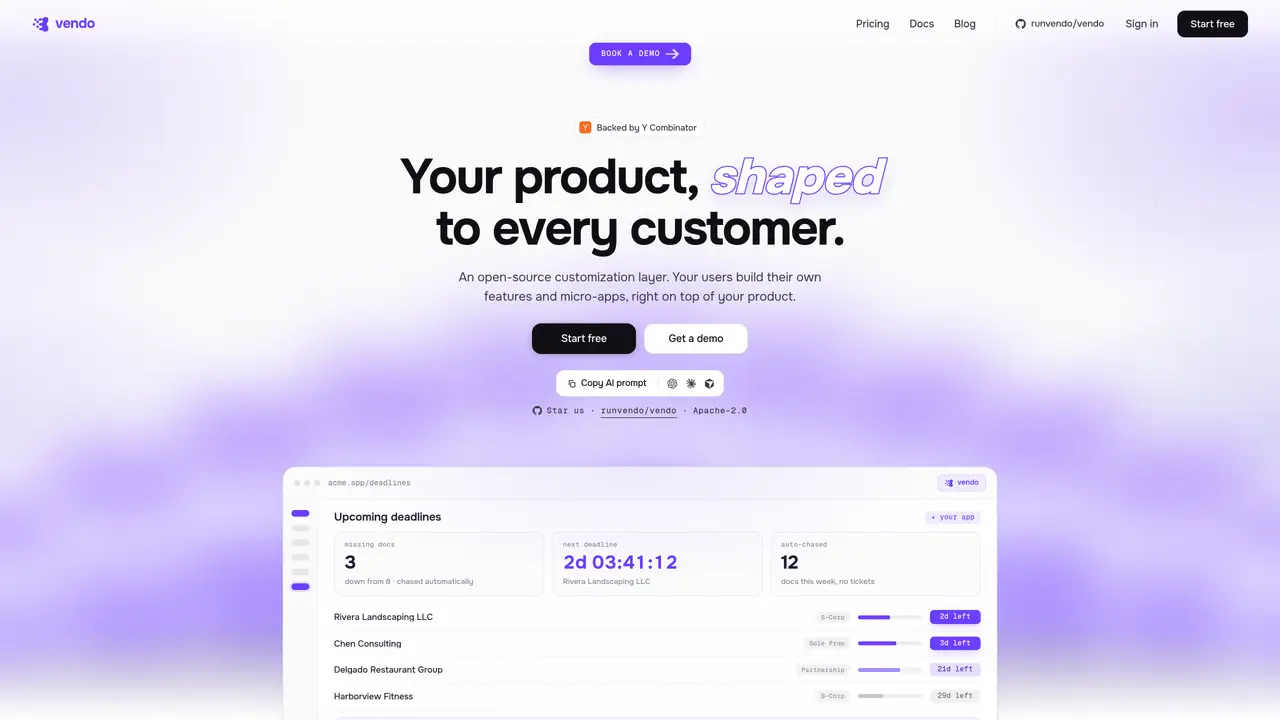
About Vendo
Vendo is an open-source customization layer that embeds an AI agent directly inside your product. It allows customers to create their own views, automations, and micro-apps without waiting for your development roadmap. The agent learns your codebase, theme, and API through a single CLI command, then generates UI that stays within your brand guidelines and permission rules. Users can connect external tools such as Gmail, Slack, and GitHub, schedule automations, and access the same agent from platforms like Claude or ChatGPT. Vendo is designed to reduce support tickets by letting users solve their own problems while maintaining governance and security. The tool offers a free single-player tier for individuals, with cloud plans available for teams needing collaboration, governance, and analytics features.
Key features
- Embeds an AI agent directly inside your product
- Learns your codebase, theme, and API via a single CLI command
- Generates UI that adheres to your brand and permission rules
- Enables users to build micro-apps, views, and automations
- Supports connections to external tools like Gmail, Slack, and GitHub
- Allows scheduling of automations
- Provides access to the agent from platforms like Claude or ChatGPT
- Offers a free single-player tier with cloud plans for teams
- Includes collaboration, governance, and analytics features
Use cases
- Enable customers to customize their experience without engineering support
- Reduce support tickets by letting users build their own automations and views
- Integrate external tools and APIs into your product through user-built micro-apps
Pros
- Enables customers to build custom features and micro-apps directly within your product without waiting for development cycles.
- Maintains brand consistency and adheres to permission rules by learning your codebase, theme, and API through a single CLI command.
- Supports integrations with external tools like Gmail, Slack, and GitHub, allowing users to connect and automate workflows.
- Offers a free single-player tier for individuals, making it accessible for solo users and small-scale testing.
- Provides cloud plans for teams, including collaboration, governance, and analytics features for broader organizational use.
Cons
- May require technical setup to integrate with existing products, as it relies on learning the codebase and API.
- Usage is metered, and plans have hard caps on included agent turns, which could limit extensive customization for larger teams.
- Governance and security features are primarily available in higher-tier plans, potentially excluding smaller teams from advanced controls.
Frequently asked questions about Vendo
What does Vendo do?
Vendo is an open-source customization layer that embeds an AI agent into your product, allowing customers to create their own views, automations, and micro-apps without waiting for development updates.
Who is Vendo designed for?
Vendo is designed for product teams and organizations that want to empower their customers to customize and extend product functionality while maintaining governance and security.
How does Vendo integrate with existing products?
Vendo integrates by reading your codebase, theme, and API through a single CLI command, then generating UI that stays within your brand guidelines and permission rules.
What integrations does Vendo support?
Vendo supports integrations with external tools such as Gmail, Slack, and GitHub, allowing users to connect and automate workflows directly within the product.
What is the pricing model for Vendo?
Vendo offers a free single-player tier with limited usage, while cloud plans for teams include collaboration, governance, and analytics features with metered usage.
How do I get started with Vendo?
Getting started involves installing the Vendo package via npm, running a CLI command to initialize and learn your product, and then embedding the agent into your product.
Vendo Website Engagement
Last Update: 9 days ago
Total Monthly Visits
0
Bounce Rate
0%
Visit Duration (avg)
0.00s
Pages Per Visit
0
Country Rank
0
India
Global Rank
0
Monthly Traffic
Traffic Sources
Traffic Share By Country
- United States66.7%
- India32.1%
- Turkey0.5%
- Indonesia0.4%
- Vietnam0.2%