
OpenAI builds and deploys advanced AI models like GPT-4o for autonomous agents and workflows.

HelixID
0Popularity
About HelixID
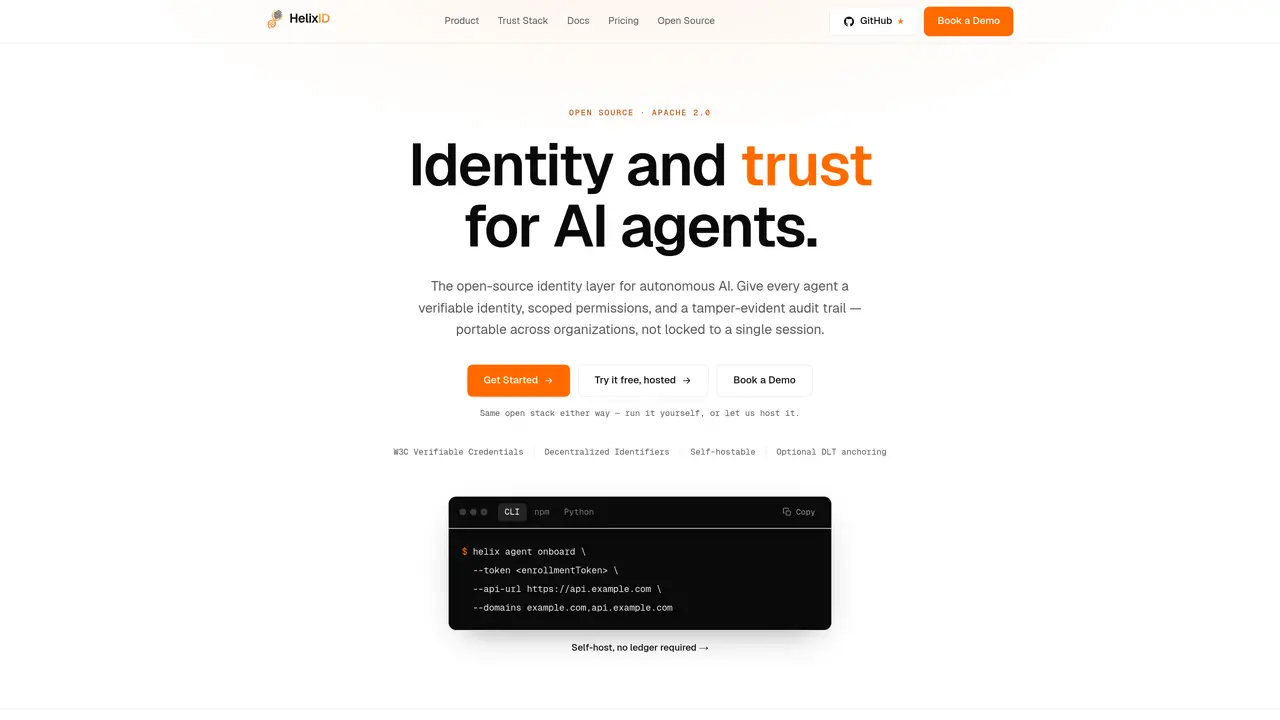
HelixID provides an open-source identity and authorization stack for AI agents using W3C Verifiable Credentials and Decentralized Identifiers. It issues cryptographic identities to agents, enforces scoped permissions via OPA/Rego policies, and maintains tamper-evident audit trails that can optionally be anchored to a distributed ledger. The system is designed to operate across organizational boundaries, enabling cross-organizational trust without pre-wiring connections. Verifiable Presentations are checked at execution time rather than relying on session tokens, allowing offline or asynchronous verification. The tool composes with existing OAuth/OIDC infrastructure while extending identity portability beyond single sessions. It supports both self-hosted deployment and managed hosting options, with an Apache 2.0 open-core model.
Key features
- W3C Verifiable Credentials v2 support
- Decentralized Identifiers (DIDs) for agents
- OPA/Rego policy enforcement at execution boundary
- Tamper-evident audit trail with optional DLT anchoring
- Self-hostable Apache 2.0 SDK
- did:key local mode for zero external dependencies
- Cross-organizational trust without pre-wiring
- Offline and asynchronous credential verification
Use cases
- Cross-organizational agent trust between companies
- Multi-hop delegation verification across agent chains
- Compliance-grade audit trails for regulated industries
Pros
- Issues W3C Verifiable Credentials and Decentralized Identifiers for agents
- Enforces scoped permissions using OPA/Rego policies at execution time
- Maintains tamper-evident audit trails with optional DLT anchoring
- Supports offline and asynchronous verification of agent credentials
- Composes with existing OAuth/OIDC infrastructure
Cons
- No free tier for hosted version beyond a single agent
- Optional DLT anchoring requires additional setup
- Limited to agent identity and trust use cases
- Python and JavaScript SDKs only
Frequently asked questions about HelixID
What is HelixID and what problem does it solve for AI agents?
HelixID provides an open-source identity and authorization stack for AI agents using W3C Verifiable Credentials and Decentralized Identifiers. It addresses challenges in cross-organizational trust, multi-hop delegation, offline verification, and portable audit trails for autonomous agents.
Who should use HelixID?
HelixID is designed for organizations deploying autonomous AI agents that need to operate across organizational boundaries, enforce scoped permissions, and maintain verifiable audit trails. It suits teams requiring identity portability beyond single sessions.
How does HelixID integrate with existing identity systems?
HelixID composes with existing OAuth/OIDC infrastructure by exchanging Verifiable Presentations for OAuth tokens, extending identity portability without replacing existing systems. It can also integrate with MCP, LangChain, LangGraph, and CrewAI workflows.
Can HelixID be used without a distributed ledger?
Yes, HelixID supports self-hosted deployment with no ledger required. The tamper-evident audit trail can optionally be anchored to a distributed ledger, but this is not mandatory for basic functionality.
What is the pricing model for HelixID?
HelixID follows an open-core model with Apache 2.0 licensing for self-hosted use. It offers a free hosted tier for basic use, with enterprise plans available for custom deployments, compliance needs, and dedicated support.
How do I get started with HelixID?
Users can start with the open-source SDK for self-hosted deployment or try the free hosted version. The CLI or SDK can be used to onboard agents, issue credentials, and enforce policies using OPA/Rego.