
OpenAI builds and deploys advanced AI models like GPT-4o for autonomous agents and workflows.
PI-Desktop
0Popularity
About PI-Desktop
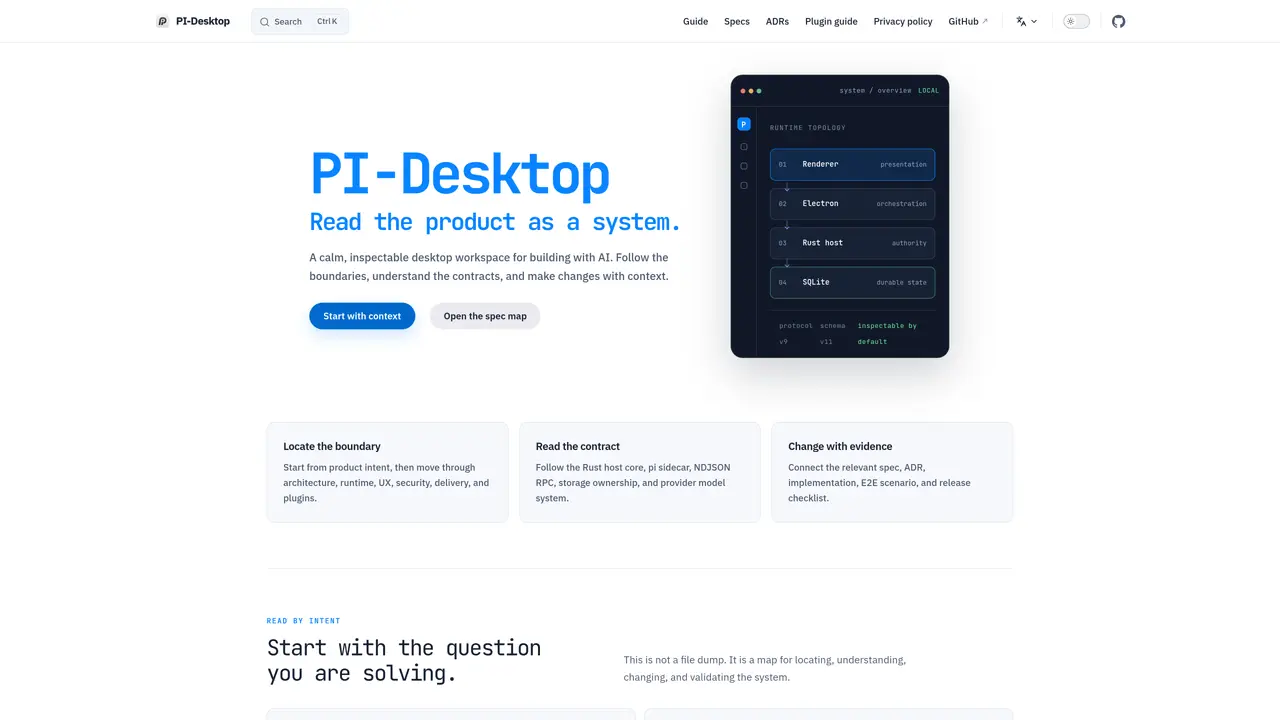
PI-Desktop provides a calm, inspectable desktop workspace designed for building with AI in a local-first environment. The tool emphasizes understanding system boundaries, contracts, and context through structured documentation. Users start with product intent and navigate through architecture, runtime, UX, security, delivery, and plugins to locate and validate changes. The system map outlines four boundaries: Shell (Electron-based), Agent (pi sidecar), Host (Rust core), and State (SQLite). Each component follows defined protocols, permissions, and ownership models, enabling traceability from product intent to implementation. Documentation is organized by intent rather than file structure, with sections covering product scope, architecture, runtime, experience, security, delivery, plugins, and decisions.
Key features
- Electron-based shell with IPC and lifecycle management
- Rust host core handling permissions and processes
- SQLite for durable state and configuration storage
- pi sidecar agent managing context and tools
- NDJSON RPC for inter-component communication
- Plugin system with package format and permissions
- System map for visualizing boundaries and threads
- Reference shelf organized by topic rather than file tree
Use cases
- Building AI-powered applications with full system visibility
- Debugging and validating changes through traceable request paths
- Extending functionality via plugins with defined APIs
Pros
- Local-first architecture with no cloud dependency
- Inspectable system boundaries and contracts
- Structured documentation organized by intent
- Traceable request paths across components
- Plugin system with defined APIs and lifecycle
Cons
- No explicit mention of cross-platform support beyond Windows
- Documentation-heavy approach may require significant upfront learning
- Limited information on real-time collaboration features
Frequently asked questions about PI-Desktop
What is PI-Desktop?
PI-Desktop is a local-first desktop workspace designed for building with AI in an inspectable environment. It emphasizes understanding system boundaries, contracts, and context through structured documentation.
Who is PI-Desktop for?
PI-Desktop is for developers and teams working with AI systems who need a structured, traceable, and context-rich environment to build, validate, and extend their applications.
How does PI-Desktop help with system development?
It provides a system map with four boundaries (Shell, Agent, Host, State) and organizes documentation by intent rather than file structure, enabling users to locate, understand, and validate changes with evidence.
What are the key components of PI-Desktop?
The key components include the Shell (Electron-based), Agent (pi sidecar), Host (Rust core), and State (SQLite), each following defined protocols, permissions, and ownership models.
Can PI-Desktop be used for plugin development?
Yes, PI-Desktop includes a plugin guide that covers package format, API, permissions, and lifecycle, allowing users to extend functionality systematically.
How do I get started with PI-Desktop?
Users can start by reading the guide to build context or opening the full specification index to explore the system map and documentation structure.