AI assistant for safe, reliable productivity with code, collaboration, and integrations.
GigHz Precision AI
$49/moStarting price
0Popularity
About GigHz Precision AI
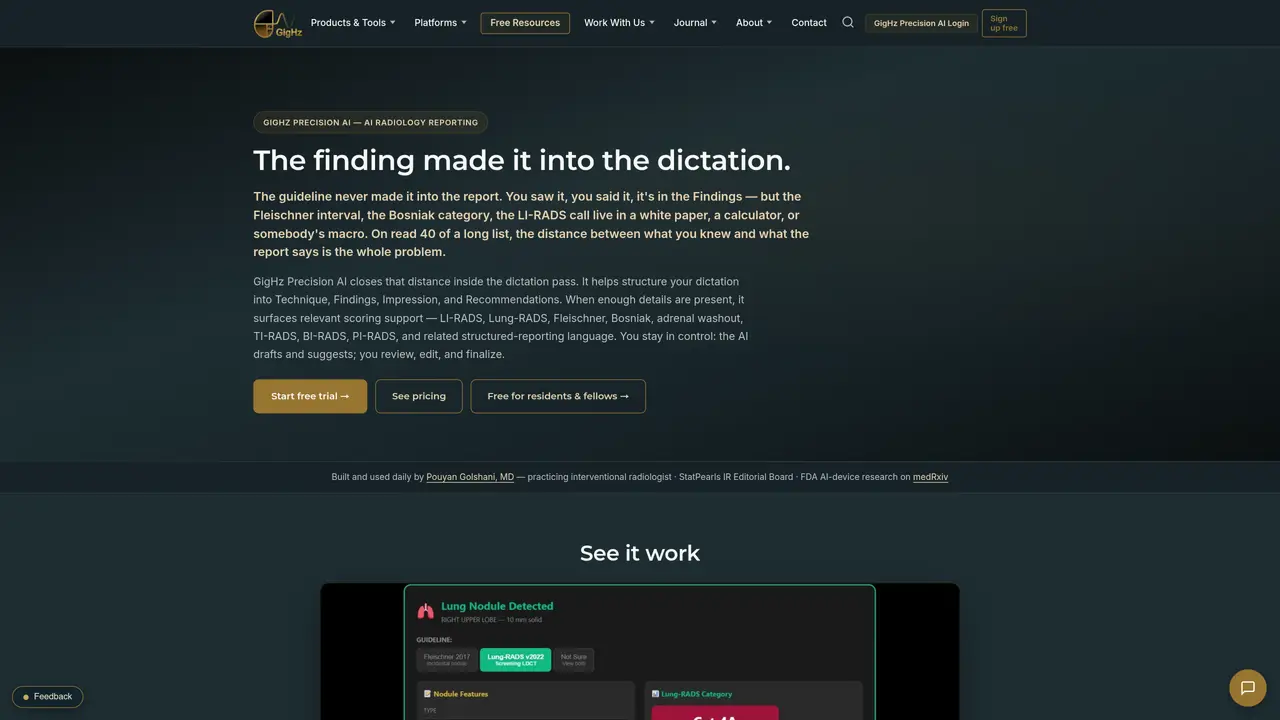
GigHz Precision AI integrates into radiology dictation workflows to automatically surface guideline-based scoring support such as LI-RADS, Lung-RADS, Fleischner, Bosniak, TI-RADS, BI-RADS, PI-RADS, and adrenal washout criteria directly within the dictation pass. The tool structures dictations into Technique, Findings, Impression, and Recommendations while suggesting relevant scoring logic when sufficient details are present. Radiologists retain full control, reviewing, editing, and finalizing AI-generated drafts before submission. It addresses workflow friction points where structured-reporting details are often missed due to noise, fatigue, or fragmented tool access. The system standardizes report language across practices while maintaining final judgment with the radiologist. Precision AI aims to consolidate guideline references, calculators, and prior reports into a single embedded workflow rather than relying on external tools or templates.
Key features
- Inline guideline scoring surfacing (LI-RADS, Lung-RADS, Fleischner, Bosniak, TI-RADS, BI-RADS, PI-RADS)
- Structured dictation sections (Technique, Findings, Impression, Recommendations)
- AI-generated drafts with editable suggestions
- Standardized report language across practices
- Context-aware recognition of applicable scoring frameworks
- Rationale traceability for guideline-based recommendations
- Integration into existing dictation workflows
- Radiologist-controlled finalization of reports
Use cases
- Radiology dictation with guideline-based scoring support
- Standardizing report language across radiology practices
- Reducing missed structured-reporting details due to workflow noise
Pros
- Surfaces guideline-based scoring (LI-RADS, Lung-RADS, Fleischner, Bosniak, etc.) inline during dictation
- Structures dictations into standardized sections (Technique, Findings, Impression, Recommendations)
- Allows radiologists to review, edit, and finalize AI-generated drafts
- Reduces workflow friction by embedding guideline logic directly in the reporting pass
- Standardizes report language while preserving radiologist autonomy
Cons
- Requires integration into existing dictation workflows
- Limited to radiology-specific use cases
- No explicit mention of multi-language support
Frequently asked questions about GigHz Precision AI
What is GigHz Precision AI and what does it do?
GigHz Precision AI is an AI-powered tool designed to integrate into radiology dictation workflows. It automatically surfaces guideline-based scoring support such as LI-RADS, Lung-RADS, Fleischner, Bosniak, TI-RADS, BI-RADS, PI-RADS, and adrenal washout criteria directly within the dictation process.
Who is GigHz Precision AI for?
The tool is primarily aimed at radiologists, including practicing physicians, residents, and fellows, who need to standardize and enhance the accuracy of their radiology reports while adhering to clinical guidelines.
How does GigHz Precision AI work within the dictation workflow?
Precision AI structures dictations into Technique, Findings, Impression, and Recommendations. When sufficient details are present in the dictation, it suggests relevant scoring logic and guideline-based recommendations inline, which the radiologist can review, edit, and finalize before submission.
Does GigHz Precision AI replace the radiologist's judgment?
No, the radiologist retains full control over the final report. The AI generates drafts and suggestions, but the radiologist reviews, edits, and approves the content before submission.
What are the main benefits of using GigHz Precision AI?
It helps reduce workflow friction by consolidating guideline references, calculators, and prior reports into a single embedded workflow. This minimizes missed structured-reporting details due to noise, fatigue, or fragmented tool access, and standardizes report language across practices.
Are there any limitations to using GigHz Precision AI?
The tool relies on the presence of sufficient details in the dictation to surface relevant scoring support. If critical information is missing or unclear, the AI may not provide accurate suggestions, requiring manual input from the radiologist.