
AI video generation platform that turns text prompts or images into short, high-quality 8-second videos with consistent characters.

Kinovi
$9.99Starting price
52KMonthly visits
29Popularity
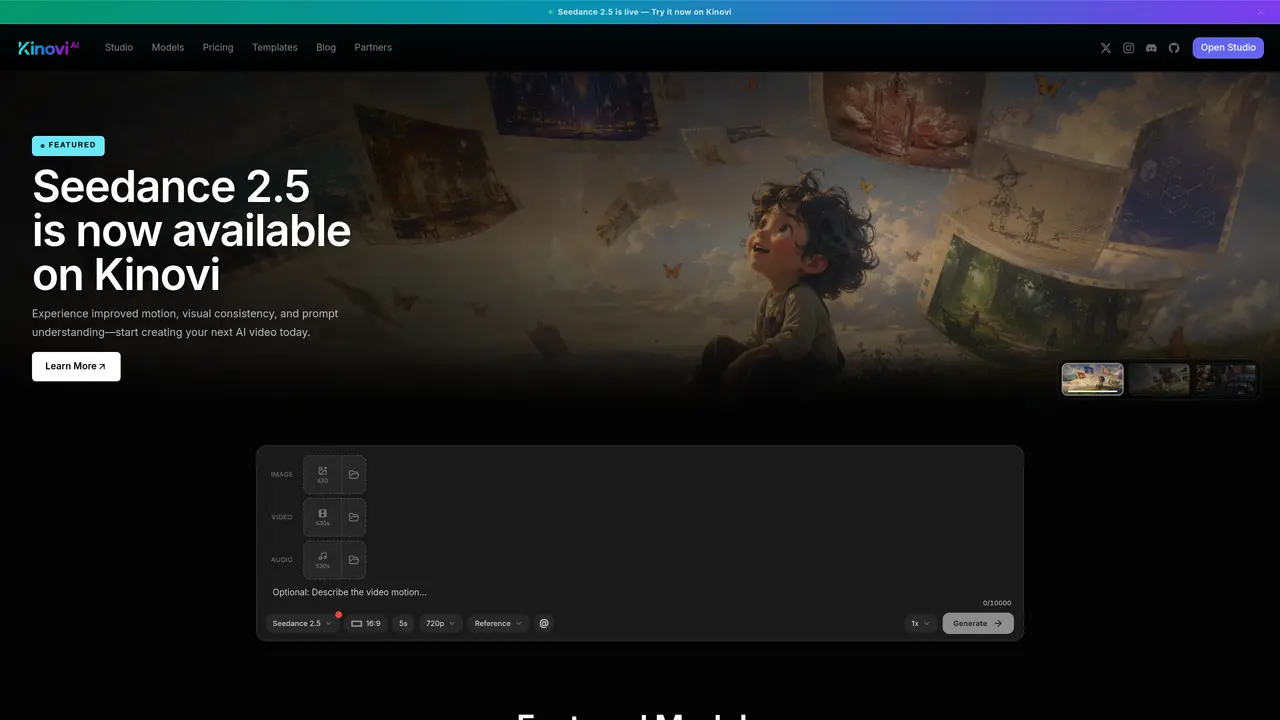
About Kinovi
Kinovi is an AI video studio that turns short prompts and visual references into directed, cinematic clips. Built on Seedance 2.0, it focuses on reference-driven creation: users combine text, images, video, and audio, then “direct” the model with tags and shot instructions. It also includes AI image generation, making it suitable both for quick social content and more polished previsualization work. Key Features: Multimodal, reference-driven workflow: Accepts up to 9 images, 3 video clips, and 3 audio tracks plus natural language text, so style, motion, rhythm, and composition can all be guided instead of left to chance. @-Tag shot direction: File names can be tagged with @ in the prompt (for example assigning first frame, camera move, or soundtrack), giving directors granular control over how each reference shapes the final clip. Short-form AI video generation: Generates 4–15 second clips at 16:9, with options like First & Last Frame and Multi-Ref modes, powered by Seedance 2.0 Pro and more than 10 underlying AI models. Iterative editing tools: Shots can be extended, regenerated, or refined with new instructions, so creators can iterate on a promising take instead of restarting from scratch. Integrated image creator: Credits can be spent on still images starting around $0.06 per image, useful for boards, thumbnails, or standalone artwork. Credit-based studio economics: Pay-per-second video (roughly $0.20–$0.40 per second) keeps costs tied to actual usage rather than monthly subscriptions.
Key features
- Multimodal, reference-driven workflow
- @-Tag shot direction
- Short-form AI video generation
- Iterative editing tools
- Integrated image creator
- Credit-based studio economics
Use cases
- Indie filmmakers and directors use Kinovi to block out shots, experiment with camera moves, and generate previz for pitches.
- Marketing and creative agencies produce short product spots, social hooks, and animated explainers without full live-action crews.
- Content creators and influencers generate stylized B-roll, intros, and transitions for platforms such as TikTok, YouTube, and Instagram.
Pros
- Reference-driven workflow with granular control using @-tagging for shot direction and composition
- Supports multimodal inputs including text, images, video clips, and audio tracks for cohesive content creation
- Integrated AI image generation and editing tools for iterative refinement of video and still outputs
- Access to multiple AI models via a unified API, including Seedance 2.5 for improved motion and visual consistency
- Template library and creator-first workspace for streamlined production of ads, ecommerce, and social content
Cons
- Credit-based pricing model may lead to unpredictable costs for large-scale or frequent usage
- Limited to short-form video generation (typically 4–30 seconds), which may not suit longer-form content needs
Frequently asked questions about Kinovi
What is Kinovi and what does it do?
Kinovi is an AI video studio that converts short prompts and visual references into directed, cinematic clips using models like Seedance 2.5. It supports multimodal inputs including text, images, video, and audio, allowing users to guide style, motion, rhythm, and composition with granular control.
Who is Kinovi designed for?
Kinovi suits creators, directors, marketers, and teams who need to generate short-form video content or previsualize scenes efficiently. Its reference-driven workflow and templates make it accessible for both quick social content and more polished production work.
How does Kinovi's pricing model work?
Kinovi operates on a credit-based system where users pay per second of video generated or per image created. Pricing varies by model, resolution, and whether reference inputs are used, with options to compare rates across multiple AI models in the catalog.
Can Kinovi integrate with other tools or APIs?
Yes, Kinovi provides a Multi-Model API that allows users to build with its models programmatically. It also offers a creator-first workspace for managing assets and outputs, enabling reuse of generated content across projects.
What are the main limitations of Kinovi?
Kinovi's output is constrained by the capabilities of its underlying AI models, which may limit fine-grained control over specific visual details. Additionally, credit-based pricing requires careful management to avoid unexpected costs, especially for high-volume usage.
How do I get started with Kinovi?
Users can start by visiting the Kinovi website, exploring the template library, or opening the Studio workspace to begin creating videos or images. The platform provides guided paths and model comparisons to help users select the right options for their needs.
Kinovi Website Engagement
Last Update: 9 days ago
Total Monthly Visits
0
Bounce Rate
0%
Visit Duration (avg)
0.00s
Pages Per Visit
0
Country Rank
0
United States
Global Rank
0
Category Rank
#0
Graphics Multimedia & Web Design
Monthly Traffic
Traffic Sources
Traffic Share By Country
- United Kingdom40.2%
- United States39.2%
- Germany8.5%
- India3.4%
- Israel2.3%