
OpenAI builds and deploys advanced AI models like GPT-4o for autonomous agents and workflows.

Archetype AI
$1Starting price
11KMonthly visits
18Popularity
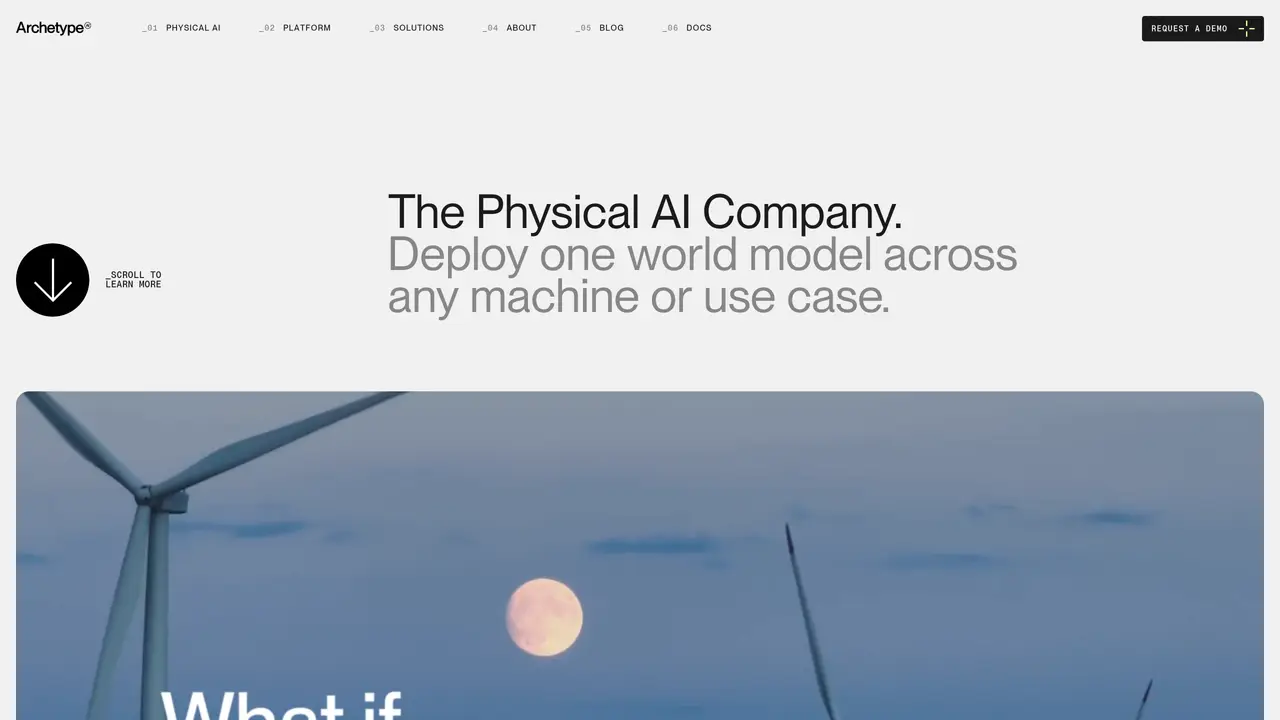
About Archetype AI
Archetype AI is a pioneering force in the realm of physical AI. Unlike conventional AI models that primarily handle digital data, Archetype AI introduces Newton, a robust AI model designed to perceive and interact with the physical world. By integrating multimodal sensor data with natural language, Newton reveals complex patterns and behaviors that typically elude human perception, making it a formidable tool in the AI landscape. The key features of Archetype AI include: Multimodal Sensor Integration: Newton processes data from a variety of sensors including radars, cameras, and accelerometers, offering a comprehensive understanding of the physical environment. Real-Time Data Encoding: The tool encodes sensor signals into a universal embedding space, ensuring rapid and real-time updates. Generative Output Capabilities: Newton can decode sensor data into multiple formats such as text, visualizations, or even code, enhancing interpretability for users. Natural Interaction: Users can interact with Newton using speech, text, or gestures, making the tool highly accessible and user-friendly. Extensive API Access: Developers can integrate Newton’s capabilities into their applications, customizing the AI to meet specific business needs.
Key features
- Multimodal Sensor Integration
- Real-Time Data Encoding
- Generative Output Capabilities
- Natural Interaction
- Extensive API Access
Use cases
- Enhanced Safety and Security in construction sites and public spaces
- Smart Spatial Computing for living and working environments
- Predictive Maintenance in industrial settings
Pros
- Fuses multimodal sensor data (radar, cameras, accelerometers) for comprehensive physical-world understanding
- Enables real-time encoding of sensor signals into a universal embedding space for rapid updates
- Supports generative outputs in text, visualizations, or code for enhanced interpretability
- Provides natural interaction via speech, text, or gestures for accessibility
- Offers extensive API access and a no-code Agent Toolkit for customization and deployment
Cons
- Requires integration with physical sensors and infrastructure, which may involve hardware setup
- Dependent on the quality and diversity of sensor data for optimal performance
- May face latency challenges in edge deployments depending on hardware constraints
Frequently asked questions about Archetype AI
What is Archetype AI and what does it do?
Archetype AI is a Physical AI platform that enables real-world intelligence by deploying AI models like Newton to perceive, understand, and interact with the physical environment. It processes multimodal sensor data to reveal hidden patterns, anomalies, and behaviors in physical assets, supporting applications across industries such as manufacturing, construction, and urban infrastructure.
Who should use Archetype AI?
The platform is designed for enterprises and organizations that operate physical assets or environments, including manufacturing, construction, telecommunications, and city infrastructure. It suits businesses seeking to enhance operational efficiency, safety, and decision-making through real-time physical AI insights.
How does Archetype AI work with sensors and data?
Archetype AI’s Newton model fuses diverse sensor inputs—such as radars, cameras, and accelerometers—into a unified understanding of the physical world. It encodes sensor signals into a universal embedding space for real-time analysis and can output insights in multiple formats, including text, visualizations, or code.
Can Archetype AI be integrated into existing systems?
Yes, Archetype AI provides extensive API access and an Agent Toolkit, allowing developers to integrate Newton’s capabilities into their applications. The platform supports REST and Python APIs, enabling customization and deployment across various environments, including edge and on-premises setups.
What are the deployment options for Archetype AI?
Newton can be deployed as physical agents on the edge or on-premises, ensuring secure, low-latency decision-making. The platform is designed to scale across multiple use cases with minimal setup or fine-tuning, making it adaptable to diverse operational needs.
How can I get started with Archetype AI?
Prospective users can request a demo or explore the platform’s documentation to understand its capabilities. The platform supports natural-language instructions for building and interacting with agents, allowing users to design and test solutions with minimal effort.
Archetype AI Website Engagement
Last Update: 9 days ago
Total Monthly Visits
0
Bounce Rate
0%
Visit Duration (avg)
0.00s
Pages Per Visit
0
Country Rank
0
United States
Global Rank
0
Category Rank
#0
Computers Electronics & Technology
Monthly Traffic
Traffic Sources
Traffic Share By Country
- United States77.7%
- India9%
- France5.4%
- Japan2%
- United Kingdom1.8%