
OpenAI builds and deploys advanced AI models like GPT-4o for autonomous agents and workflows.

FlowHunt
€50Starting price
198KMonthly visits
38Popularity
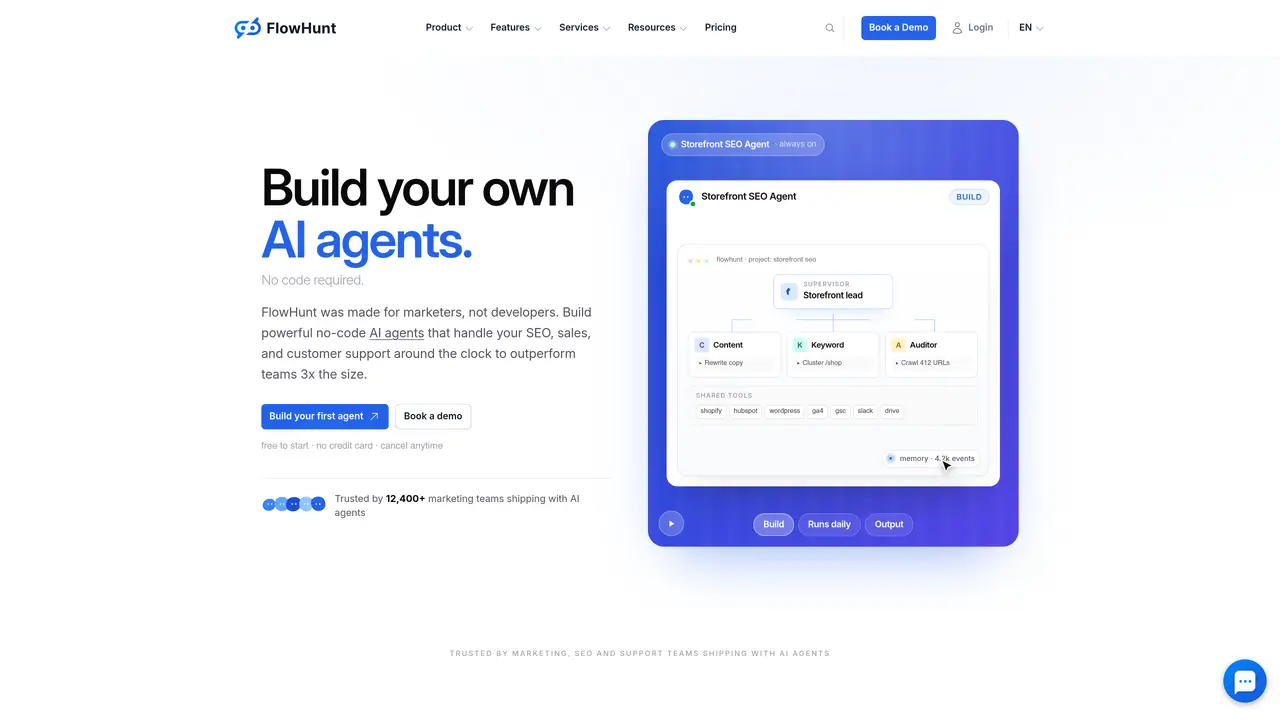
About FlowHunt
FlowHunt is a no-code AI workflow automation platform designed for businesses and enterprise teams to build chatbots, AI agents, and internal AI tools. It enables users to create multi-step AI workflows using a visual drag-and-drop builder and configurable templates. The platform supports AI agents capable of handling real tasks, escalating support issues, and collaborating with other agents for complex processes. Knowledge sources can be integrated to ground outputs in documents, websites, videos, FAQs, and external data, including real-time research. FlowHunt offers a cross-platform desktop app for Windows, macOS, and Linux, optimized for batch processing and interactive AI assistants. The tool emphasizes autonomous agent orchestration, knowledge-grounded responses, and business integrations to deploy production-ready chatbots and workflow automations across teams. It supports integrations with platforms like LiveAgent, Smartsupp, LiveChat, HubSpot, Shopify, and Slack.
Key features
- No-code drag-and-drop flow builder
- AI agents for task handling and escalation
- Knowledge sources for grounded responses
- Real-time research capabilities
- Cross-platform desktop app
- Multi-step workflow automation
- Agent-to-agent collaboration
- Business integrations (LiveAgent, HubSpot, Slack, etc.)
- Batch processing and interactive assistants
- Template-based workflow assembly
Use cases
- Building customer support chatbots
- Automating internal research workflows
- Deploying AI agents for content operations
Pros
- No-code visual builder for creating AI agents and workflows without requiring developer expertise
- Supports autonomous agent orchestration with multi-step workflows and real-time task handling
- Integrates knowledge sources like documents, websites, videos, and external data for grounded responses
- Offers cross-platform desktop app for batch processing and interactive AI assistants on Windows, macOS, and Linux
- Provides pre-built templates and components tailored for marketing, SEO, sales, and customer support use cases
Cons
- May require initial setup time to configure complex workflows and knowledge sources
- Limited transparency on pricing structure without direct inquiry
- Dependent on the quality and relevance of integrated knowledge sources for accurate outputs
FlowHunt videos
Frequently asked questions about FlowHunt
What is FlowHunt and who is it designed for?
FlowHunt is a no-code AI agent builder designed primarily for marketers, SEO professionals, sales teams, and support staff. It enables users to create autonomous AI agents that handle tasks like content creation, SEO optimization, customer support, and workflow automation without requiring coding expertise.
How does FlowHunt help with SEO and content creation?
FlowHunt provides AI agents that research keywords, draft long-form blog posts, optimize product descriptions, and generate comparison pages. These agents can publish content directly to platforms like Shopify, WordPress, or HubSpot, ensuring SEO best practices are applied consistently.
Can FlowHunt integrate with other business tools?
Yes, FlowHunt supports integrations with popular platforms such as Shopify, HubSpot, WordPress, Slack, LiveAgent, Smartsupp, and LiveChat. These integrations allow AI agents to interact with existing workflows and data sources for seamless automation.
What is the Visual Builder in FlowHunt?
The Visual Builder is a drag-and-drop interface that allows users to design AI workflows and agents without coding. It includes components like supervisors, content rewriters, keyword clusterers, and auditors, which can be combined to create custom AI-driven processes.
Does FlowHunt offer pre-built templates or examples?
Yes, FlowHunt provides a library of flow templates tailored for specific use cases such as SEO content generation, product page optimization, and YouTube-to-blog conversion. These templates serve as starting points for users to customize and deploy quickly.
What are Knowledge Sources in FlowHunt?
Knowledge Sources allow users to ground AI agents in specific information by connecting documents, websites, videos, FAQs, or external data. This ensures that AI outputs are accurate and contextually relevant, such as using product data or competitor lists for SEO tasks.
FlowHunt Website Engagement
Last Update: 9 days ago
Total Monthly Visits
0
Bounce Rate
0%
Visit Duration (avg)
0.00s
Pages Per Visit
0
Country Rank
0
Vietnam
Global Rank
0
Category Rank
#0
Programming & Developer Software
Monthly Traffic
Traffic Sources
Traffic Share By Country
- South Korea7.6%
- Brazil4.6%
- United States4.4%
- Vietnam4.2%
- Cyprus3.7%