
OpenAI builds and deploys advanced AI models like GPT-4o for autonomous agents and workflows.

HarnessRouter Community Edition
$0.01Starting price
0Popularity
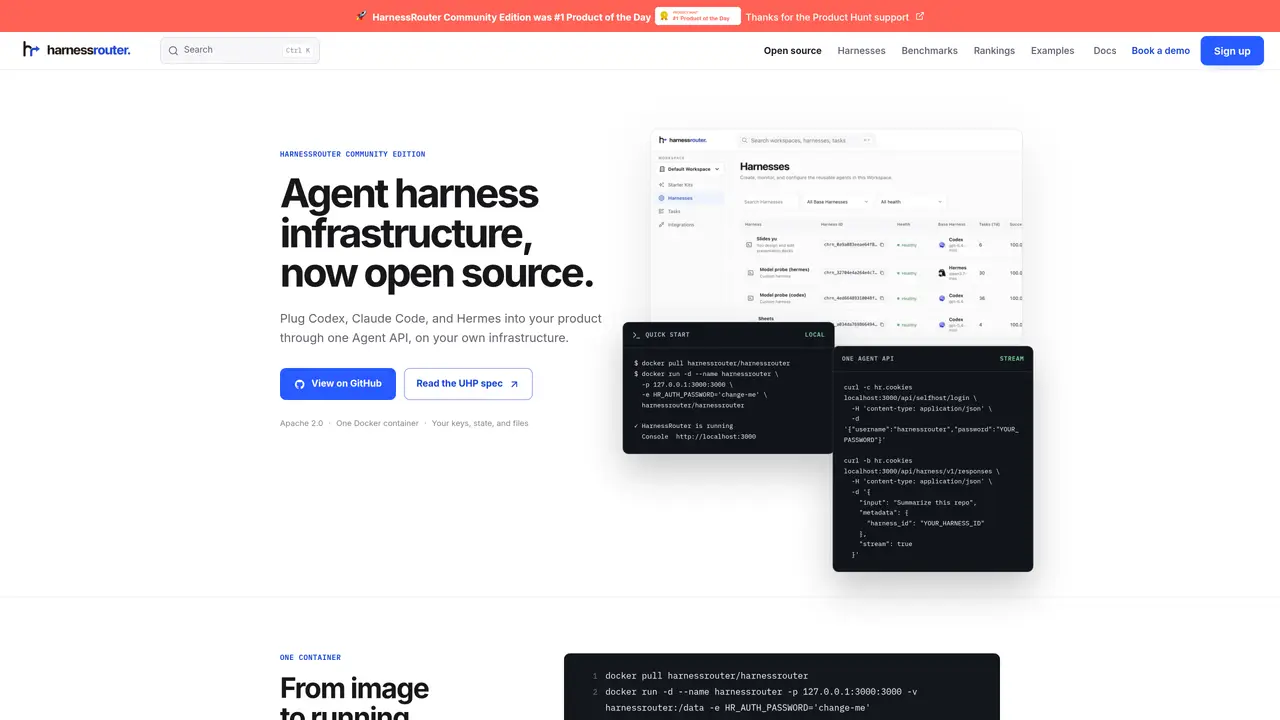
About HarnessRouter Community Edition
HarnessRouter Community Edition provides an open-source agent harness infrastructure that allows integration of multiple AI agents such as Codex, Claude Code, and Hermes through a single API. It operates as a self-contained system with Gateway, Runner, and Console components bundled in one Docker container, eliminating the need for external databases or cloud accounts. The tool manages the full lifecycle of agent tasks including session creation, streaming responses, file handling, artifact generation, cancellation, and structured error handling. It uses the Unified Harness Protocol (UHP), an open and versioned HTTP contract, to ensure portability and interoperability between different agent implementations. Community Edition supports local deployment with user-controlled infrastructure, including provider keys, state storage via SQLite, and workspace files. The system includes a web-based console for managing harnesses, benchmarks, and examples, and offers starter kits demonstrating production-ready implementations for slides, spreadsheets, dashboards, and video editing.
Key features
- Unified Agent API for Codex, Claude Code, and Hermes
- Built-in Console for managing harnesses and tasks
- SQLite-based state and workspace file storage
- Streaming responses and real-time event tracking
- Artifact generation and file persistence
- Session management with create, resume, and inspect capabilities
- Unified Harness Protocol (UHP) for portable agent contracts
- Starter kits for slides, sheets, dashboards, and videos
Use cases
- Integrating AI agents into existing products via a single API
- Building agent-backed features such as automated slide generation
- Creating AI-powered dashboards that dynamically update based on data queries
Pros
- Single Docker container deployment with no external dependencies
- Supports multiple agent frameworks through a unified API
- Open-source under Apache 2.0 license
- Full agent lifecycle management including sessions, streaming, and error handling
- Includes starter kits for production use cases
Cons
- Requires Docker and local infrastructure for Community Edition
- No managed database option in Community Edition
- Limited to self-hosted deployment in open-source version
Frequently asked questions about HarnessRouter Community Edition
What is HarnessRouter Community Edition?
HarnessRouter Community Edition is an open-source agent harness infrastructure that integrates multiple AI agents such as Codex, Claude Code, and Hermes through a single API. It operates as a self-contained system with Gateway, Runner, and Console components bundled in one Docker container.
Who should use HarnessRouter Community Edition?
It is designed for developers and teams who want to integrate AI agents into their products while maintaining control over infrastructure, data, and costs. It suits those seeking a portable, interoperable, and self-hosted solution.
How does HarnessRouter Community Edition work?
The tool manages the full lifecycle of agent tasks, including session creation, streaming responses, file handling, artifact generation, cancellation, and structured error handling. It uses the Unified Harness Protocol (UHP), an open HTTP contract, to ensure portability and interoperability.
What integrations does HarnessRouter Community Edition support?
It supports leading AI agent harnesses such as Codex by OpenAI, Claude Code by Anthropic, and Hermes by Nous Research. These can be integrated through a single API without rebuilding the product backend.
What are the deployment requirements for HarnessRouter Community Edition?
It requires a Docker container for deployment and supports local infrastructure with user-controlled provider keys, state storage via SQLite, and workspace files. No external databases, vaults, or cloud accounts are needed.
How can I get started with HarnessRouter Community Edition?
Users can start by pulling the Docker image and running it with a single command. The system includes a web-based console for managing harnesses, benchmarks, and examples, as well as starter kits for production-ready implementations.