OpenAI builds and deploys advanced AI models like GPT-4o for autonomous agents and workflows.

Synartesis
0Popularity
About Synartesis
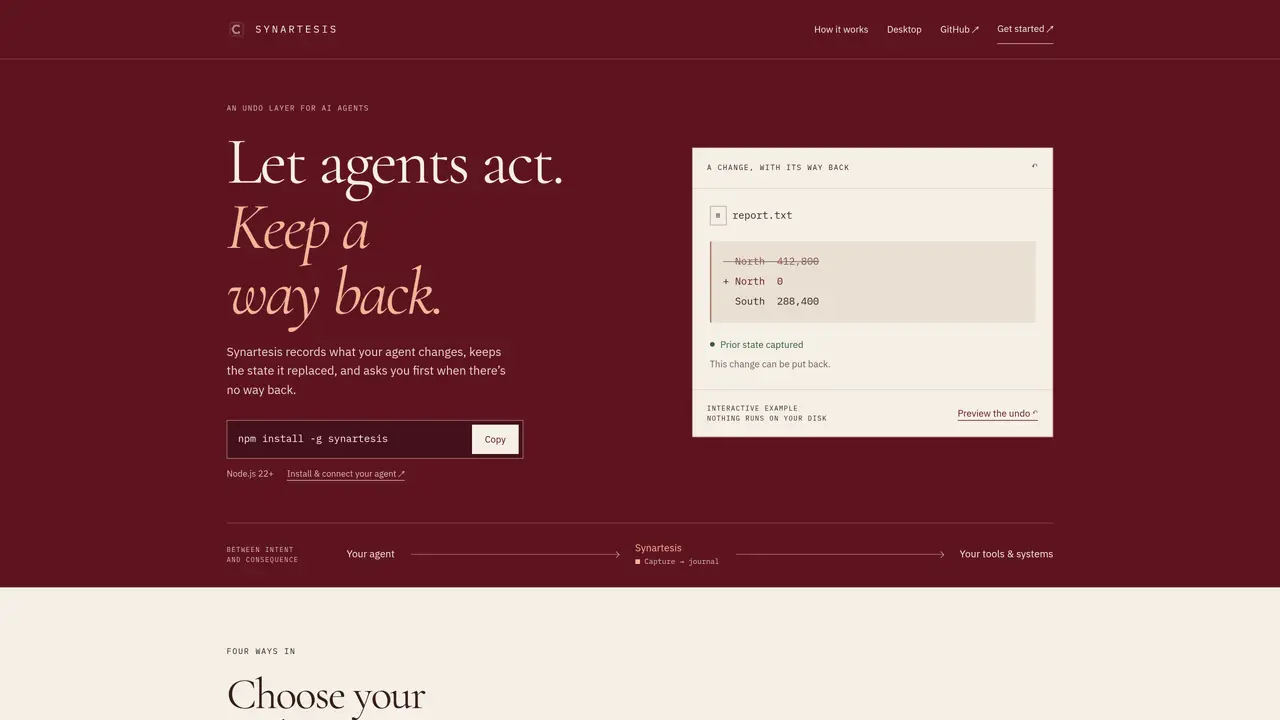
Synartesis functions as an undo layer for AI agents, capturing the state of files or systems before changes are made and storing that prior state for potential reversal. It integrates with existing agent workflows by acting as a proxy that intercepts tool calls, records the original values, and forwards the changes only after confirmation. The tool supports multiple entry points, including a command-line interface, a desktop window, and direct installation on local machines where agents like Claude Code or Cursor operate. Users can review captured changes, approve or reject them, and restore previous states when needed. Synartesis enforces policies to classify tool calls as reversible, compensable, or irreversible, ensuring that only actions with a defined undo path proceed automatically. For actions without a clear reversal, the system halts and requests human intervention before proceeding. The journal records each change and its corresponding undo step, allowing users to replay sequences or resolve conflicts that arise from later modifications to the same resources.
Key features
- Prior state capture before writes
- Policy enforcement for tool call classification
- Conflict detection before undo operations
- Journaling of all changes and undo steps
- Proxy-based interception of tool calls
- Desktop window for visual review and approval
- Support for local model execution
- Multi-platform compatibility (macOS, Windows, Linux)
Use cases
- Reverting unintended changes made by AI agents in code or documents
- Reviewing and approving AI-driven modifications before they are finalized
- Recovering from errors in automated workflows by restoring previous states
Pros
- Captures prior state before any change is applied
- Supports multiple integration methods (CLI, desktop, direct install)
- Enforces policy-based classification of tool calls
- Prevents silent overwrites by halting if capture fails
- Works with local and remote models via standard endpoints
Cons
- Requires Node.js 22+ for installation
- Desktop builds are unsigned and may trigger security warnings
- Windows installer is built but not tested in CI
- Policy must be defined for each tool to enable automatic undo
Frequently asked questions about Synartesis
What does Synartesis do?
Synartesis acts as an undo layer for AI agents, recording changes made by agents and preserving the prior state of files or systems to allow reversal when needed. It intercepts tool calls, captures original values before changes occur, and forwards modifications only after confirmation or policy checks.
Who is Synartesis designed for?
Synartesis is designed for users who work with AI agents that modify files or systems, such as developers using agents like Claude Code or Cursor. It suits those who need safety nets for irreversible actions or want to review and approve changes before they are finalized.
How does Synartesis integrate with existing AI agent workflows?
Synartesis integrates by acting as a proxy that intercepts tool calls from agents, records the original state, and enforces policies to classify actions as reversible, compensable, or irreversible. It supports multiple entry points, including command-line, desktop window, and local machine installation.
What happens if an action cannot be undone?
If an action is classified as irreversible or lacks a defined undo path, Synartesis halts the process and requests human intervention before proceeding. This ensures that potentially harmful or irreversible changes are not executed without explicit approval.
Can Synartesis work with local AI models?
Yes, Synartesis supports local AI models, including those run via Ollama or LM Studio, allowing users to avoid paid API calls or sending prompts to external model providers. The desktop app and CLI can interact with these local models seamlessly.
How do I get started with Synartesis?
To get started, install Synartesis using the command-line interface with a package manager like npm. Then, connect your AI agent to Synartesis by running a simple command such as 'synartesis install' to configure the proxy and begin capturing changes.