
OpenAI builds and deploys advanced AI models like GPT-4o for autonomous agents and workflows.

Viam
$0.05Starting price
56KMonthly visits
29Popularity
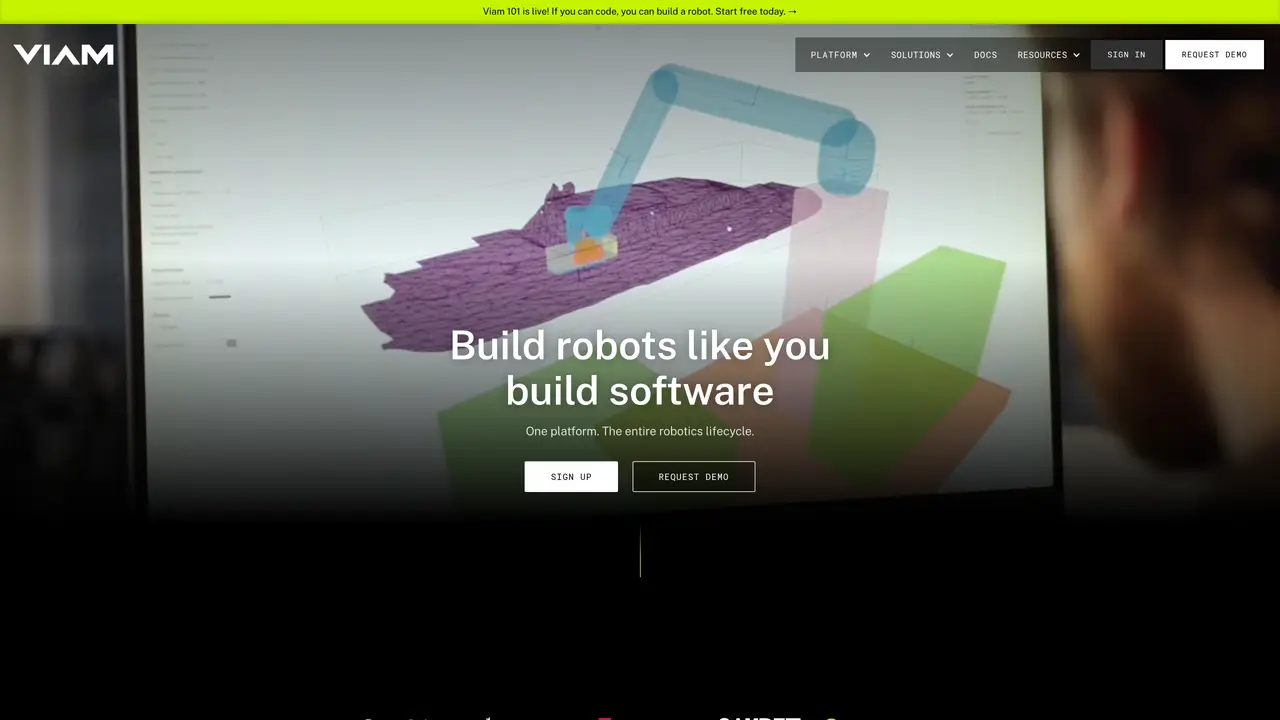
About Viam
Viam is an innovative software platform designed to bridge the gap between software and hardware. It simplifies the integration of AI and machine learning into any device, enhancing operational efficiency and developer velocity. With its robust suite of tools and functionalities, Viam offers flexible, intuitive cloud solutions that scale across various applications, from predictive maintenance to data analytics and beyond. Key Features: Modular and Open Source: Viam is built to be modular and open source, accommodating any hardware, software, or programming language. AI and Machine Learning Integration: Easily integrate and customize popular AI models to enhance machine capabilities. Fleet Management: Offers comprehensive tools for monitoring and managing machine fleets efficiently. Data Analytics and Visualization: Capture, store, and visualize data to gain insights and drive decision-making. Extensive Compatibility: Supports a wide range of hardware and software, ensuring seamless integration without the need for complex customizations.
Key features
- Modular and Open Source
- AI and Machine Learning Integration
- Fleet Management
- Data Analytics and Visualization
- Extensive Compatibility
- Robust API for Custom Integrations
Use cases
- Predictive maintenance in manufacturing industries
- Device management and data analysis in healthcare providers
- Quick development and deployment of smart devices in tech startups
Pros
- Modular and open-source architecture allowing integration with any hardware or software stack
- Multi-language SDKs (Python, Go, TypeScript) for flexible development
- Built-in motion, vision, and fleet management capabilities without requiring complex custom setups
- Supports rapid prototyping to global fleet scaling with consistent application code
- Provides remote access, control, and security features for distributed robotics systems
Cons
- May require technical expertise in coding and robotics to fully leverage capabilities
- Cloud-managed features could introduce dependency on internet connectivity for remote operations
- Initial setup might involve learning curve for developers unfamiliar with robotics platforms
Frequently asked questions about Viam
What is Viam and who is it designed for?
Viam is a software platform for building, deploying, and managing robotics applications, designed primarily for software engineers and developers. It enables users to write control logic using multi-language SDKs while abstracting hardware complexities.
How does Viam simplify robotics development?
Viam simplifies robotics development by providing modular APIs for hardware, built-in motion and vision capabilities, and a registry for instant access to drivers and ML models. This allows developers to focus on application logic rather than infrastructure.
Can Viam be used for managing robot fleets?
Yes, Viam offers comprehensive fleet management tools, including cloud-managed monitoring, alerting, OTA updates, and access control for scaling robotics applications from prototypes to global deployments.
Does Viam support AI and machine learning integration?
Yes, Viam supports the integration and customization of popular AI models, enabling enhanced machine capabilities such as perception and adaptive behavior in robotics applications.
What programming languages does Viam support?
Viam supports multiple programming languages through its SDKs, including Python, Go, and TypeScript, allowing developers to write application logic in their language of choice.
How do I get started with Viam?
Users can start building with Viam by creating a free account and getting their first machine online in minutes. The platform provides documentation, tutorials, and resources to facilitate quick onboarding.
Viam Website Engagement
Last Update: 9 days ago
Total Monthly Visits
0
Bounce Rate
0%
Visit Duration (avg)
0.00s
Pages Per Visit
0
Country Rank
0
United States
Global Rank
0
Category Rank
#0
Restaurants & Delivery
Monthly Traffic
Traffic Sources
Traffic Share By Country
- United States38%
- India6.3%
- United Kingdom5.9%
- Malaysia5.1%
- Vietnam3.9%