
OpenAI builds and deploys advanced AI models like GPT-4o for autonomous agents and workflows.

Vibe Coding
0Popularity
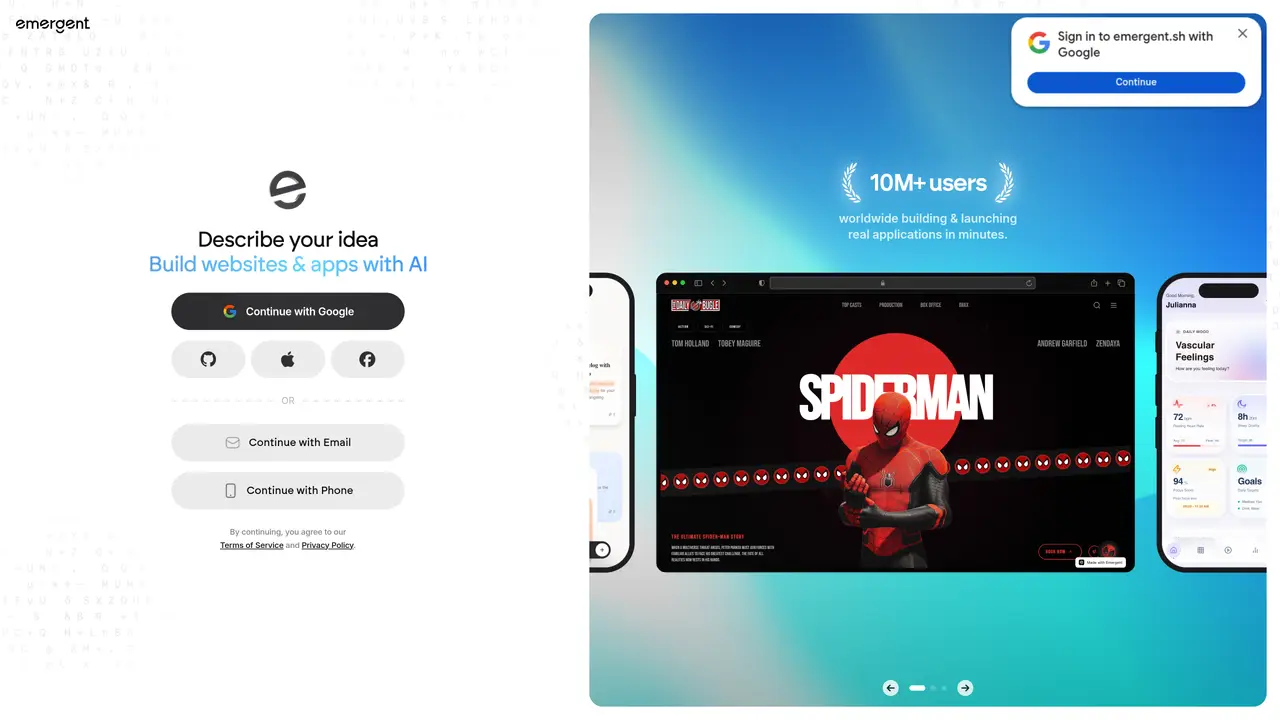
About Vibe Coding
Vibe Coding is an AI-native development environment that lets users build applications, tools, and prototypes by combining natural language prompts with automated workflows. Instead of writing code from scratch, developers describe the desired functionality, and the platform generates functional code modules, logic, and interfaces. The workspace supports iterative refinement, allowing users to adjust prompts, review generated components, and integrate manual customization as projects evolve. It bridges the gap between rapid prototyping and traditional development, enabling teams to move from concept to working software faster while maintaining control over architecture and logic. The tool is designed for developers, founders, and product teams who need to experiment with AI-assisted coding, validate startup ideas, or build internal tools without deep coding expertise. By automating repetitive coding tasks and accelerating iteration cycles, Vibe Coding streamlines the development process while preserving the flexibility to scale and customize applications as needed.
Key features
- Build applications using natural language prompts
- Generate functional code modules and logic automatically
- Prototype products and startup ideas rapidly
- Combine AI-assisted coding with manual customization
- Iterate quickly on product concepts and development workflows
- Generate application workflows and logic with AI
- Accelerate development with AI-assisted coding tools
- Maintain control over architecture and logic
- Visual workflows for managing development steps
- AI-native development environment
Use cases
- Turn product ideas into working MVPs quickly
- Build internal tools and automation workflows
- Experiment with AI-assisted development for faster iteration
Pros
- Enables rapid prototyping by translating natural language prompts into functional code modules
- Supports iterative refinement with prompt adjustments and manual customization
- Accelerates development cycles by automating repetitive coding tasks
- Maintains flexibility to scale and customize applications as projects evolve
- Designed for teams without deep coding expertise to validate ideas or build internal tools
Cons
- May require manual review and adjustments for complex or highly specialized logic
- Dependent on the accuracy of natural language prompts for optimal code generation
- Potential limitations in handling highly nuanced or domain-specific requirements
Frequently asked questions about Vibe Coding
What is Vibe Coding and how does it work?
Vibe Coding is an AI-native development environment that allows users to build applications, tools, and prototypes by describing desired functionality in natural language. The platform generates functional code modules, logic, and interfaces, which users can iteratively refine through prompt adjustments and manual customization.
Who is Vibe Coding designed for?
The tool is designed for developers, founders, and product teams who need to experiment with AI-assisted coding, validate startup ideas, or build internal tools without requiring deep coding expertise.
Can Vibe Coding integrate with existing development workflows?
Yes, the platform supports iterative refinement and manual customization, allowing integration with existing development processes while accelerating iteration cycles.
What are the main benefits of using Vibe Coding?
The primary benefits include faster prototyping, reduced manual coding effort, and the ability to move from concept to working software more quickly while maintaining control over architecture and logic.
Does Vibe Coding require coding expertise to use?
While it reduces the need for deep coding expertise, users benefit from a basic understanding of development principles to refine and customize generated code effectively.
How does Vibe Coding handle complex or specialized requirements?
The platform generates functional code based on prompts, but complex or highly specialized logic may require manual review and adjustments to meet specific needs.