
Cloud accounting software that automates bookkeeping, invoicing, and financial reporting for small and growing businesses.

Nanonets Automated Accounting
FreeStarting price
0Popularity
About Nanonets Automated Accounting
Nanonets Automated Accounting is the perfect solution for busy entrepreneurs and small business owners. Our automated platform simplifies the process of tracking financials, giving you real-time visibility into your finances and allowing you to make informed decisions. With Nanonets Automated Accounting, you can easily link your banking accounts, credit cards, and other financial services to your account. This gives you a comprehensive view of your financials in one place, so you can quickly identify and address any discrepancies or areas of concern. Plus, our intuitive dashboard makes it easy to view key financial metrics, such as cash flow, expenses, and revenue. Our automated system also eliminates the need for manual entry and reduces the time needed to reconcile your books. Nanonets Automated Accounting is the perfect solution for entrepreneurs and small business owners who want to stay on top of their financials without spending hours of their precious time doing it.
Key features
- Automate financial tracking
- Link banking and financial services
- View key financial metrics in one place
- Eliminate manual entry
- Reduce time needed for reconciliation
- Real-time visibility into finances
Use cases
- Small business owners who want to simplify their financial tracking process
- Entrepreneurs who need to stay on top of their finances without spending hours doing it
- Businesses that want to reduce the time needed for reconciliation and manual entry
Pros
- Native integration with existing financial and business systems without replatforming
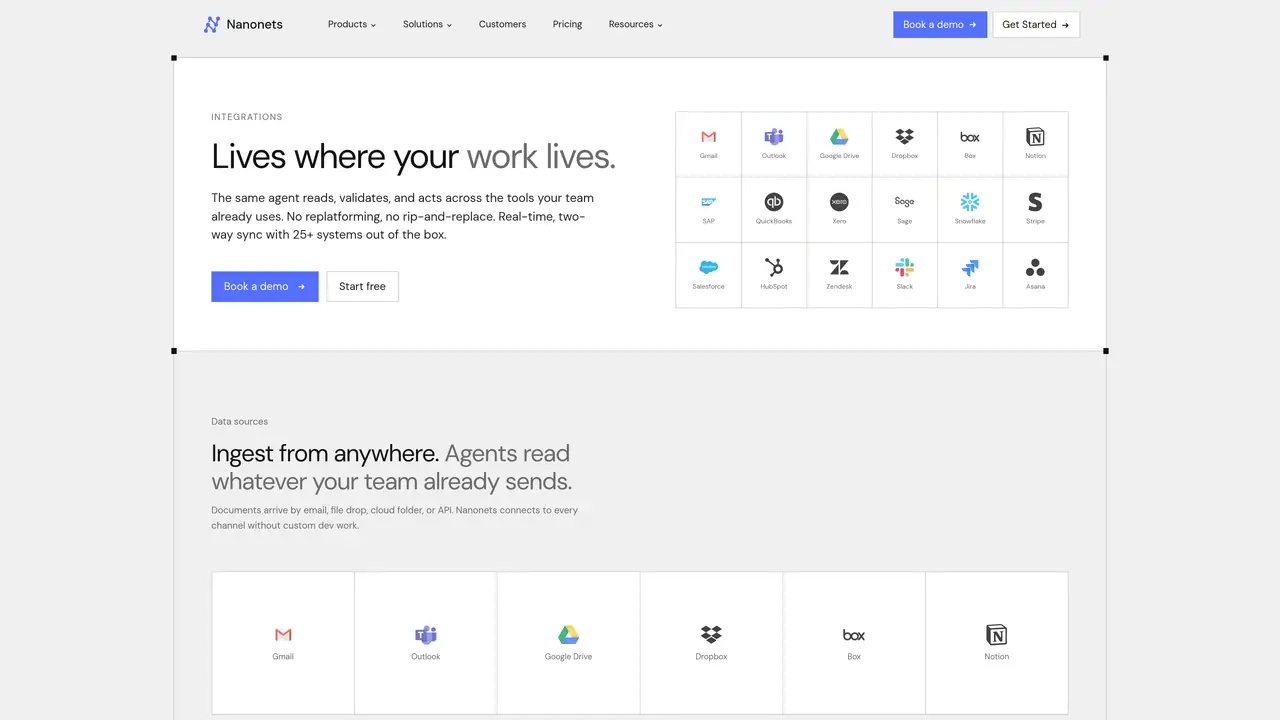
- Real-time, two-way sync with over 25 pre-built connectors for ERPs, CRMs, and collaboration tools
- Automated extraction, validation, and processing of unstructured financial data from multiple channels
- Full audit trails and provenance logging for compliance and reconciliation purposes
- Scalable support for custom connectors and enterprise authentication standards
Cons
- Limited visibility into custom or legacy systems not covered by pre-built connectors
- Potential dependency on third-party integrations for full functionality
- May require initial setup and configuration for optimal performance
Frequently asked questions about Nanonets Automated Accounting
What does Nanonets Automated Accounting do?
Nanonets Automated Accounting automates financial data processing by extracting, validating, and syncing transactional data from documents like invoices and receipts into accounting systems such as QuickBooks, Xero, and SAP. It reduces manual entry and reconciles books in real time.
Who is Nanonets Automated Accounting suitable for?
The tool is designed for entrepreneurs, small business owners, and finance teams who need to streamline financial workflows without migrating systems or undergoing complex integrations. It suits businesses using ERP, CRM, or accounting platforms.
How does Nanonets Automated Accounting integrate with existing tools?
Nanonets connects natively with over 25 systems, including QuickBooks, Xero, SAP, Salesforce, and Slack, enabling real-time two-way sync. It authenticates once and processes data across tools without requiring custom development or replatforming.
What types of documents can Nanonets Automated Accounting process?
The platform ingests documents from email, cloud storage, file drops, or APIs, handling formats like invoices, receipts, and vendor statements. It extracts and validates data regardless of layout or format.
Does Nanonets Automated Accounting provide audit trails?
Yes, every action is logged with full provenance, offering compliance teams a clear audit trail and finance teams reconciled records. The system tracks data flow from ingestion to sync.
How do I get started with Nanonets Automated Accounting?
Users can start a free trial or book a demo to see the tool in action with their specific documents and workflows. No credit card is required to begin, and the team can scope custom integrations during the onboarding process.