
Efficiently create and manage cases, streamline workflows, securely store and share documents, and collaborate with colleagues.

Doksima
0Popularity
About Doksima
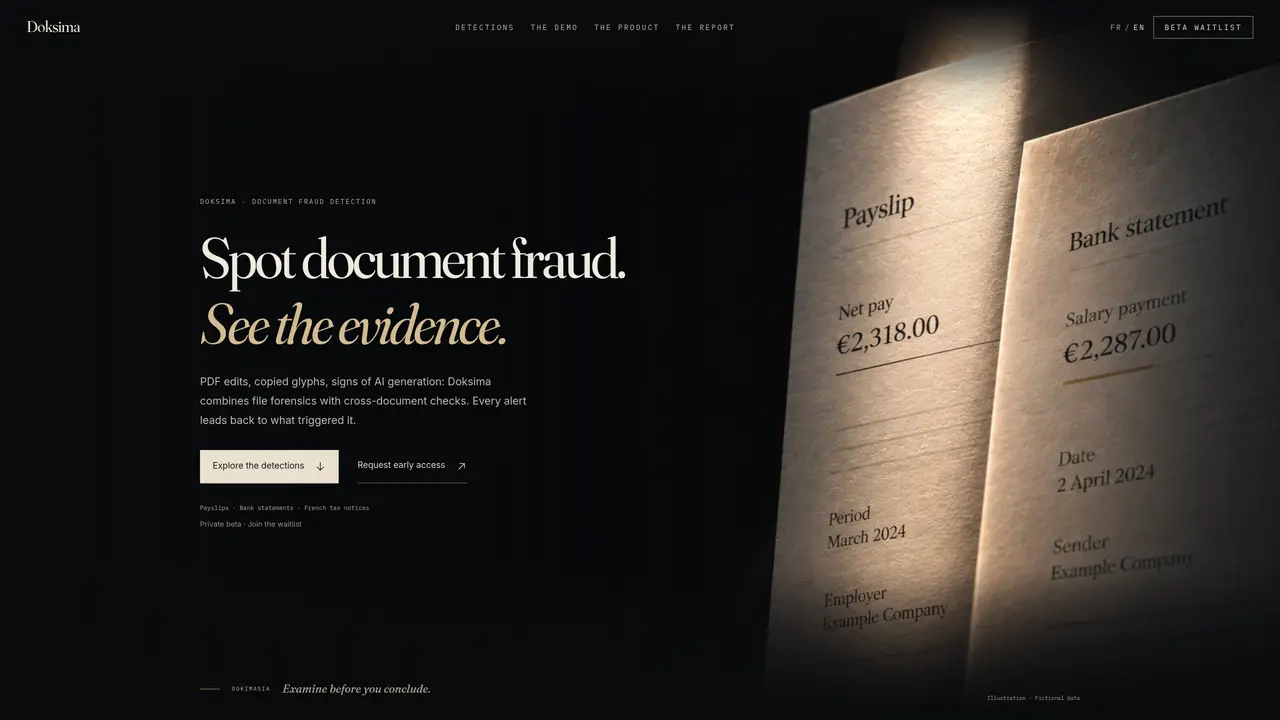
Doksima examines PDF documents to identify signs of forgery such as font anomalies, copied glyphs, or AI-generated textures. It combines file-level forensic analysis with cross-document comparisons to uncover discrepancies between supporting documents like payslips, bank statements, or tax notices. The tool flags potential issues and links each alert to its source, allowing users to trace inconsistencies back to specific pages or elements within the files. Findings are presented in a structured report that separates technical observations from human review decisions, ensuring clarity on what the system can and cannot establish. Users can organize reviews, track application statuses, and document outcomes without the system making final judgments. The interface is designed to guide users through discrepancies while maintaining a clear separation between automated checks and manual verification processes.
Key features
- PDF file forensic analysis
- Font and glyph anomaly detection
- Cross-document amount comparison
- Structured report generation
- Source tracing for each finding
- Review queue for tracking applications
- Separation of automated checks and human review
- Four defined verdict categories
Use cases
- Verifying employment documents for inconsistencies
- Detecting potential fraud in financial statements
- Cross-checking tax notices against supporting records
Pros
- Combines file forensics with cross-document checks
- Links every alert to its source within the document
- Separates technical findings from human review decisions
- Provides structured reports with clear definitions for each finding
- Supports comparison of amounts and sources across documents
Cons
- No live document analysis; requires pre-uploaded files
- Currently in private beta with a waitlist
- Prototype screenshots indicate French-language focus
- No account required but no live processing available
Frequently asked questions about Doksima
What does Doksima do?
Doksima examines PDF documents to detect signs of forgery such as font anomalies, copied glyphs, or AI-generated textures. It combines file-level forensic analysis with cross-document comparisons to uncover discrepancies between supporting documents like payslips, bank statements, or tax notices.
Who is Doksima designed for?
The tool is designed for professionals who need to verify the authenticity of documents, such as compliance officers, fraud investigators, or administrative teams handling applications that require supporting evidence.
How does Doksima present its findings?
Findings are presented in a structured report that separates technical observations from human review decisions, linking each alert to its source within the documents. The report clarifies what the system can and cannot establish.
Can Doksima analyze live documents?
No, the website states that it does not analyze documents live. Instead, it provides a guided demo and allows users to explore fictional data to understand how the tool works.
What types of discrepancies can Doksima detect?
Doksima can detect discrepancies such as mismatched totals, isolated embedded fonts, copied digits, or inconsistencies in document formatting. It traces these issues back to specific pages or elements within the files.
Does Doksima make final judgments on document authenticity?
No, Doksima flags potential issues and provides evidence but does not make final judgments. Users retain control to review findings, request original documents, or document outcomes based on the tool's observations.