
OpenAI builds and deploys advanced AI models like GPT-4o for autonomous agents and workflows.

AutonomyAI
$1Starting price
12KMonthly visits
18Popularity
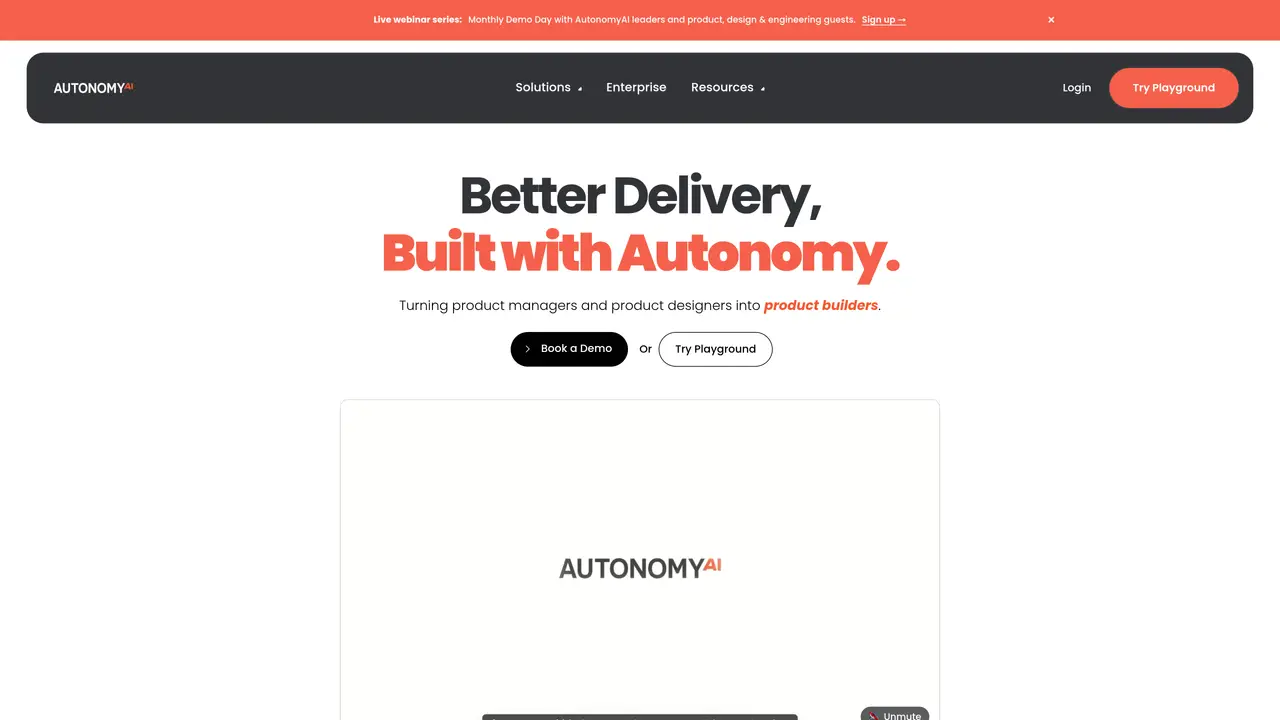
About AutonomyAI
AutonomyAI’s Fei Studio is an agentic OS for building directly inside real codebases, bridging planning, prototyping, and delivery without throwaway work. It ingests a repository in minutes to map components, styles, APIs, hooks, and architecture, then lets product managers and designers generate production-quality changes from prompts, screenshots, tickets, or Figma designs. Fei plans the change, renders a prototype, generates code aligned to house standards, and opens a clean pull request with a full spec and change history for engineering review. Engineers review diffs in their normal tools—Claude Code, Cursor, or any MCP-capable agent—and approve when ready, preserving oversight while accelerating delivery. Teams modernizing legacy UIs, aligning design systems, validating ideas, or turning support feedback into fixes gain a fast lane to production with auditability and governance built in. Enterprise stakeholders benefit from clean PRs, explicit specs, and automatic context refreshes that keep the agent’s understanding current as the codebase evolves.
Key features
- Repository ingestion in under two minutes to map components, styles, APIs, and architecture
- Task orchestration from prompt, screenshot, ticket, or Figma to production-ready PR
- Production-grade code generation aligned to repository conventions and design system
- Clean pull requests with full specs, diffs, and change history for engineering review
- Agent knowledge hub that auto-refreshes understanding as the codebase evolves
- Playground and IDE agent integration for PMs, designers, and engineers
- Deterministic multi-step task execution priced per task, not per seat or step
- Support for Claude Code, Cursor, and any MCP-capable agent workflow
- Enterprise-ready auditability, compliance, and documentation resources
- Variant exploration and testable implementation options for idea validation
Use cases
- Convert support feedback into small, reviewable production changes
- Redesign interface elements safely across complex codebases
- Validate product ideas with testable, code-aligned implementation variants
Pros
- Enables product managers and designers to generate production-quality code directly from prompts, screenshots, or designs without relying solely on engineers
- Automates the creation of pull requests with full specs and change history, streamlining engineering review
- Supports real-time codebase mapping to align AI-generated changes with existing architecture and standards
- Integrates with engineering workflows via MCP-capable agents like Claude Code or Cursor, preserving oversight
- Provides auditability and governance through explicit specifications and automatic context updates as the codebase evolves
Cons
- Requires repository ingestion and mapping, which may introduce initial setup time for large or complex codebases
- Dependent on the quality and completeness of the codebase documentation for accurate AI-generated changes
- Engineering teams must still review and approve pull requests, maintaining a dependency on human oversight
Frequently asked questions about AutonomyAI
What is AutonomyAI and what does it do?
AutonomyAI’s Fei Studio is an agentic operating system designed to help product managers, designers, and engineers collaborate directly within real codebases. It maps repositories to understand components, styles, APIs, and architecture, then generates production-quality changes from prompts, screenshots, or design files, opening pull requests for engineering review.
Who is AutonomyAI best suited for?
Fei Studio is ideal for product teams looking to accelerate feature delivery, designers aiming to implement changes in real code, engineers seeking to reduce repetitive work, and enterprises modernizing legacy systems or aligning design systems. It benefits teams that need auditability and governance in their development workflows.
How does AutonomyAI integrate with existing tools?
Fei Studio integrates with engineering workflows through MCP-capable agents such as Claude Code or Cursor, allowing engineers to review and approve changes directly in their preferred tools. It also supports Figma designs and other design tools for generating code aligned with real product codebases.
What are the key limitations of AutonomyAI?
The tool requires an initial repository ingestion and mapping process, which may take time for large or complex codebases. It also depends on the quality of existing codebase documentation for accurate AI-generated changes. Additionally, engineering teams must still review and approve pull requests, maintaining a human oversight requirement.
How do I get started with AutonomyAI?
Prospective users can start by booking a demo or trying the playground on the AutonomyAI website. The tool ingests a repository to map its components and architecture, after which users can generate changes from prompts, screenshots, or design files and review them via pull requests.
Does AutonomyAI support legacy system modernization?
Yes, Fei Studio is designed to help teams refactor legacy interfaces and align design systems by generating production-quality changes directly within the real codebase, reducing the need for throwaway work.
AutonomyAI Website Engagement
Last Update: 9 days ago
Total Monthly Visits
0
Bounce Rate
0%
Visit Duration (avg)
0.00s
Pages Per Visit
0
Country Rank
0
United States
Global Rank
0
Monthly Traffic
Traffic Sources
Traffic Share By Country
- United States23.8%
- India15.6%
- United Kingdom14.1%
- Israel13.3%
- Indonesia11.4%