
OpenAI builds and deploys advanced AI models like GPT-4o for autonomous agents and workflows.

Kombai
$16Starting price
128KMonthly visits
35Popularity
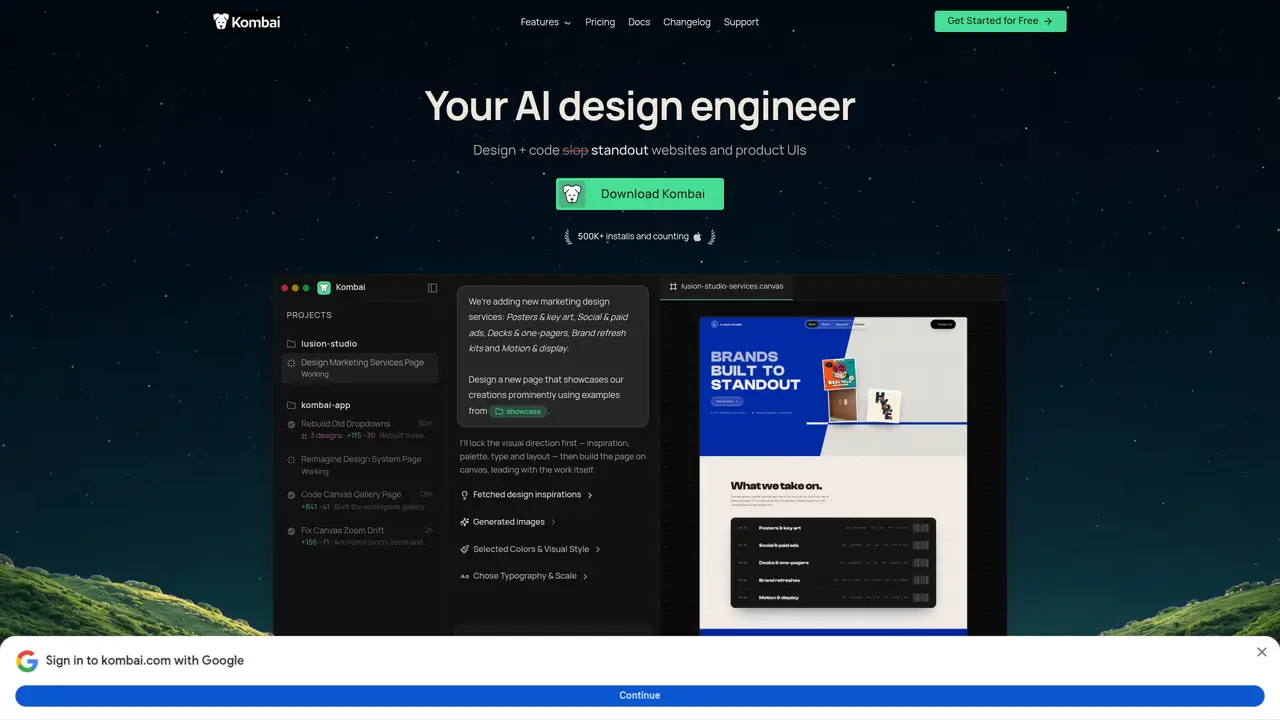
About Kombai
Kombai is an AI-powered frontend agent that converts Figma designs, images, or text prompts into production-ready, component-based UI code for frameworks like React and Tailwind. It is built specifically for frontend development, ensuring generated code aligns with existing project stacks, components, and patterns through repo-aware coding. The tool supports over 400 frontend frameworks and libraries while maintaining SOC 2 certification and a strict policy against using customer data for training. Kombai includes agentic browser access to guide, debug, and audit frontend tasks, moving beyond static screenshot-based tools. It offers a local sandbox preview for real-time interaction and a VS Code extension to streamline workflows directly within the IDE. Designed to avoid unintended backend changes, Kombai focuses exclusively on frontend development, enabling teams to rapidly iterate on UI while preserving consistency and scalability in their codebase.
Key features
- Design-to-code generation for React and Tailwind
- Repo-aware coding that learns and reuses project patterns
- Agentic browser access for debugging and auditing
- Local sandbox preview for real-time UI interaction
- VS Code extension for IDE-based workflows
- Frontend-only scope to prevent backend changes
- Support for 400+ frontend frameworks and libraries
- SOC 2 certified with strict data privacy policies
Use cases
- Convert Figma designs into production-ready React and Tailwind code
- Generate UI components from images or text prompts for rapid prototyping
- Debug and audit frontend work using agentic browser access and multi-tab control
Pros
- Generates production-ready, component-based frontend code for frameworks like React and Tailwind
- Operates with repo-aware coding, learning and reusing a project’s stack, components, and patterns
- Includes agentic browser access for guiding, debugging, and auditing frontend tasks beyond screenshot-based tools
- Provides a local sandbox preview for real-time interaction and a VS Code extension for streamlined IDE workflows
- Supports over 400 frontend frameworks and libraries while adhering to SOC 2 certification standards
Cons
- Limited to frontend-only development, avoiding backend changes
- Requires initial setup to scan and understand the codebase for optimal performance
- May not fully replicate complex design systems without manual adjustments
Frequently asked questions about Kombai
What is Kombai?
Kombai is an all-in-one AI agent for building frontends, enabling users to create designs on an infinite canvas, generate production-ready code aligned with their stack, and edit rendered UI visually. It integrates directly into IDEs and supports both design and code workflows.
Does Kombai offer a free plan?
Yes, Kombai provides a free plan with a monthly allocation of credits. Users can continue using the free tier indefinitely or upgrade to paid plans for higher usage.
Where is Kombai available?
Kombai is available as an extension for popular IDEs, including VS Code, Cursor, Antigravity, Trae, and Kiro. It can also be installed via the Open VSX Registry for compatible IDEs.
Can Kombai generate both designs and working code?
Yes, Kombai supports two modes: 'Design mode' for creating standalone designs on canvases and 'Code mode' for generating production-ready code that integrates with existing codebases.
Can I import designs from Figma into Kombai?
Yes, Kombai offers a native integration to import Figma designs, parsing complex files, fixing common issues like messy grouping, and extracting icons and assets without requiring MCP.
How does Kombai work with an existing codebase?
Kombai functions as an IDE extension within your codebase, scanning and understanding the project's stack to generate code that fits natively. It reuses components, hooks, utilities, and design tokens via Context Graphs.
Kombai Website Engagement
Last Update: 9 days ago
Total Monthly Visits
0
Bounce Rate
0%
Visit Duration (avg)
0.00s
Pages Per Visit
0
Country Rank
0
India
Global Rank
0
Category Rank
#0
Jobs & Employment
Monthly Traffic
Traffic Sources
Traffic Share By Country
- Pakistan9%
- United States8%
- India7.3%
- Vietnam5.3%
- Brazil4.9%