
OpenAI builds and deploys advanced AI models like GPT-4o for autonomous agents and workflows.

Mapnostics
$49/moStarting price
0Popularity
About Mapnostics
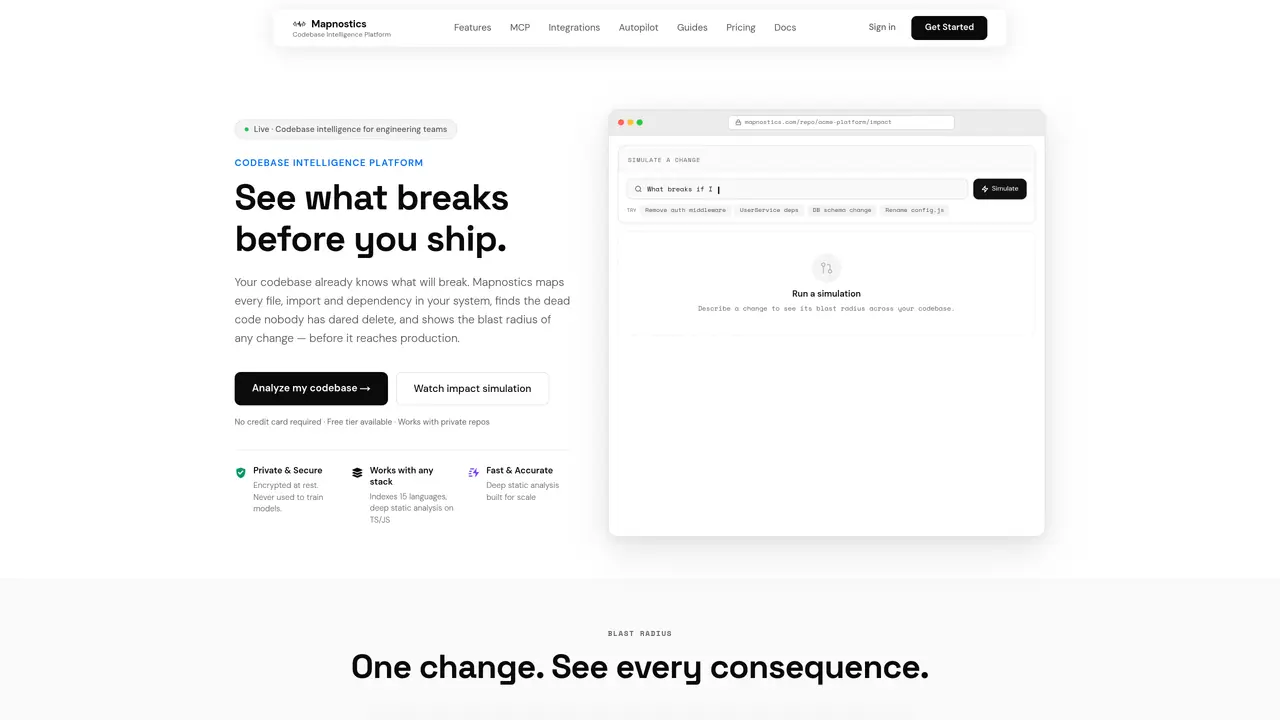
Mapnostics provides a system-level view of codebases by mapping every file, import, and dependency to identify dead code and simulate the blast radius of proposed changes before they reach production. The platform performs deep static analysis on TypeScript and JavaScript while indexing 15 languages, enabling teams to assess risks such as security exposures, service disruptions, or unintended regressions. It generates a full system map within two minutes and offers AI-powered effort estimates with a 15% buffer for tickets, helping engineers onboard faster and make informed decisions. The tool integrates with private repositories and supports any tech stack, with encrypted data storage and no use of customer code for model training. It also provides shareable reports, team ownership maps, and Slack alerts for collaborative risk management.
Key features
- Dead code detection
- Change impact simulation
- Code map and dependency graph
- Bus factor and key-person risk analysis
- Developer onboarding maps
- Secret scanning
- Ticket intelligence
- Shareable reports
Use cases
- Preventing regressions before shipping changes
- Reducing onboarding time for new engineers
- Assessing technical debt in legacy systems
Pros
- System-level codebase mapping
- Impact simulation before changes
- Dead code detection with confidence scores
- AI effort estimates for tickets
- MCP server for AI agent integration
Cons
- Free tier limited to 5 repositories
- Pro plan limited to 10 repositories
- No on-premises option listed
- Not designed for greenfield projects under 6 months
Frequently asked questions about Mapnostics
What does Mapnostics do?
Mapnostics provides a system-level view of codebases by mapping every file, import, and dependency to identify dead code and simulate the blast radius of proposed changes before they reach production.
Who is Mapnostics designed for?
It is built for engineering teams managing legacy systems, fast-moving AI-heavy codebases, or organizations where onboarding takes months, particularly those with 50,000+ lines of code or teams of 5+ developers.
How does Mapnostics integrate with existing workflows?
The tool integrates with private repositories, supports any tech stack, and offers MCP server integrations with AI agents like Claude, Cursor, and Windsurf for context-aware suggestions.
Does Mapnostics use customer code for model training?
No, Mapnostics encrypts data at rest and never uses customer code for model training.
How quickly can Mapnostics generate a system map?
Mapnostics generates a full system map within two minutes of connecting to a repository.
What kind of reports does Mapnostics provide?
It provides shareable reports, team ownership maps, and Slack alerts for collaborative risk management, along with AI-powered effort estimates for tickets.