
OpenAI builds and deploys advanced AI models like GPT-4o for autonomous agents and workflows.
Responder
0Popularity
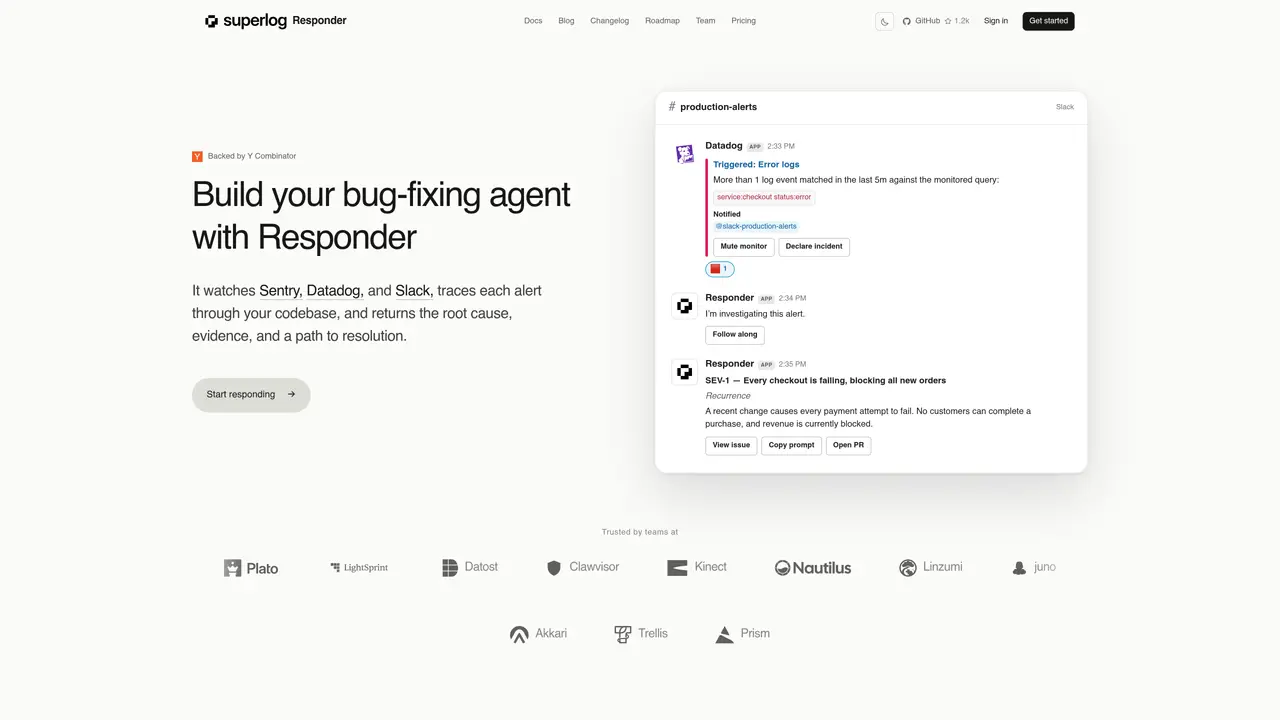
About Responder
Responder integrates with observability platforms such as Sentry, Datadog, and Slack to monitor production alerts. When an alert triggers, it traces the issue through the codebase to identify the root cause, compiles evidence, and suggests a resolution path. The agent can automatically open pull requests for valid issues while filtering out noise. It provides complete context for debugging by accessing code, logs, and production telemetry. Teams can customize the agent’s behavior using custom prompts and configuration files like AGENTS.md or CLAUDE.md. Responder replies directly in Slack to keep stakeholders informed during incidents.
Key features
- Alert monitoring via Sentry, Datadog, and Slack
- Root cause analysis of production issues
- Automated pull request generation for fixes
- Noise filtering for alerts
- Slack incident updates
- Custom prompt configuration
- Access to codebase, logs, and telemetry
- Multi-platform integration
Use cases
- Diagnosing production incidents in real time
- Automating bug fixes from error logs
- Reducing alert fatigue by filtering noise
Pros
- Traces alerts through codebase to identify root causes
- Automatically opens pull requests for valid issues
- Filters noise from production alerts
- Provides full debugging context from observability tools
- Supports custom prompts and configuration files
Cons
- Requires integration with specific observability platforms
- Limited to environments where alerts are monitored via Sentry, Datadog, or Slack
Frequently asked questions about Responder
What observability platforms does Responder integrate with?
Responder integrates with Sentry for error tracking, Datadog for alerts and monitors, and Slack for notifications and incident management.
How does Responder help during production incidents?
Responder traces alerts through the codebase to identify root causes, compiles evidence, and suggests resolution paths. It replies directly in Slack to keep stakeholders informed and can automatically open pull requests for valid issues.
Can I customize Responder's behavior for my team?
Yes, teams can customize Responder using configuration files like AGENTS.md or CLAUDE.md and custom prompts to tailor its investigation and response approach.
What kind of context does Responder provide for debugging?
Responder provides complete context by accessing the codebase, logs, and production telemetry, enabling agents to investigate issues with full visibility.
Does Responder filter out false positives from alerts?
Yes, Responder filters out noise and only responds to real issues, reducing unnecessary alerts and improving incident response efficiency.
How do I get started with Responder?
Start by connecting your observability platforms such as Sentry and Datadog, then configure Responder to monitor alerts and respond in Slack. Custom prompts and configuration files can be set up to align with your team's workflow.