
Cloud platform for web scraping, browser automation, and AI data extraction with 20,000+ pre-built tools and scalable cloud runs.

AutomaSnap
FreeStarting price
0Popularity
About AutomaSnap
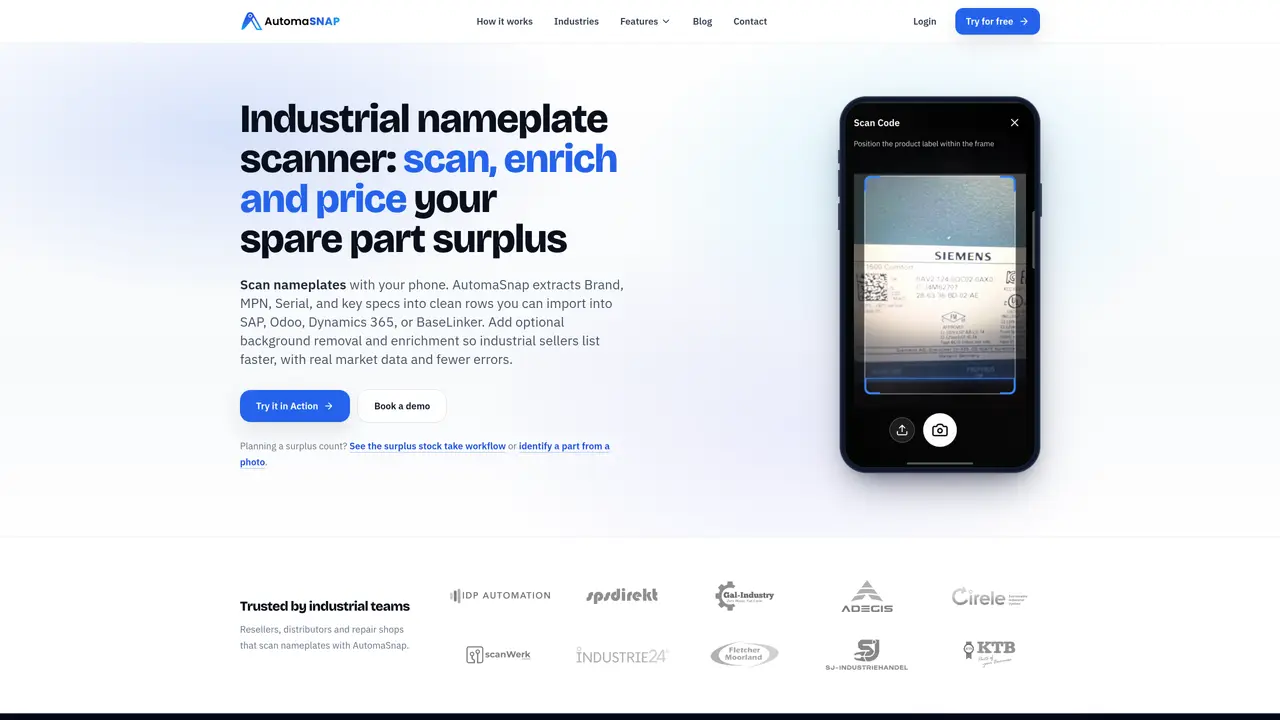
AutomaSnap is an AI-powered nameplate and product intake tool designed to transform photos of labels into clean, market-ready listings suitable for ERP systems. It uses AI OCR to extract key details such as brand, MPN, serial numbers, and specifications directly from shop-floor photos. The tool enriches extracted data with real market information, including GTIN/UPC codes, suggested prices, and SEO-optimized titles and descriptions. AutomaSnap also handles background removal, QR and barcode scanning, and exports data in spreadsheet formats or syncs directly with e-commerce platforms like Shopify, WooCommerce, and eBay. By automating manual data entry, it reduces errors and significantly accelerates listing and inventory workflows for businesses managing product catalogs or inventory systems. The platform is particularly useful for manufacturers, distributors, and retailers who need to digitize and standardize product information quickly and accurately.
Key features
- AI OCR for extracting brand, MPN, serials, and specs from label photos
- Background removal for cleaner product images
- QR and barcode scanning capabilities
- Enrichment with GTIN/UPC codes and market data
- Suggested pricing and SEO-optimized titles/descriptions
- Spreadsheet export and direct sync with Shopify, WooCommerce, eBay, and ERP systems
- Reduces manual typing and errors in product listings
- Speeds up inventory and listing workflows
Use cases
- Digitizing product catalogs from physical labels for ERP integration
- Automating inventory updates by extracting data from shop-floor photos
- Generating market-ready product listings for e-commerce platforms
Pros
- Extracts brand, MPN, serial numbers, and specifications directly from shop-floor photos using AI OCR
- Enriches extracted data with real market information such as GTIN/UPC codes, suggested prices, and SEO-optimized titles
- Supports background removal, QR and barcode scanning, and direct publishing to e-commerce platforms
- Reduces manual data entry errors and accelerates listing and inventory workflows
- Designed for industrial environments, handling imperfect photos and complex nameplates
Cons
- Requires clear photos of nameplates for accurate OCR extraction
- Limited to use cases involving physical product labels or nameplates
- May not support all niche or proprietary label formats without customization
Frequently asked questions about AutomaSnap
What does AutomaSnap do?
AutomaSnap is an AI-powered tool that scans nameplates and labels from photos to extract product details like brand, MPN, serial numbers, and specifications. It then enriches this data with market information such as GTIN/UPC codes and suggested prices, and prepares it for ERP systems or e-commerce platforms.
Who is AutomaSnap suitable for?
The tool is designed for industrial resellers, distributors, repair shops, warehouse managers, and e-commerce specialists who need to digitize and standardize product information quickly and accurately from physical labels or nameplates.
How does AutomaSnap integrate with other systems?
AutomaSnap exports data in spreadsheet formats compatible with ERP systems like SAP, Odoo, and Dynamics 365, and supports direct publishing to e-commerce platforms such as Shopify, WooCommerce, eBay, PrestaShop, and BaseLinker.
What types of labels or nameplates can AutomaSnap read?
The tool is optimized for industrial nameplates and labels, including those with complex layouts, multiple fields, or mixed text styles. It supports QR codes, barcodes, and standard text fields.
Can AutomaSnap be used for surplus stock inventory?
Yes, AutomaSnap is designed to digitize surplus spare parts inventory by scanning nameplates with a phone, extracting key details, and preparing the data for import into inventory or ERP systems.
How do I get started with AutomaSnap?
Users can start by taking a photo of a nameplate or label using the AutomaSnap app. The tool then processes the image, extracts and enriches the data, and allows the user to review and export the results for further use.