
AI platform for upscaling images, enhancing photos, and generating high-quality creative assets with contextual detail.

Cursive Translator
929Monthly visits
0Popularity
About Cursive Translator
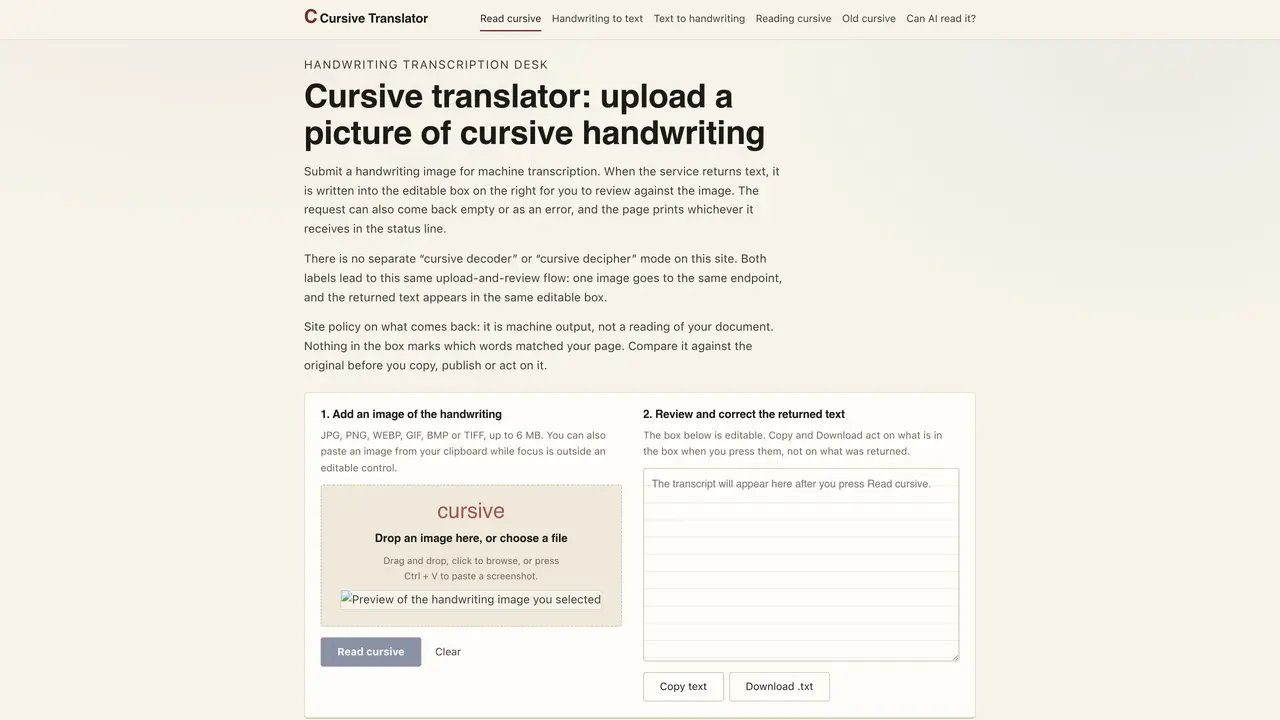
Cursive Translator accepts image files containing cursive handwriting and returns machine-generated text for editing. Users upload a JPG, PNG, WEBP, GIF, BMP or TIFF file up to 6 MB or paste an image from the clipboard. The service processes the image in the browser and sends it to an external endpoint which forwards the request to Google Cloud Vision for transcription. The returned text appears in an editable box where users can review, correct and copy it. The page provides no confidence scores, highlighting or other response fields to indicate which words matched the original. Users are instructed to compare the returned text against the image before using it. The tool operates without requiring an account or installation and handles each request independently without storing images or text.
Key features
- Image upload via drag and drop, file selection or clipboard paste
- Real-time transcription of cursive handwriting to text
- Editable text output for manual correction
- Downloadable text file with original filename
- Status line reporting of transcription results
- Client-side file type and size validation
- No persistent storage of user data
- Lightweight web interface with no installation
Use cases
- Transcribing handwritten notes or letters for digital editing
- Converting cursive text from scanned documents into editable text
- Reviewing historical or personal handwritten documents
Pros
- No account or installation required
- Supports multiple image formats (JPG, PNG, WEBP, GIF, BMP, TIFF)
- Processes images entirely in the browser before external submission
- Editable output for manual review and correction
- No storage of uploaded images or returned text on the service side
Cons
- Limited to English language processing
- Single image per request
- No confidence values or highlighting for verification
- Maximum file size of 6 MB
Frequently asked questions about Cursive Translator
What does Cursive Translator do?
Cursive Translator converts images of cursive handwriting into editable text using machine transcription. Users upload an image file or paste from the clipboard, and the service processes it in the browser before sending it to Google Cloud Vision for transcription.
Who is Cursive Translator suitable for?
The tool is designed for individuals or professionals who need to digitize handwritten notes, letters, or documents written in cursive. It is particularly useful for historians, genealogists, students, or anyone working with handwritten materials.
Does Cursive Translator require an account or installation?
No, Cursive Translator operates without requiring an account or any installation. Users can start transcribing immediately by uploading an image or pasting from the clipboard.
How does Cursive Translator handle uploaded images and text?
The service processes each request independently and does not store images or text. The image is sent to an external endpoint which forwards it to Google Cloud Vision, and only the returned text is displayed for review.
What image formats does Cursive Translator support?
The tool supports JPG, PNG, WEBP, GIF, BMP, and TIFF formats. Images larger than 6 MB are refused in the browser and not sent for processing.
How accurate is the transcription provided by Cursive Translator?
The transcription is machine-generated and may contain errors. The service provides no confidence scores or highlighting, so users are instructed to carefully review the returned text against the original image before using it.
Cursive Translator Website Engagement
Last Update: 9 days ago
Total Monthly Visits
0
Bounce Rate
0%
Visit Duration (avg)
—
Pages Per Visit
0
Country Rank
—
Unknown
Global Rank
—