Enhance learning with AI-driven flashcards, tests, and games.
72M visits/mo+70.8%#1 Lifestyle & Education
Subscription-based platform teaching UK children AI literacy through gamified missions
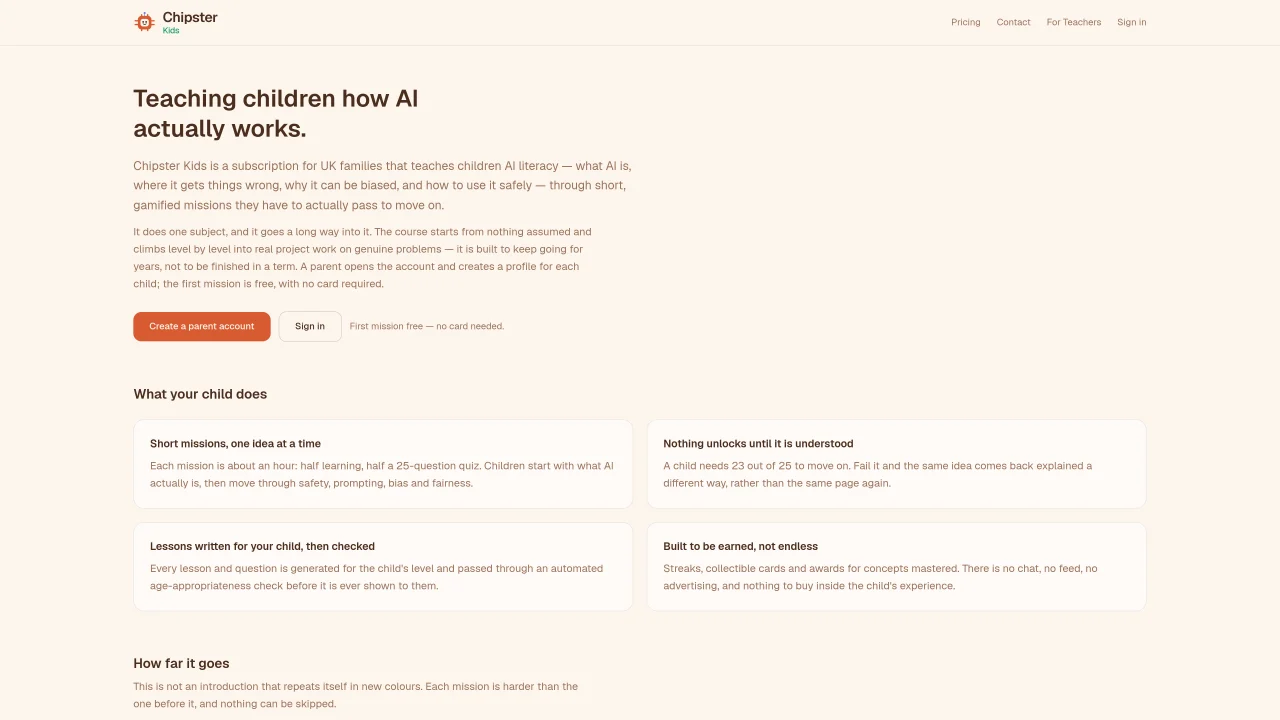
Chipster Kids is a subscription service for UK families that teaches children AI literacy through structured, gamified missions. The platform begins with foundational concepts such as what AI is, where it can fail, and how it can be biased, progressing to more advanced topics like prompting, fairness, and model learning. Each mission is approximately one hour long, combining short lessons with a 25-question quiz. Children must achieve a score of 23 out of 25 to advance, and if they fail, the concept is re-explained in a different way rather than repeating the same material. Lessons and questions are generated based on the child’s level and automatically checked for age appropriateness before being presented. The course is designed to span years, with each mission building on the previous one and no skipping allowed. It culminates in real project work that addresses genuine problems, rather than superficial introductions. The platform is designed for children aged five and up, with no prior computing knowledge required. Parents create and manage accounts, and the child’s experience is free of chat, feeds, advertising, and in-app purchases.
Chipster Kids is a UK-based subscription service that teaches children AI literacy through structured, gamified missions. It covers foundational concepts like what AI is, where it can fail, and how it can be biased, progressing to advanced topics such as prompting, fairness, and model learning.
The platform is designed for children aged five and up, with no prior computing knowledge required. Parents create and manage accounts, and the child’s experience is free of chat, feeds, advertising, and in-app purchases.
Each mission lasts about an hour and combines short lessons with a 25-question quiz. Children must score at least 23 out of 25 to advance. If they fail, the concept is re-explained differently rather than repeating the same material. Lessons and questions are generated based on the child’s level and checked for age appropriateness.
No, the course is designed to span years with each mission building on the previous one. Nothing unlocks until it is genuinely understood, and children cannot skip forward. The course culminates in real project work addressing genuine problems.
Chipster Kids offers a monthly subscription for £15.99 per child and an annual subscription for £159.99 per child, which saves approximately 17%. Additional children can be added for £7.99 per month per child. Prices include UK VAT, and subscriptions can be canceled at any time.
The platform prioritizes safety and privacy with strict defaults. Only parents can register, and children never sign up or enter an email address. No real names, photographs, schools, or locations appear publicly. The leaderboard shows nicknames only and is optional. Children cannot type freely to the AI and select questions from a list instead.
We use essential cookies to run aitoolnavio™, and optional cookies to analyze traffic and measure our marketing. You choose what we use — optional cookies stay off unless you turn them on. See our Privacy Policy.
One short email a week: fresh tools worth trying, honest takes and the updates that actually matter. No spam, unsubscribe any time.
Enhance learning with AI-driven flashcards, tests, and games.
Automatically check student papers for plagiarism, generate originality reports, and offer powerful grading tools.
Create interactive lessons, track student progress, deliver assessments for personalized learning.
Practice coding challenges, improve technical skills, get detailed explanations, compare performance with peers.
AI-powered homework help with step-by-step textbook solutions, expert Q&A, writing tools, and exam prep.
Easily create and track training courses, design learning environments, and access from any device with an intuitive interface.
AI-generated text detector with 99.98% verified accuracy, supporting 20+ languages and integrations with LMS platforms.
Solve math problems, learn topics from basic to advanced, and get hints and insights for difficult problems.
Revolutionize education with AI: lesson planning, IEPs, assessments, enhanced communication.
Online language-learning platform offering interactive courses, progress tracking, rewards, and personalized feedback for all skill levels.
IB and MYP exam prep platform with 35k+ practice questions, AI grading, flashcards, and study tools for students and schools.
AI-powered learning app that helps students and pupils organize study materials, stay motivated, and improve grades with smart tools and features.
Matched on what this tool does — grouped by the job you would be replacing.
matches Gamified AI literacy missions · 25-question quizzes with 23/25 pass threshold · Automated age-appropriateness checks
Personalized learning pathways, interactive lessons, quizzes, and gamified rewards to engage and motivate students.
An AI-powered interactive buddy app that helps children learn through gamified, conversational experiences and rewards.
A safe and engaging AI playground tailored for children's learning.
Gamified learning platform for mastering AI tools through bite-sized lessons
matches Collectible cards and awards for concepts mastered · Progress reports for parents
matches Automated age-appropriateness checks
An AI story generator for parents and teachers that creates age-appropriate children’s stories with custom illustrations, audio narration, and exports for sharing.
AI storyteller creating personalized, illustrated, and narrated children's books to help kids in hospital understand medical journeys.
Generates personalized English bedtime stories for children based on interests and themes
Creates AI-generated personalized children's storybooks with custom art and narration
AI-powered read-along companion that adapts to children's reading pace, enhancing literacy skills through personalized, interactive learning.
AI-powered reading tutor that personalizes lessons for children, especially those with dyslexia, using speech recognition and story generation.
App that guides parents to read personalized stories aloud with dialogic prompts