
AI-powered medical search engine that delivers synthesized, cited answers from peer-reviewed research for clinicians.

Emedgene
0Popularity
About Emedgene
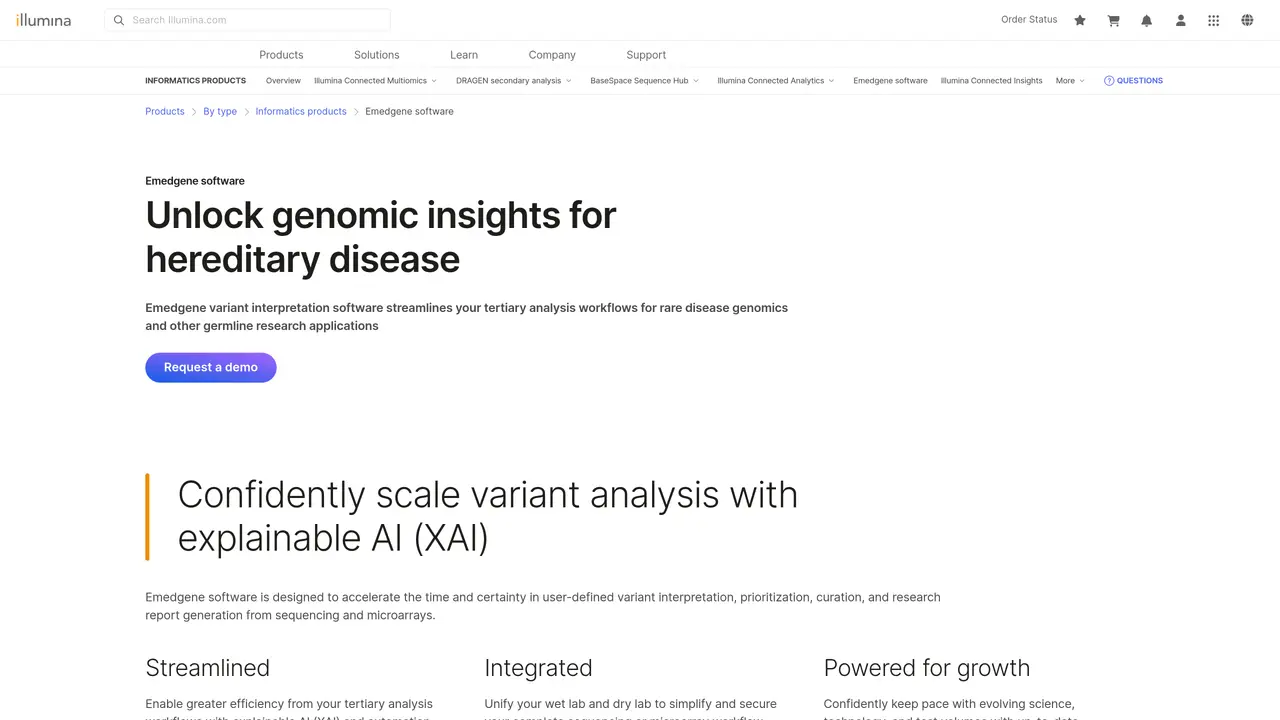
Emedgene is a powerful, AI-driven platform designed to help healthcare professionals accurately diagnose and manage genetic conditions. Our service uses advanced algorithms to analyze patient data, including genetic test results and family history, to identify genetic variants and generate actionable insights. Additionally, we provide evidence-based clinical resources to ensure that healthcare providers can make informed decisions. With Emedgene, healthcare providers can get up-to-date, comprehensive information and make accurate diagnoses quickly and easily. This saves time, improves patient outcomes and reduces costs. Our service is accessible via web and mobile applications, making it easy to use and ensuring that healthcare providers can access the information they need whenever and wherever they need it. With Emedgene, healthcare professionals can provide the best possible care for their patients.
Key features
- Automatically extract patient data
- Identify genetic variants
- Generate actionable insights
- Accessible via web and mobile applications
- Evidence-based clinical resources
Use cases
- Diagnosing and managing genetic conditions in healthcare settings
- Improving patient outcomes through accurate diagnoses and informed decisions
- Reducing costs by streamlining diagnosis and treatment processes
Pros
- Uses AI-driven algorithms to analyze genetic test results and family history for variant interpretation
- Provides evidence-based clinical resources to support informed decision-making
- Accessible via web and mobile applications for convenient use
- Designed to improve diagnostic accuracy and reduce time to diagnosis
- Integrates with genomic and multiomic software for comprehensive insights
Cons
- Primarily focused on genetic and rare disease applications, limiting broader medical use cases
- Requires input of detailed patient data, which may not always be available or complete
- Dependent on the quality and accuracy of underlying genetic test data
- May involve a learning curve for healthcare professionals unfamiliar with genomic analysis
Frequently asked questions about Emedgene
What is Emedgene and what does it do?
Emedgene is an AI-driven platform designed to assist healthcare professionals in interpreting genetic test results and identifying clinically relevant genetic variants. It integrates patient data, such as genetic test results and family history, to generate actionable insights for accurate diagnosis and management of genetic conditions.
Who should use Emedgene?
Emedgene is intended for healthcare professionals, including geneticists, clinicians, and researchers, who need to interpret genetic data for diagnosing and managing genetic disorders. It is particularly useful for those working in clinical genetics, rare disease diagnosis, and precision medicine.
How does Emedgene work?
Emedgene uses advanced AI algorithms to analyze genetic data, including variant interpretation and clinical evidence. It cross-references patient information with databases and scientific literature to provide evidence-based insights and recommendations for diagnosis and treatment.
What are the key features of Emedgene?
Emedgene offers AI-powered variant interpretation, integration of patient data, access to clinical resources, and evidence-based insights. It supports germline variant analysis and provides tools for generating comprehensive reports to aid clinical decision-making.
Does Emedgene integrate with other systems?
Yes, Emedgene is designed to integrate with existing genetic testing workflows and laboratory information systems. It supports data import and export to streamline the interpretation process and ensure compatibility with clinical workflows.
How can I get started with Emedgene?
To get started with Emedgene, healthcare professionals or organizations can contact the company for access, training, and onboarding. The platform is accessible via web and mobile applications, allowing users to begin interpreting genetic data and generating reports.