GitHub hosts HunyuanVideo, Tencent's open-source framework for large-scale video generation models, enabling AI-driven video creation.

DeepMind
4MMonthly visits
60Popularity
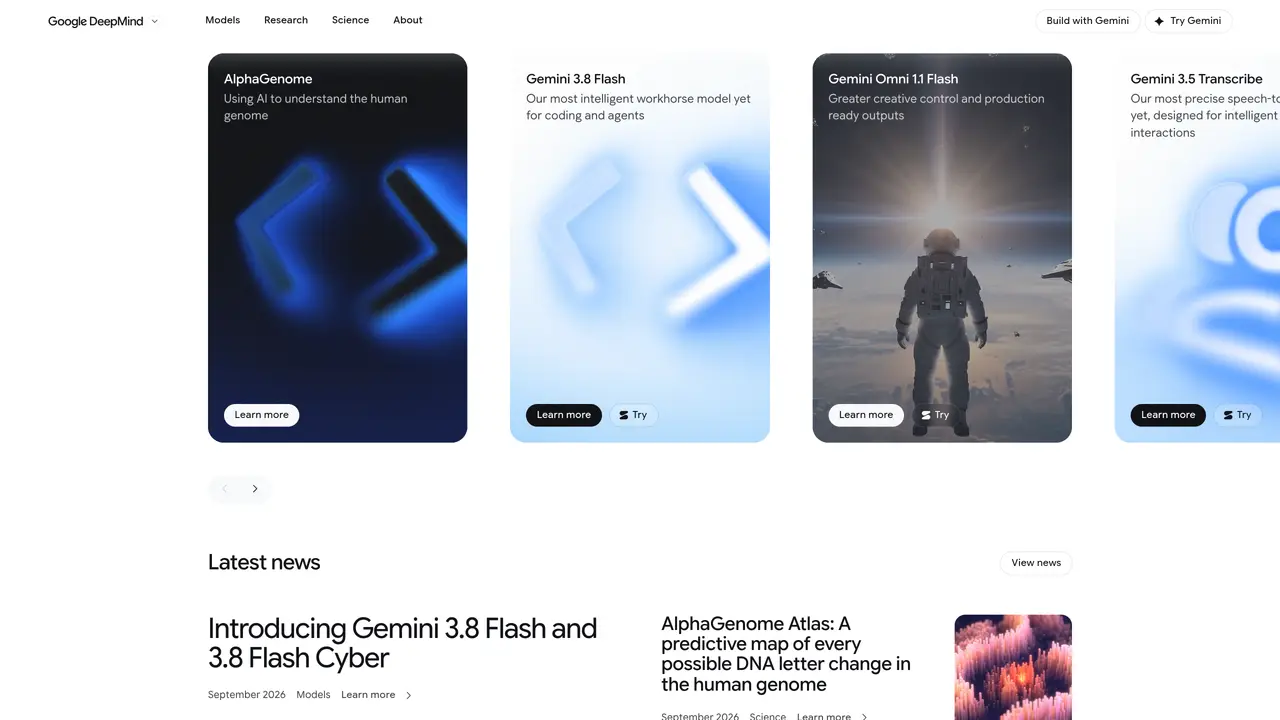
About DeepMind
Google DeepMind is a leading AI research lab focused on advancing artificial intelligence to address fundamental challenges in science, healthcare, and technology. The organization develops cutting-edge AI systems that bridge rigorous research with practical applications, ranging from protein folding and climate modeling to medical diagnostics and large-scale language models. DeepMind’s work is driven by scientific curiosity and a commitment to ethical responsibility, ensuring that innovations translate into measurable societal benefits. Its models have achieved groundbreaking results in areas such as protein structure prediction, energy efficiency optimization, and reinforcement learning, while also pushing the boundaries of generative AI. By partnering with academic institutions, governments, and healthcare providers, DeepMind ensures its technologies are deployed responsibly and effectively across diverse fields. The lab also releases open models like Gemma to promote responsible AI development at scale, alongside specialized tools for robotics, genomics, and scientific discovery.
Google DeepMind
London, United Kingdom · Founded 2010
- Founders
- Shane Legg, Demis Hassabis
- Founded
- 2010
- Headquarters
- London, United Kingdom
Key features
- AlphaFold for protein structure prediction
- AlphaGo and AlphaZero for reinforcement learning
- Energy optimization in large-scale data centers
- Gemini model series for multimodal AI
- Healthcare diagnostics and medical imaging AI
- Ethical and responsible AI development practices
- Open-source tools and published research papers
- Collaborations with academic and government institutions
Use cases
- Accelerating drug discovery through protein structure prediction
- Optimizing energy efficiency in data centers and infrastructure
- Advancing medical research and diagnostic support with AI
Pros
- Pioneers breakthroughs in AI research with applications across science, healthcare, and technology
- Develops both proprietary and open-source models, enabling broad accessibility and innovation
- Integrates ethical AI principles and safety measures into all research and deployments
- Collaborates with academic, governmental, and industry partners to scale real-world impact
- Offers specialized models for diverse domains, including genomics, weather forecasting, and robotics
Cons
- High computational and resource requirements for training and deploying advanced models
- Complexity in implementation may pose challenges for non-expert users
- Ethical and safety considerations require ongoing oversight and governance
DeepMind videos
Frequently asked questions about DeepMind
What is Google DeepMind?
Google DeepMind is an AI research lab under Google that develops advanced artificial intelligence systems to solve complex challenges in science, healthcare, and technology. It combines fundamental research with real-world applications.
Who should use Google DeepMind's AI models?
Researchers, developers, scientists, and organizations seeking cutting-edge AI capabilities in fields like genomics, robotics, weather forecasting, and creative media. Its tools are designed for both technical experts and collaborative partners.
How does Google DeepMind ensure the safety and ethics of its AI systems?
DeepMind integrates proactive safety measures, rigorous evaluations, and ethical frameworks into its research and deployments. It collaborates with global partners to address emerging risks and aligns with responsible AI principles.
What types of AI models does Google DeepMind offer?
The lab provides a range of models, including proprietary systems like AlphaFold and Veo, as well as open models like Gemma. It also develops specialized tools for robotics, genomics, and scientific discovery.
Can Google DeepMind's models be integrated with other tools or platforms?
Yes, DeepMind offers APIs and developer tools to integrate its models with external applications. It also collaborates with partners to ensure compatibility and scalability across different systems.
How can someone get started with Google DeepMind's AI tools?
Prospective users can explore available models and APIs through Google’s developer platforms, such as Google AI Studio or the Gemini app. Documentation and resources are provided to support integration and experimentation.
DeepMind Website Engagement
Last Update: 9 days ago
Total Monthly Visits
0
Bounce Rate
0%
Visit Duration (avg)
0.00s
Pages Per Visit
0
Country Rank
0
United States
Global Rank
0
Category Rank
#0
Ai Chatbots & Tools
Monthly Traffic
Traffic Sources
Traffic Share By Country
- United States21.3%
- India13.7%
- China5.7%
- United Kingdom3.9%
- Germany3.1%