
AI-powered medical search engine that delivers synthesized, cited answers from peer-reviewed research for clinicians.

NNScholar Bureau
$9.90Starting price
0Popularity
About NNScholar Bureau
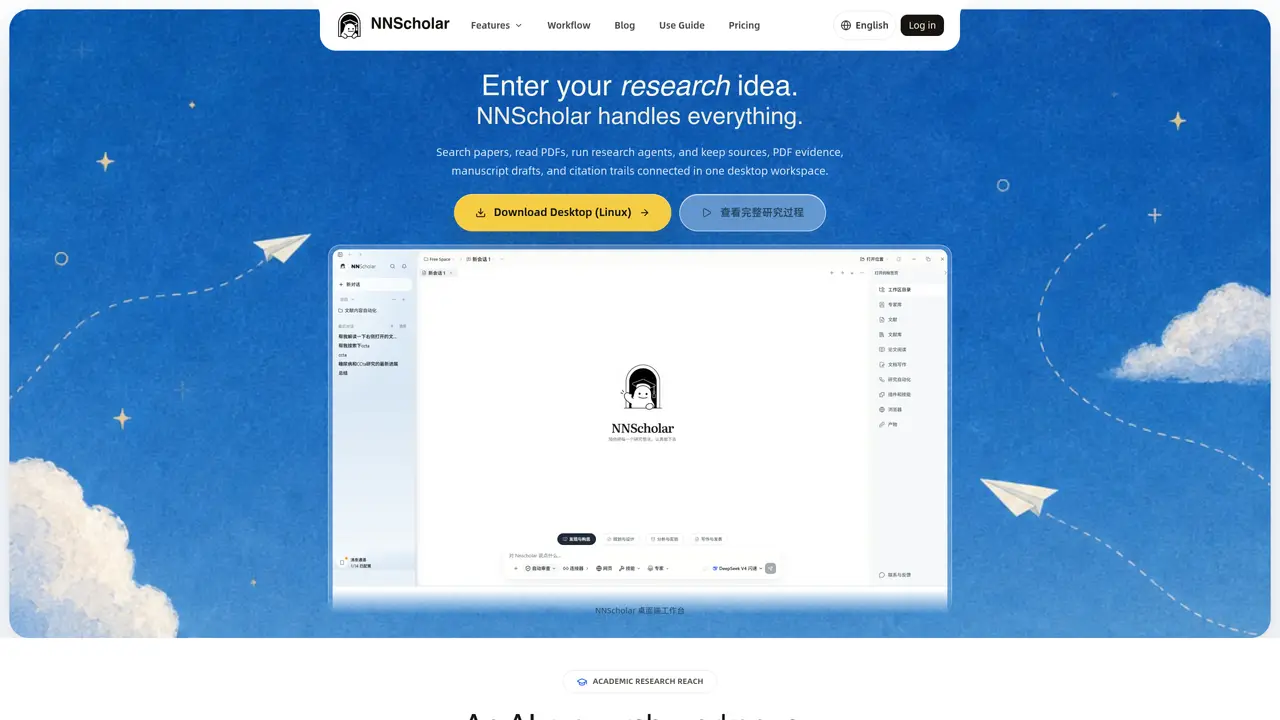
NNScholar Bureau provides an integrated AI research workspace for academic projects. It supports literature discovery from research questions, DOIs, PMIDs or arXiv entries, allowing users to save relevant papers into connected projects. The tool includes PDF interaction features such as translation, annotation and contextual questioning within academic papers. A centralized research space maintains papers, notes, conversations, project stages and outputs as work progresses. AI academic writing workflows assist in transforming evidence into outlines, drafts, figures and submission materials. The platform offers AI research agents that organize evidence, verify sources and suggest next steps, alongside an evidence board that links claims, sources, decisions and risks. Citation tracing follows references and topic updates from seed literature to validate claims before submission.
Key features
- AI literature review from research questions or identifiers
- PDF translation, annotation and contextual questioning
- Centralized research library with notes and outputs
- AI writing workflows for outlines, drafts and figures
- AI research agents for evidence organization
- Evidence board for claims, sources and decisions
- Citation tracing for reference validation
- Academic skills reuse for review and synthesis
Use cases
- Conducting systematic literature reviews from initial question to final submission
- Analyzing and annotating academic PDFs with contextual AI assistance
- Managing research projects with connected evidence, notes and outputs
Pros
- Integrates literature search, PDF analysis and writing workflows in one workspace
- Supports multiple input types including research questions, DOIs and PMIDs
- Provides AI agents for evidence organization and source verification
- Maintains connected research materials across notes, papers and outputs
- Offers citation tracing to validate claims before submission
Cons
- Requires transition from web to desktop for serious projects
- No explicit mention of free tier or open API access
- Language support appears limited to French and English
Frequently asked questions about NNScholar Bureau
What is NNScholar Bureau?
NNScholar Bureau is an AI-powered research workspace designed to streamline academic workflows from literature discovery to paper submission. It integrates tools for literature search, PDF interaction, evidence management, and AI-assisted writing within a centralized platform.
Who is NNScholar Bureau suitable for?
The tool is designed for researchers, academics, and students who need to manage literature, analyze PDFs, organize evidence, and draft academic papers efficiently. It supports both individual researchers and teams working on long-term projects.
How does NNScholar Bureau handle literature discovery and screening?
Users can start with a research question, DOI, PMID, arXiv entry, or keywords to discover relevant papers. The platform uses AI to filter and recommend papers, allowing users to save and organize materials directly into connected projects for further analysis.
Can NNScholar Bureau read and interact with PDFs?
Yes, the tool enables contextual PDF reading, translation, annotation, and question-answering within academic papers. Users can highlight text, take notes, and discuss specific sections while maintaining a direct connection to the original source.
What is the difference between NNScholar Bureau's WebUse and Desktop versions?
WebUse is the browser-based version for quick setup and validation of workflows, while the Desktop version offers a more robust, long-term research environment for in-depth reading, continuous project management, and advanced features.
How does NNScholar Bureau ensure the reliability of AI-generated content and citations?
The platform includes an evidence board to link claims, sources, decisions, and risks, along with citation tracing to validate references. AI research agents organize and verify sources, ensuring that conclusions are traceable to original materials before submission.