An AI-driven experience management platform for enterprises to collect multi-channel feedback, analyze structured and unstructured data, and deliver actionable insights.

EvidenceGrid
$12Starting price
0Popularity
About EvidenceGrid
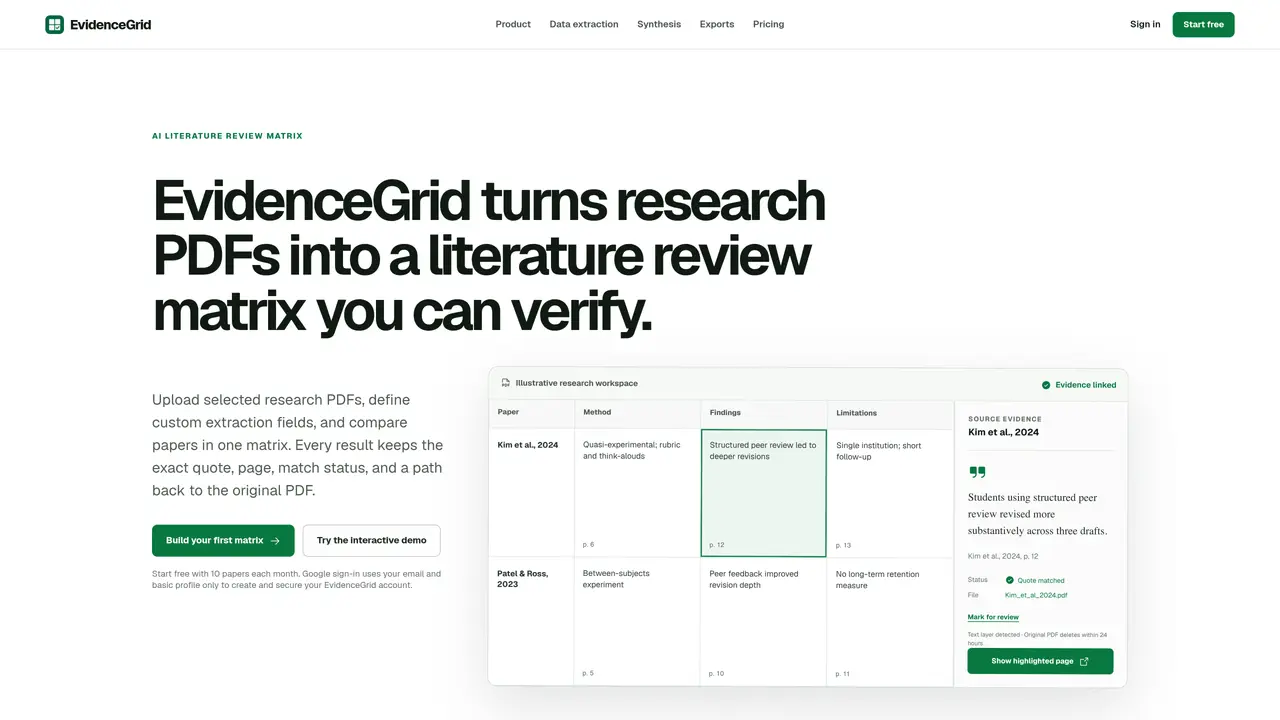
EvidenceGrid is a research workflow tool that converts PDF-based academic literature into structured literature review matrices. It extracts exact quotes, page numbers, source links, and metadata while preserving the original context of each citation. Researchers upload PDFs or reference files, then define custom extraction fields tailored to their specific research questions, such as study design, sample size, or key findings. The platform supports batch processing for large literature reviews, evidence verification with repair options to correct extraction errors, and cross-paper synthesis to identify themes, agreements, disagreements, limitations, and research gaps. Users can export matrices in multiple formats, including PDF, Word, Excel, or Obsidian, and optionally deliver results directly to reference managers like Zotero or note-taking tools such as Notion. Workspaces can be saved as reusable templates, enabling researchers to replicate extraction schemas across projects without rebuilding structures or re-uploading papers. The tool emphasizes reproducibility by maintaining traceable links between extracted evidence and original sources, facilitating transparent and verifiable literature reviews.
Key features
- PDF and reference file uploads (RIS, BibTeX, CSV)
- Custom extraction fields with evidence requirements
- Background extraction jobs for matrix population
- Evidence verification with quote matching and repair
- Cross-paper synthesis of themes and limitations
- Multiple export formats (PDF, Word, Excel, Obsidian)
- Direct delivery to Zotero and Notion
- Reusable workspace templates
Use cases
- Systematic literature reviews requiring verifiable evidence
- Academic research synthesis with structured extraction
- Thesis or research program documentation with traceable sources
Pros
- Retains exact quotes, page numbers, and source links for every extracted result
- Supports custom extraction fields and reusable templates
- Offers background extraction jobs and evidence verification with repair options
- Provides multiple export formats including PDF, Word, Excel, and Obsidian
- Includes optional direct delivery to Zotero and Notion
Cons
- Free plan limited to 10 papers per month
- No API access mentioned
- Requires PDF uploads or supported reference file formats
- EvidenceGrid account creation required
Frequently asked questions about EvidenceGrid
What is an AI literature review matrix?
An AI literature review matrix organizes comparable evidence from multiple research papers into structured fields. EvidenceGrid keeps each extracted answer linked to its exact quote, page number, match status, and source PDF, allowing researchers to verify the matrix before synthesis or export.
Who is EvidenceGrid designed for?
EvidenceGrid is designed for researchers, academics, and students who need to systematically extract, verify, and synthesize evidence from research PDFs. It supports structured literature reviews, systematic reviews, and evidence-based workflows.
How does EvidenceGrid handle pricing?
EvidenceGrid offers a Free plan that includes custom fields, reusable templates, evidence review, synthesis, file downloads, and Obsidian export. Paid plans provide additional features and higher usage limits; details are available on the pricing page.
What integrations does EvidenceGrid support?
EvidenceGrid supports direct delivery of verified evidence to Zotero and Notion. It also allows importing references in RIS, BibTeX, and CSV formats, and exporting results in PDF, Word, Excel, or Obsidian formats.
What are the limitations of EvidenceGrid?
EvidenceGrid requires supported PDFs for extraction, and its accuracy depends on the quality of the source material. Repair options are available for uncertain fields, but results may still require manual verification for complex claims.
How do I get started with EvidenceGrid?
To get started, create a workspace, define your research question, and choose a template or custom extraction fields. Upload research PDFs or import references, then extract and verify the evidence before exporting or synthesizing the results.