GitHub hosts HunyuanVideo, Tencent's open-source framework for large-scale video generation models, enabling AI-driven video creation.

Databricks
5.7MMonthly visits
63Popularity
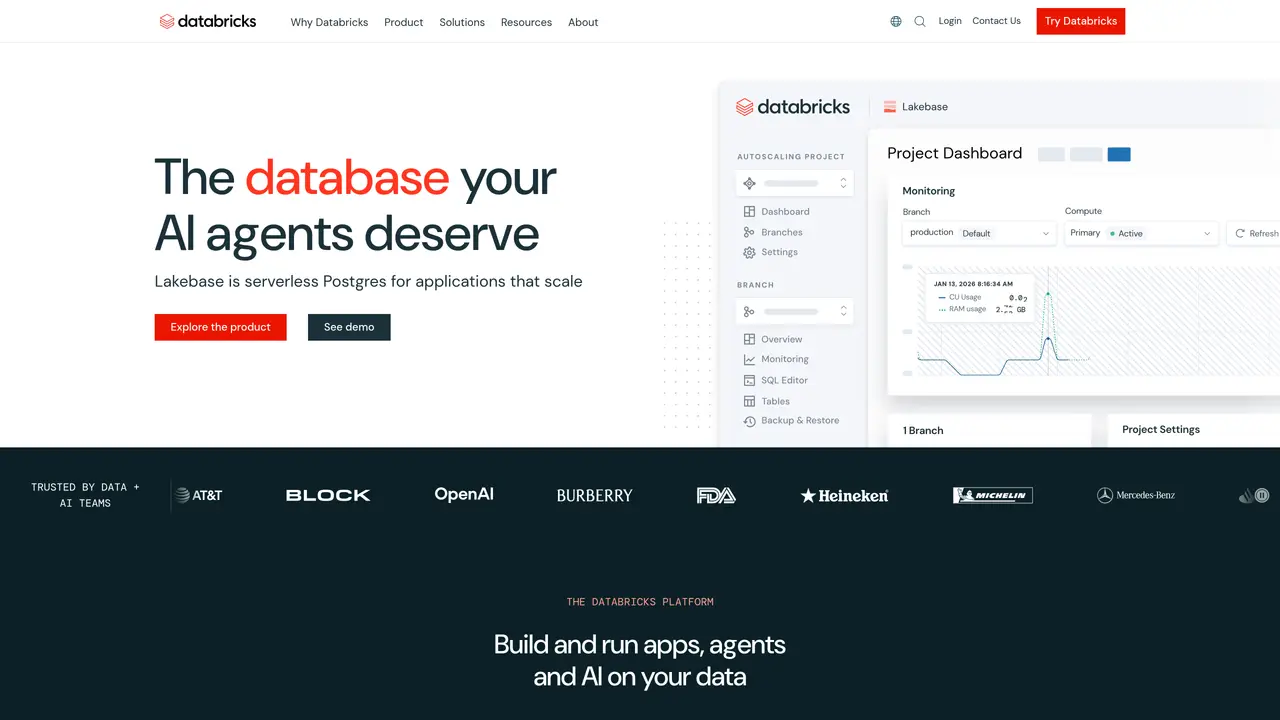
About Databricks
Databricks is a powerful cloud-based platform that enables data teams to collaborate and explore data faster. This platform offers an all-in-one solution to build, manage, and analyze data pipelines. With Databricks, you can easily transform large and complex datasets into actionable insights. Databricks is designed to help data teams of all sizes handle their data processing, creating a seamless workflow and allowing them to focus on what matters most. Whether you’re creating data models, deploying applications, or running analytics, Databricks helps you get the job done. The platform provides a unified analytics workspace for data scientists and engineers, allowing them to develop and run data jobs in a secure, distributed environment. With its intuitive user interface, users can manage their data pipelines with ease. Databricks also provides powerful machine learning algorithms, enabling users to quickly and accurately generate insights from their data.
Databricks
San Francisco, United States · Founded 2013
- Founders
- Ali Ghodsi, Ion Stoica, Reynold Xin, Matei Zaharia
- Founded
- 2013
- Headquarters
- San Francisco, United States
Key features
- Develop and run data jobs
- Transform complex datasets into actionable insights
- Leverage machine learning algorithms for insights generation
- Secure distributed environment for data processing
- Unified analytics workspace for data scientists and engineers
- Intuitive user interface for managing data pipelines
Use cases
- Data modeling and deployment
- Running analytics and generating insights
- Transforming complex datasets into actionable insights
Pros
- Unified analytics workspace combining data engineering, machine learning, and business analytics
- Scalable cloud-based platform for processing large and complex datasets
- Collaborative environment for data teams to work together seamlessly
- Supports end-to-end data pipeline management from ingestion to visualization
- Integrates with popular data sources, BI tools, and machine learning frameworks
Cons
- Can be complex to set up and configure for beginners
- Pricing model may be cost-prohibitive for small teams or individual users
- Requires cloud infrastructure knowledge for optimal use
Frequently asked questions about Databricks
What is Databricks and what does it do?
Databricks is a unified analytics platform that combines data engineering, machine learning, and business analytics. It provides a collaborative environment for data teams to build, manage, and analyze data pipelines, enabling the transformation of large datasets into actionable insights.
Who is Databricks designed for?
Databricks is designed for data scientists, data engineers, and analysts across organizations of all sizes. It supports teams that need to process, analyze, and derive insights from data in a secure and scalable cloud environment.
How does Databricks work with data pipelines?
Databricks offers an end-to-end solution for building, managing, and analyzing data pipelines. It allows users to ingest, transform, and process data at scale using a distributed computing framework, while providing tools for monitoring and optimizing pipeline performance.
What integrations does Databricks support?
Databricks integrates with a wide range of data sources, cloud platforms, and third-party tools, including AWS, Azure, Google Cloud, Apache Spark, Delta Lake, and various data warehouses and BI tools. It also supports open-source frameworks and custom integrations.
Can Databricks be used for machine learning?
Yes, Databricks provides built-in support for machine learning workflows, including model training, deployment, and monitoring. It includes MLflow for experiment tracking and model management, as well as scalable compute resources for running ML workloads.
How do I get started with Databricks?
To get started with Databricks, users can sign up for an account on the Databricks website and choose a cloud provider (AWS, Azure, or Google Cloud) to deploy the platform. Databricks offers documentation, tutorials, and quickstart guides to help users set up their first data pipeline or machine learning project.
Databricks Website Engagement
Last Update: 9 days ago
Total Monthly Visits
0
Bounce Rate
0%
Visit Duration (avg)
0.00s
Pages Per Visit
0
Country Rank
0
United States
Global Rank
0
Category Rank
#0
Programming & Developer Software
Monthly Traffic
Traffic Sources
Traffic Share By Country
- United States37.5%
- India19.9%
- United Kingdom6.9%
- Canada3.5%
- Brazil2.7%