AI-powered writing assistant for grammar, style, and tone improvements across documents and emails.

OpenAI Text Classifier
0Popularity
About OpenAI Text Classifier
The OpenAI Text Classifier is an innovative service designed to help identify the difference between text written by humans and text generated by artificial intelligence. This model uses sophisticated algorithms to analyze the content of any document and accurately classify it as either human-written or AI-generated. The AI Text Classifier provides an essential tool for anyone looking to make an informed decision on the origin of a particular piece of text. By using the AI Text Classifier, users can quickly and accurately determine the source of any text, allowing them to make informed decisions about the content. The model is trained on a variety of human-written documents, giving it the power to identify the difference between human-written and AI-generated content even in unfamiliar contexts. This makes the AI Text Classifier an invaluable resource for anyone interested in distinguishing between the two. The AI Text Classifier is easy to use and accessible to anyone.
OpenAI
San Francisco, California, US · Founded 2015
- Founders
- Sam Altman, Greg Brockman, Ilya Sutskever, Elon Musk, Wojciech Zaremba, John Schulman
- Founded
- 2015
- Headquarters
- San Francisco, California, US
- Legal status
- Private (capped-profit)
Key features
- Identify text origin
- Make informed decisions with accurate AI-generated content
- Quickly and accurately determine the source of any text
- Trained on a variety of human-written documents
- Easy to use and accessible to anyone
Use cases
- Distinguishing between human-written and AI-generated content
- Making informed decisions about the origin of a particular piece of text
- Identifying the source of any text with high accuracy
Pros
- Uses advanced algorithms trained on diverse human-written documents to distinguish AI-generated text from human-written content
- Provides a straightforward classification output indicating the likelihood of text being AI-generated
- Accessible via a web interface without requiring technical expertise to operate
- Designed to work across various contexts and types of text
- Offers a quick and automated way to assess text origin for decision-making purposes
Cons
- May not be 100% accurate due to the inherent complexity of distinguishing AI-generated text from human-written text
- Limited to text classification and does not provide explanations or detailed analysis for its results
- Dependent on the quality and diversity of training data, which may affect performance on niche or specialized content
- Not suitable for real-time or large-scale text analysis without additional integration or automation
Frequently asked questions about OpenAI Text Classifier
What does the OpenAI Text Classifier do?
The OpenAI Text Classifier is designed to identify whether a given text is more likely to be written by a human or generated by artificial intelligence.
Who should use the OpenAI Text Classifier?
It is intended for educators, researchers, publishers, and organizations that need to verify the authenticity of text content.
How does the OpenAI Text Classifier work?
The tool analyzes text patterns and characteristics to determine the likelihood of human or AI authorship based on its training data.
Can the OpenAI Text Classifier be integrated into other systems?
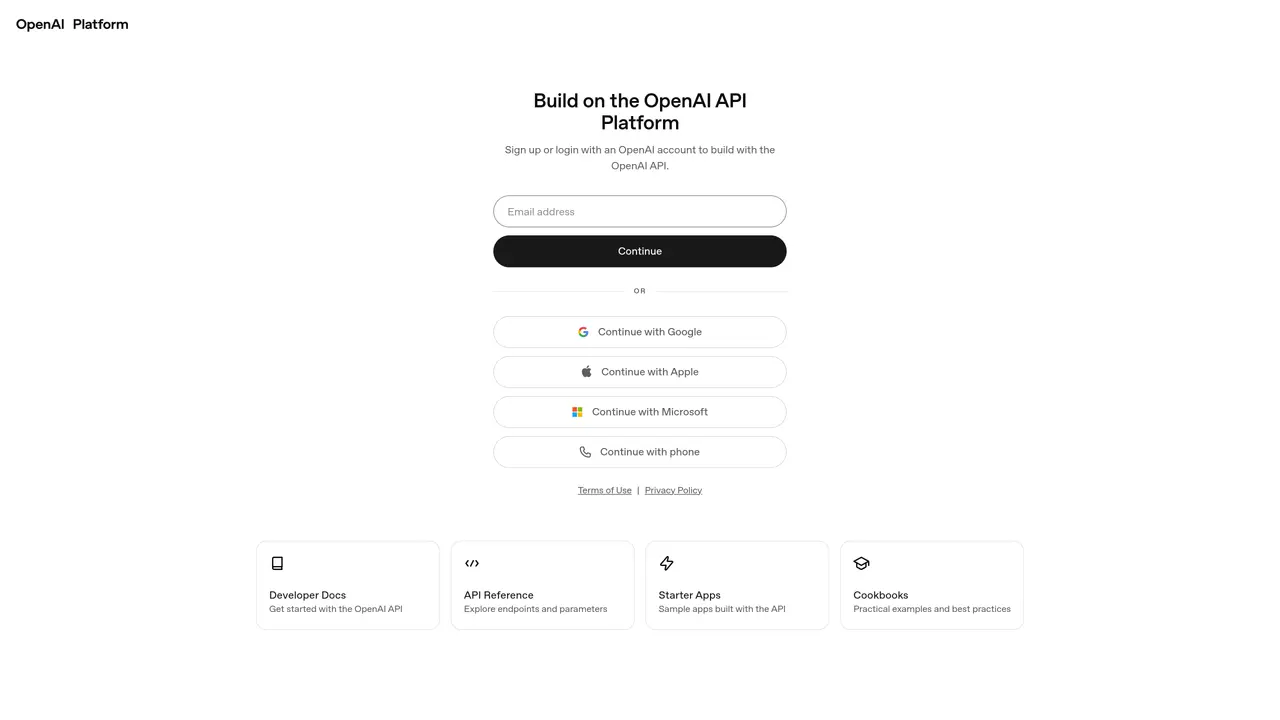
The classifier is accessible via the OpenAI platform and can be used programmatically through API calls for integration into workflows.
What are the limitations of the OpenAI Text Classifier?
It may struggle with very short texts or content that closely mimics human writing styles, and it is not foolproof.
How do I get started with the OpenAI Text Classifier?
Users can access the classifier through the OpenAI platform by submitting text for evaluation via the provided interface or API.