AI-powered writing assistant for grammar, style, and tone improvements across documents and emails.

Pixoraid AI
FreeStarting price
0Popularity
About Pixoraid AI
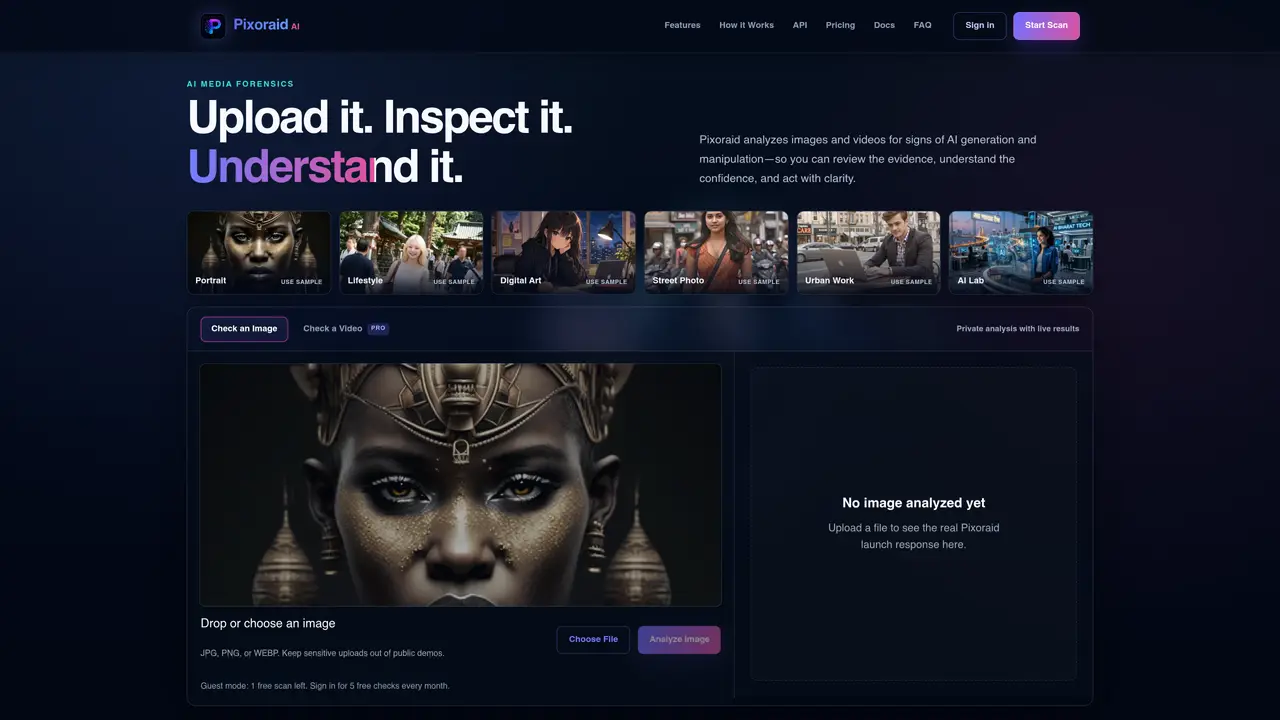
Pixoraid AI analyzes images and videos to identify signs of AI generation or manipulation. It uses a forensic detection engine that examines pixel patterns, frequency artifacts, semantic inconsistencies, and metadata to estimate the likelihood that an image is AI-generated. The tool provides a probability score with confidence bands and a breakdown of the signals that influenced the result. It supports both still images and video frames, offering frame-by-frame analysis for video content. Pixoraid emphasizes transparency by showing the forensic signals behind its verdicts, including noise patterns, edge density, EXIF data, compression artifacts, and more. The platform is designed for creators, platforms, journalists, and businesses who need to verify media authenticity before publication or moderation. It offers both a free demo path and a live backend scanner for private analysis, with results including review guidance for uncertain cases rather than forced binary verdicts.
Key features
- AI image and video detection
- 21 forensic signal extraction
- Probability scoring with confidence bands
- Frame-by-frame video analysis
- Metadata and EXIF inspection
- REST API with JSON response
- Human-readable evidence breakdown
- Private secure processing path
Use cases
- Verify authenticity of images before publication in journalism
- Moderate user-generated content on platforms
- Support academic integrity reviews in educational institutions
Pros
- Provides probability scores with confidence bands and transparent evidence
- Supports both images and video frames with frame-by-frame analysis
- Includes 21 forensic signal layers (noise, edges, EXIF, compression, etc.)
- Offers a REST API for integration into other platforms
- Handles uncertain cases with explicit 'uncertain' verdicts instead of forced decisions
Cons
- Guest mode limited to 1 free scan
- Signed-in users limited to 5 free checks per month
- Compression and re-encoding reduce reliability of results
- New AI models may initially have lower accuracy until represented in training data
Frequently asked questions about Pixoraid AI
What does Pixoraid AI actually detect?
Pixoraid AI analyzes images and videos to identify signs of AI generation or manipulation by examining pixel patterns, frequency artifacts, semantic inconsistencies, and metadata. It provides a probability score with confidence bands and a breakdown of the forensic signals influencing the result.
Who is Pixoraid AI designed for?
The tool is designed for creators, platforms, journalists, and businesses who need to verify media authenticity before publication or moderation. It supports both individual users and organizations building moderation workflows.
How does Pixoraid handle video content?
Pixoraid supports video analysis by providing a frame-by-frame AI probability breakdown, not just a single score for the entire clip. Users can upload videos from various generators and receive detailed forensic insights.
What kind of evidence does Pixoraid provide for its results?
Pixoraid offers a transparent breakdown of forensic signals, including noise patterns, edge density, EXIF data, compression artifacts, and more. Each verdict includes which signals triggered, their individual weights, and the reasoning behind the conclusion.
Can Pixoraid AI be integrated into other platforms?
Yes, Pixoraid provides a REST API with sub-second response times, allowing integration into any platform with a single POST request and JSON response for AI detection capabilities.
Does Pixoraid offer a free version or trial?
Pixoraid offers a free demo path with limited scans and a live backend scanner for private analysis. Users can sign in for additional free checks each month, with options for more extensive usage based on their needs.