
OpenAI builds and deploys advanced AI models like GPT-4o for autonomous agents and workflows.

AgentGit
Turns AI agent sessions into version-controlled Git repositories for developers and teams.
$1Starting price
About AgentGit
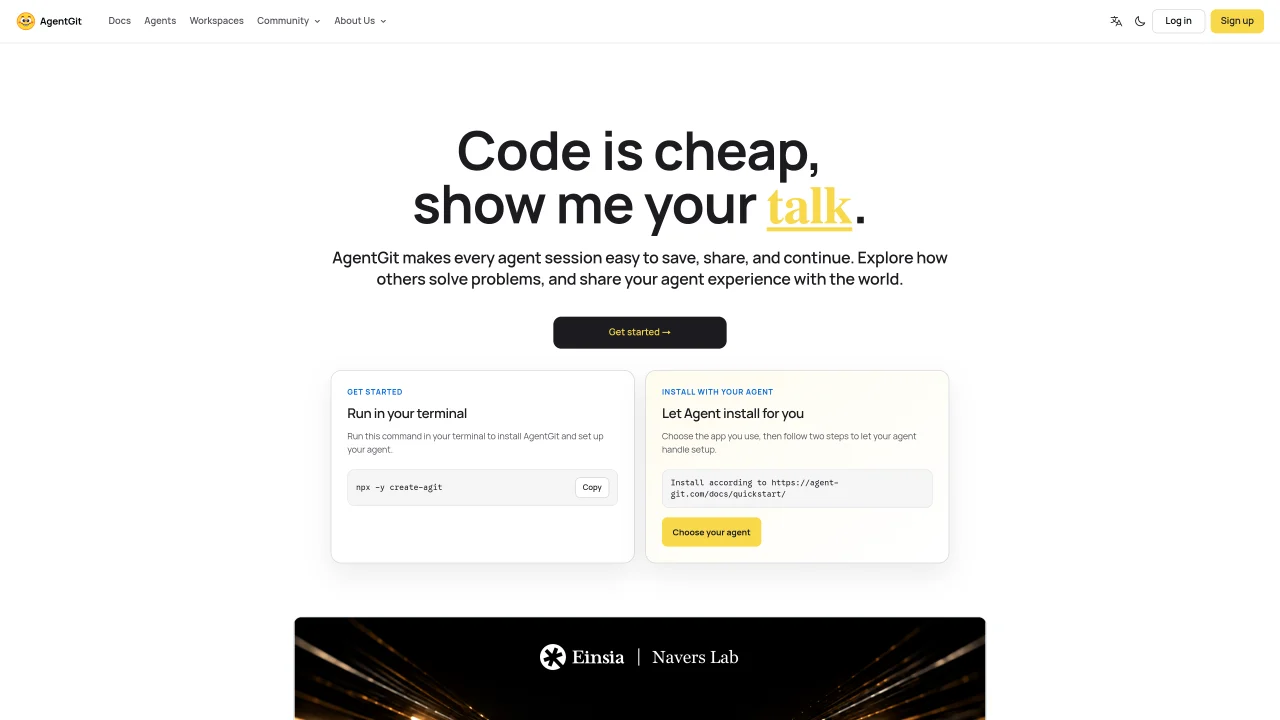
AgentGit is a Git-backed hub and command line tool that converts AI agent sessions into version-controlled histories for developers and teams using coding agents like Claude Code, Codex, Cursor, and OpenCode. Each prompt, tool call, and decision is committed to a dedicated repository, preserving context even when agent tabs close. This enables handing off work, resuming long-running sessions, and auditing how agents reached specific changes in the codebase. Sessions can be imported from supported runtimes and continued in compatible environments or shared as read-only histories. The tool also supports remote control workflows, allowing users to drive local agents from other devices and collaborate in real time. Published sessions appear on the hosted Hub with searchable links, enabling teams to review past decisions, milestones, and specific turns through CLI or MCP search tools. By treating agent conversations as primary Git artifacts, AgentGit integrates seamlessly with existing developer workflows while providing traceable, searchable records of AI-driven changes.
Key features
- Git-based session history with branches and commits
- Cross-agent import and handoff for supported runtimes
- Remote control workflows for multi-device collaboration
- Hosted Hub for sharing and searching session histories
- CLI and MCP search tools for finding past decisions
- Local-first storage with optional cloud synchronization
- Dedicated repositories for each agent conversation
- Read-only sharing links for external reviewers
Use cases
- Tracking and auditing AI-driven code changes in software engineering teams
- Resuming and reviewing long-running agent sessions for handoffs
- Publishing public agent session histories for research or educational purposes
Frequently asked questions about AgentGit
What happens to secrets in my sessions?
Secrets can appear in prompts, tool calls, and command output, so treat shared sessions like code review material. Before publishing or sharing a session, review it and remove anything sensitive. Read-only links do not grant write access.
Where is my data stored?
Sessions live in Git repositories on the hub you push to—by default agent-git.com. Your machine keeps a local store under ~/.agit/. Visibility follows the agent settings you chose at first push.
Does AgentGit run in the background?
No daemon watches your disk. Sessions enter version control when you import or push them; turns settle at the end of each user turn via hooks you install with 'agit setup'.
Which agent runtimes work with AgentGit?
Claude Code, Codex, OpenCode, OpenClaw, Hermes, and WorkBuddy support native resume. Cursor sessions can be imported read-only. Cross-runtime handoff may be lossy—AgentGit states losses before converting.
Can I delete or rewrite history in AgentGit?
Published history is append-only: no rebase or force-push. To undo, fork a new branch from an older turn and continue there.
How does sharing a link work in AgentGit?
Share a read-only web link to a published session. Anyone with the link can read the full transcript without an account; write access still requires authentication and grants.