OpenAI builds and deploys advanced AI models like GPT-4o for autonomous agents and workflows.

GitGhost
FreeStarting price
0Popularity
About GitGhost
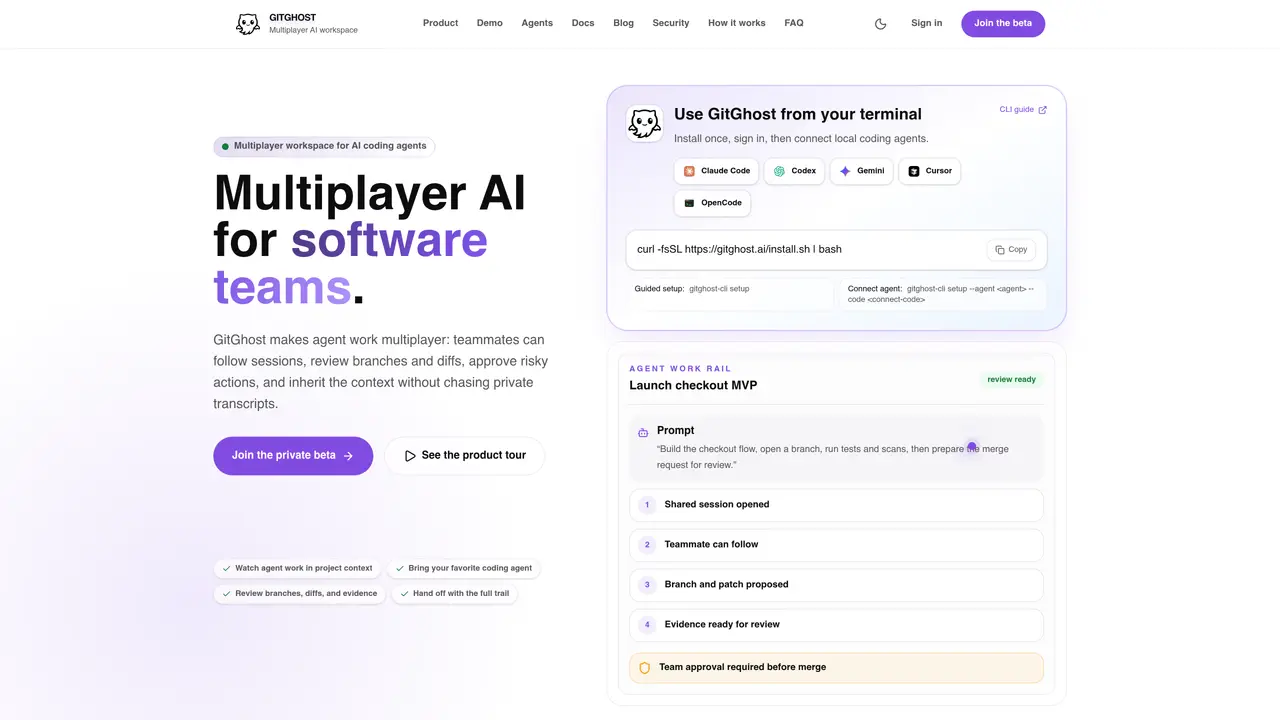
GitGhost provides a shared workspace where software teams can collaborate with AI coding agents. It connects local coding agents such as Claude Code, Cursor, Codex, Gemini, or OpenCode to a centralized platform where teammates can follow agent sessions, review branches and diffs, approve risky actions, and inherit context without relying on private transcripts. The tool integrates with project repositories, enabling teams to host repos, manage branches, and track commit context alongside AI-generated changes. It supports guided project setup, session checkpoints, patch proposals, and merge requests, all within a unified interface that includes AI chat, pipelines, security scans, and activity evidence. The platform emphasizes visibility, reviewability, and handoff trails, ensuring agent work is inspectable, reproducible, and mergeable. It is designed for mixed teams, allowing both technical and non-technical members to follow agent work while developers retain control over merge, policy, and review processes.
Key features
- Multiplayer workspace for AI coding agents
- Repository hosting with branch and commit tracking
- AI chat for product requests and guided setup
- Session checkpoints and patch proposals
- Merge request context with diffs and approvals
- Pipeline execution with logs and artifacts
- Security scans for code, dependencies, and secrets
- Shared project memory with provenance
Use cases
- Collaborative review of AI-generated code changes
- Tracking and approving agent work in shared repositories
- Handoff of agent sessions with full context and evidence
Pros
- Shared multiplayer workspace for AI agent collaboration
- Integrates with popular coding agents like Claude Code and Cursor
- Tracks agent sessions, branches, diffs, and approvals in one place
- Supports guided project setup and session checkpoints
- Includes pipeline execution, security scans, and evidence trails
Cons
- Requires joining a private beta
- Limited to agent-based workflows
- No explicit mention of free tier or pricing
Frequently asked questions about GitGhost
What is GitGhost and who is it designed for?
GitGhost is a multiplayer workspace for AI coding agents, designed for software teams that want to collaborate on agent-driven development. It allows teammates to follow agent sessions, review branches and diffs, approve risky actions, and inherit context without relying on private transcripts.
How do I get started with GitGhost?
Install the GitGhost CLI once, sign in, and connect your local coding agent such as Claude Code, Cursor, Codex, Gemini, or OpenCode. Use the guided setup to configure the agent and begin collaborating in a shared workspace.
What coding agents does GitGhost support?
GitGhost supports local coding agents including Claude Code, Cursor, Codex, Gemini, OpenCode, and others. The platform connects these agents to a centralized workspace for shared collaboration.
Can non-technical team members use GitGhost?
Yes, GitGhost is designed for mixed teams, allowing both technical and non-technical members to follow agent work while developers retain control over merge, policy, and review processes.
Does GitGhost provide repository hosting?
Yes, GitGhost includes repository hosting where agent work becomes reviewable. The project page connects file trees, branches, commit context, issues, merge requests, pipelines, security scans, and agent sessions behind each change.
How does GitGhost ensure the security and reviewability of agent work?
GitGhost provides security scans, pipelines, session checkpoints, patch proposals, and approval workflows. It maintains a shared trail of agent work, including transcripts, diffs, and evidence, to ensure inspectability, reproducibility, and mergeability.