
OpenAI builds and deploys advanced AI models like GPT-4o for autonomous agents and workflows.

Memmy
0Popularity
About Memmy
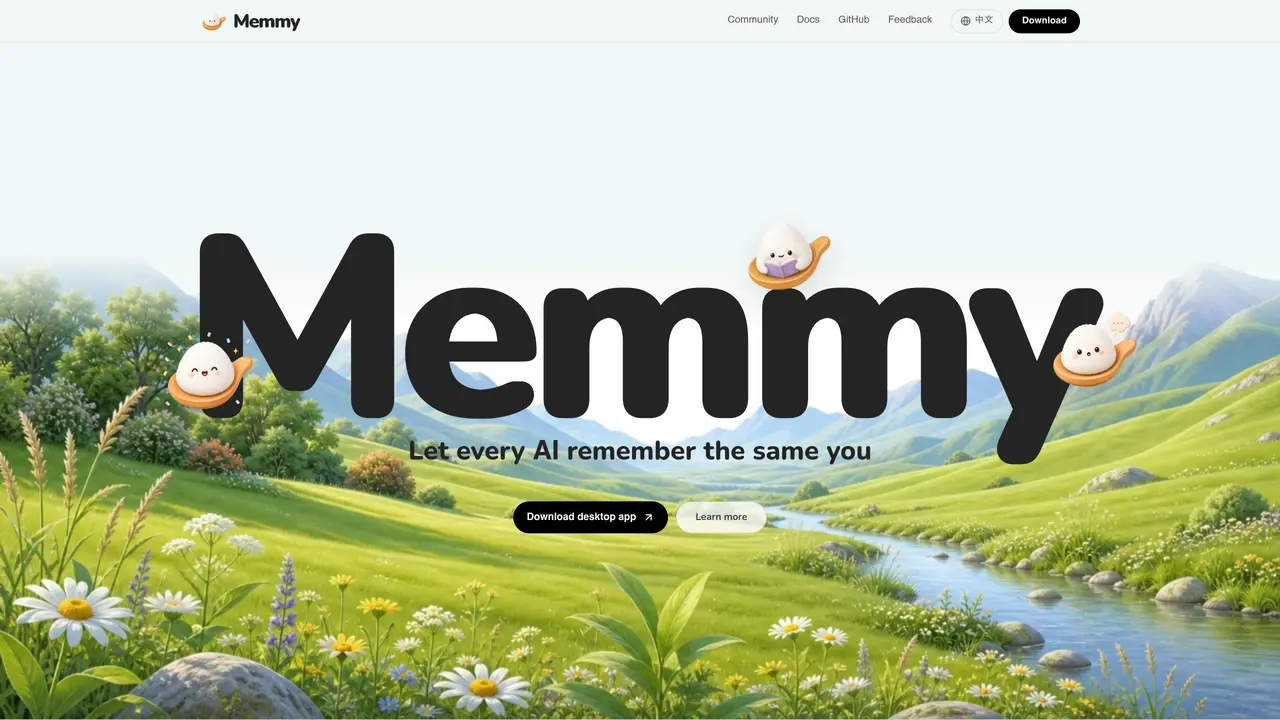
Memmy is a desktop application that stores and organizes AI conversation history locally on a user’s device. It scans and extracts preferences, decisions, and project context from AI tools such as Cursor, Claude, and Codex, then structures this information into searchable memory. When switching between AI agents, Memmy injects the relevant context into the new tool, reducing repetition and maintaining continuity. The tool can also perform tasks directly, such as merging plans or organizing material, acting as an agent itself. Memory is stored locally and never uploaded to remote servers, with users retaining full control over what is shared and when. Authorization is required for scanning, and users can revoke access or delete memories at any time.
Key features
- Local memory storage with user-controlled access
- Automatic scanning of AI collaboration history
- Structured memory organization with deduplication
- Context injection for AI tools on demand
- Direct task execution as an agent
- User-controlled sharing and deletion of memories
- Cross-platform desktop support (macOS, Windows)
- Open source with community feedback integration
Use cases
- Maintaining continuity when switching between AI coding assistants
- Tracking project decisions and preferences across multiple AI tools
- Reducing repetition in long-running AI-assisted development tasks
Pros
- Stores memory locally without cloud uploads
- Supports multiple AI tools including Cursor, Claude, and Codex
- Reduces repetition by carrying context between agents
- Allows direct task execution like merging plans or organizing material
- Open source with community-driven development
Cons
- Requires installation of a desktop application
- Limited to AI tools with local conversation history access
- No mobile or web version available
Frequently asked questions about Memmy
What is Memmy and what does it do?
Memmy is a desktop application that stores and organizes AI conversation history locally on a user’s device. It scans AI tools like Cursor, Claude, and Codex to extract preferences, decisions, and project context, then structures this information into searchable memory.
Who is Memmy designed for?
Memmy is built for people who work with multiple AI tools daily and need to maintain continuity across different agents without repeating context.
How does Memmy handle data security and privacy?
All memory data is stored locally on the user’s device and never uploaded to remote servers. Scans require explicit authorization, and users retain full control over what is shared or deleted.
Can Memmy perform tasks beyond memory management?
Yes, Memmy can act as an agent itself by performing tasks such as merging plans, organizing material, or continuing unfinished work based on stored context.
How do I get started with Memmy?
Download the desktop app for macOS or Windows, authorize scans of your AI tools, and Memmy will begin organizing your conversations into structured memory automatically.
Is Memmy open source?
Yes, Memmy is open source and encourages community feedback to improve its functionality and understanding of user preferences.