
OpenAI builds and deploys advanced AI models like GPT-4o for autonomous agents and workflows.

Oak
13KMonthly visits
19Popularity
About Oak
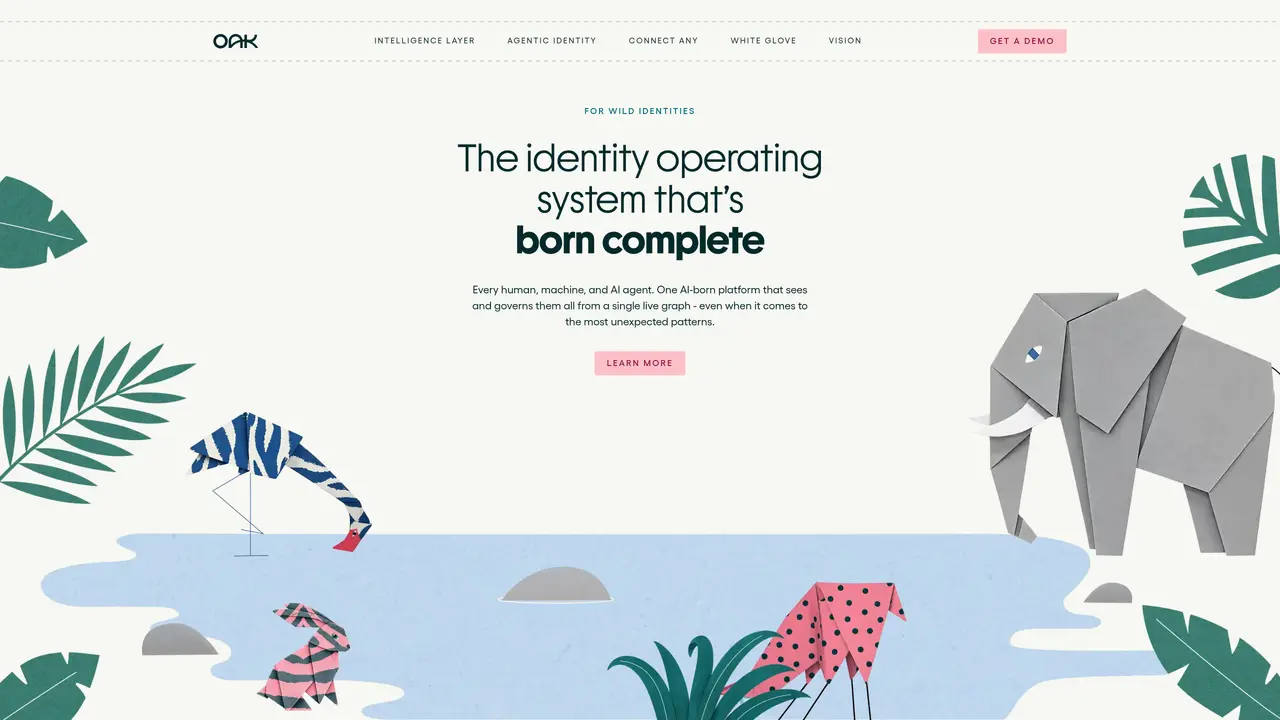
Oak is an AI-native identity operating system designed for security, platform, and identity teams managing complex, mixed environments. It connects to directories, applications, infrastructure, and agent runtimes to ingest identities and entitlements into a unified, queryable graph. The system enriches this data with behavior and relationships, then evaluates intent and context to govern access beyond static rule-based reviews. Oak continuously discovers humans, service accounts, machines, and AI agents, surfacing blind spots such as dormant permissions and over-privilege. Findings drive policies and remediation, enabling teams to approve, revoke, or right-size access directly from the system. Oak is built for enterprises facing identity fragmentation, inconsistent entitlement reviews, or blind spots around service accounts, providing centralized visibility and actionable leverage. It also supports organizations anticipating rapid growth in agent-driven automation by standardizing policy before complexity compounds. Deployment proceeds incrementally, with white-glove services accelerating migrations, policy modeling, and remediation workflows to reduce disruption to existing processes. Oak includes end-to-end connectors to normalize data into its graph and keep visibility and enforcement current as systems evolve.
Key features
- Continuously discovers humans, service accounts, machines, and AI agents across environments
- Unifies identities, entitlements, and relationships in one live, queryable identity graph
- Evaluates intent and context to govern access beyond static, rule-based reviews
- Surfaces blind spots and risky patterns, including dormant permissions and over-privilege
- Enables in-place remediation to revoke, right-size, or approve access with context
- First-class support for AI agents and service accounts
- End-to-end connectors for ingesting identities and permissions across environments
- Normalizes data into a unified data model for governance decisions
- Provides real-time access cleanup during merger integrations
- Offers white-glove services for migrations, policy modeling, and remediation workflows
Use cases
- Unify scattered identity stores into one live graph for centralized visibility
- Govern AI agent permissions with intent-aware policies
- Detect dormant service accounts before they cause risk
Pros
- Designed from the ground up as an AI-native identity operating system, ensuring native integration with modern identity governance needs.
- Provides a unified, live graph that consolidates identities across humans, machines, and AI agents into a single source of truth.
- Offers end-to-end connectors to normalize and ingest identity data from diverse directories, applications, and infrastructure.
- Enables governance based on intent and context rather than static rule-based reviews, improving accuracy and adaptability.
- Includes white-glove services for migration, policy modeling, and remediation to accelerate deployment and reduce disruption.
Cons
- Primarily targeted at enterprise-scale organizations, which may limit accessibility for smaller teams or simpler use cases.
- Implementation complexity may require dedicated resources or expertise to fully leverage its capabilities.
- Availability of white-glove services is restricted to qualified Fortune 500 organizations, potentially excluding mid-market customers.
Frequently asked questions about Oak
What is Oak and what does it do?
Oak is an AI-native identity operating system designed to govern identities across humans, machines, and AI agents. It connects to directories and infrastructure to ingest identities into a unified graph, enriches data with behavior and relationships, and evaluates intent and context to govern access dynamically.
Who is Oak designed for?
Oak is built for security, platform, and identity teams in enterprises managing complex, mixed environments. It also supports organizations anticipating rapid growth in agent-driven automation by standardizing identity policies before complexity increases.
How does Oak handle identity fragmentation?
Oak consolidates identities from disparate tools and systems into a single, queryable graph, eliminating fragmented identity data and providing a centralized source of truth for governance and visibility.
Does Oak support AI agents and service accounts?
Yes, Oak is designed to discover and govern AI agents, service accounts, and other non-human identities, addressing blind spots that traditional identity systems often miss.
What kind of support does Oak offer for deployment?
Oak provides white-glove services, including migration, policy modeling, and remediation workflows, to accelerate deployment and reduce disruption to existing processes.
What integrations does Oak support?
Oak includes end-to-end connectors to normalize data from various directories, applications, and infrastructure, ensuring visibility and enforcement remain current as systems evolve.
Oak Website Engagement
Last Update: 10 days ago
Total Monthly Visits
0
Bounce Rate
0%
Visit Duration (avg)
0.00s
Pages Per Visit
0
Country Rank
0
Israel
Global Rank
0
Monthly Traffic
Traffic Sources
Traffic Share By Country
- Israel65.2%
- United States34.8%