
OpenAI builds and deploys advanced AI models like GPT-4o for autonomous agents and workflows.

Pipedream
444KMonthly visits
44Popularity
About Pipedream
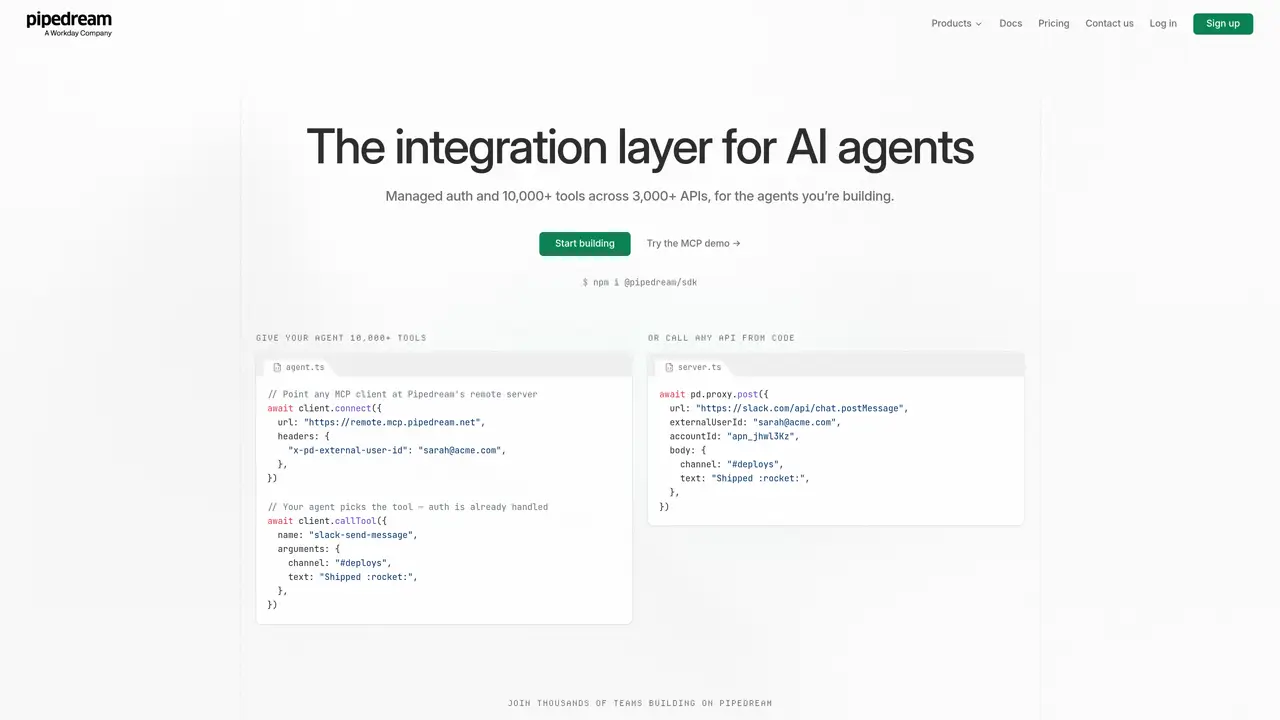
Pipedream is a developer platform for building AI agents and event-driven workflows that connect across more than 3,000 applications. Teams compose workflows from triggers, prebuilt actions, and custom JavaScript or TypeScript code, then deploy them instantly with managed authentication, queues, and data stores. The platform supports secure agent actions via MCP servers, enabling LLM-powered assistants to call real APIs and services without exposing credentials. Built-in observability—step-level logs, metrics, and instant deploys—lets engineers iterate safely while replacing brittle scripts and scattered glue code with reusable, observable automations. Pipedream also provides a Connect SDK to embed integrations directly into applications or agents, exposing tools to LLMs through standardized interfaces. Scheduling, retries, private networking, and monitoring are handled out of the box, so teams can ship production automations in hours rather than weeks. It is commonly used for cross-app automations like syncing GitHub issues to Linear, categorizing inbound email, enriching signups, generating daily summaries with LLMs, monitoring product events, and alerting channels—all without standing up additional infrastructure.
Key features
- Build AI agents that invoke MCP tools and real APIs with managed authentication
- Compose event-driven workflows from triggers, prebuilt actions, and custom code
- Add 3,000+ integrations via Connect SDK and embed tools directly in apps
- Operate reliably with built-in queues, data stores, retries, scheduling, and private networking
- Observe and iterate using step-level logs, metrics, code generation, and instant deployments
- Deploy workflows and agents with one click and monitor runs across environments
- Expose tools to LLMs through MCP servers for secure, standardized access
- Manage OAuth credentials centrally for all connected applications
- Schedule recurring workflows and configure retry policies automatically
- Use private networking to keep integrations and data transfers secure
Use cases
- Sync GitHub issues to Linear automatically and keep teams aligned
- Generate daily calendar summaries or reports using LLMs without extra infrastructure
- Categorize inbound email and route updates to Slack or other channels
Pros
- Provides managed authentication for over 3,000 APIs, handling OAuth flows and token refresh automatically
- Offers 10,000+ prebuilt triggers and actions for rapid workflow and agent development
- Supports custom JavaScript, TypeScript, Python, and Java code for flexible automation logic
- Enables secure agent actions via MCP servers, allowing LLMs to call real APIs without credential exposure
- Includes built-in observability with step-level logs, metrics, and instant deployments for safe iteration
Cons
- May require familiarity with JavaScript or TypeScript for advanced customization
- Complex workflows could incur higher costs depending on usage volume and features enabled
- Limited native support for low-code/no-code users compared to simpler automation tools
Frequently asked questions about Pipedream
What is Pipedream and who is it for?
Pipedream is an integration platform for building AI agents and event-driven workflows that connect across thousands of applications. It is designed for developers and companies looking to automate cross-app processes, deploy secure AI integrations, and embed connectors into their applications or agents.
How does Pipedream handle authentication for APIs?
Pipedream manages the entire authorization flow, including hosted OAuth clients, secure token storage, and automatic token refresh. Users connect their accounts through hosted Connect flows or embedded SDKs, and Pipedream injects fresh credentials on every request without exposing them to the user's servers.
Can Pipedream be used with AI agents and LLMs?
Yes, Pipedream supports secure agent actions via MCP servers, enabling LLMs to call real APIs and services without handling credentials. It also provides a Connect SDK to expose tools to LLMs through standardized interfaces.
What programming languages does Pipedream support?
Pipedream supports JavaScript, TypeScript, Python, and Java for custom code, as well as REST APIs and MCP for agent interactions. Prebuilt tools and triggers are available for common use cases.
How do I get started with Pipedream?
Users can start building workflows or agents by visiting Pipedream's platform, exploring prebuilt tools, or writing custom code. The platform offers documentation, demos, and SDKs to guide integration and deployment.
Does Pipedream require additional infrastructure to run workflows?
No, Pipedream handles scheduling, retries, private networking, and monitoring out of the box. Workflows run in Pipedream's managed runtime, eliminating the need to host or scale additional infrastructure.
Pipedream Website Engagement
Last Update: 9 days ago
Total Monthly Visits
0
Bounce Rate
0%
Visit Duration (avg)
0.00s
Pages Per Visit
0
Country Rank
0
United States
Global Rank
0
Category Rank
#0
Programming & Developer Software
Monthly Traffic
Traffic Sources
Traffic Share By Country
- United States38.6%
- India6%
- United Kingdom3.4%
- Canada2.8%
- Germany2.7%