
OpenAI builds and deploys advanced AI models like GPT-4o for autonomous agents and workflows.

SOLO
643Monthly visits
0Popularity
About SOLO
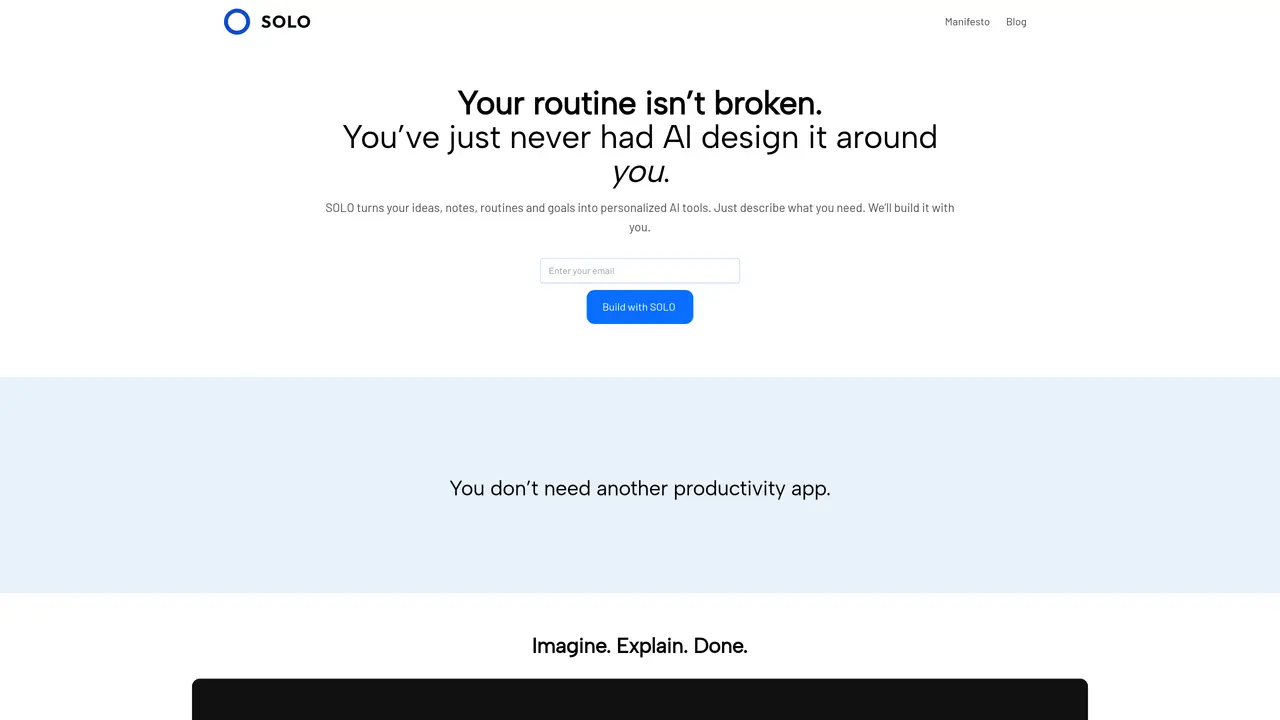
SOLO is personalized software built through conversation. You talk, it builds. Model Context Protocol (MCP) connects your tools without setup hassle. No templates. No code. Just intent to implementation — software that feels custom-built because it is. SOLO is for anyone who wants to automate tasks and streamline workflows. It’s typically used by students, creators, and executive assistants who need AI command centers. The tool works by allowing users to converse with it about their needs and goals, and then building customized software to meet those needs. This process happens in real-time, without the need for coding or template setup. SOLO is a freemium tool, offering both free and paid plans.
Key features
- Personalized software built through conversation
- No templates or code required
- Real-time customization
- Automated task management
- Streamlined workflows
- AI command centers for executive assistants
Use cases
- Students can create custom study trackers that pull deadlines from Canvas, organize notes by class, and schedule focused work sessions based on exam dates.
- Creators can build content workflows that plan posts, track engagement, and schedule follow-ups across platforms — all from one conversational interface.
- Executive assistants can use SOLO to build AI command centers for managing tasks and workflows.
Pros
- Turns user descriptions into live, connected software without coding or templates
- Adapts tools in real-time to match individual workflows and preferences
- Integrates seamlessly with existing tools like Notion, Slack, and Google Docs without API setup
- Designed for personalization, focusing on user intent rather than rigid templates
- Developed by researchers and creators, with backing from notable investors
Cons
- Currently in beta, which may limit availability or feature stability
- Requires users to describe their needs in detail for optimal tool creation
- May not suit users seeking pre-built, out-of-the-box solutions
- Integration depth depends on the compatibility of user-provided tools
Frequently asked questions about SOLO
What does SOLO do?
SOLO turns ideas, routines, goals, and workflows into personalized AI tools through conversation. Users describe what they need, and SOLO builds customized software in real time without requiring coding or templates.
Who is SOLO designed for?
SOLO is designed for individuals who want to automate tasks and streamline workflows, including students, creators, and executive assistants. It caters to those seeking AI-driven tools that adapt to their unique styles and needs.
How does SOLO integrate with existing tools?
SOLO integrates with tools like Notion, Slack, and Google Docs without requiring API setup. The software connects seamlessly to existing systems, allowing it to work effortlessly within current workflows.
What makes SOLO different from other productivity tools?
SOLO differentiates itself by creating software that adapts in real time to the user's thinking and workflows. It focuses on intuitive, personalized experiences rather than rigid templates or pre-built solutions.
How do I get started with SOLO?
Users can start by describing what they want to build in a single sentence. SOLO then creates a custom tool based on the description, allowing for immediate use and further refinement.
Is SOLO available for free?
SOLO offers both free and paid plans, providing users with options to access its features depending on their needs.
SOLO Website Engagement
Last Update: 9 days ago
Total Monthly Visits
0
Bounce Rate
—
Visit Duration (avg)
—
Pages Per Visit
—
Country Rank
—
Unknown
Global Rank
—