
Automate email sending, save leads to CRMs, and create complex workflows for customer support tickets.

SnapLogic
$1Starting price
89KMonthly visits
32Popularity
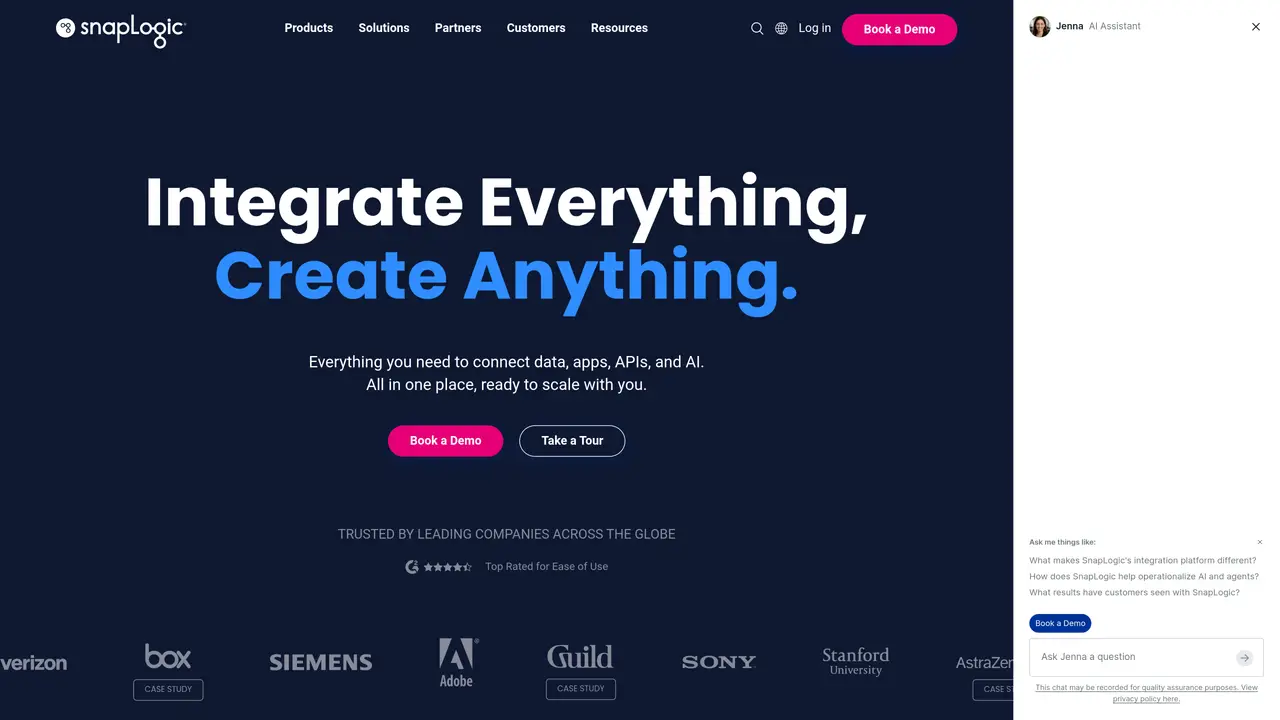
About SnapLogic
SnapLogic is a powerful, cloud-based integration platform that redefines the way businesses connect applications, data, and devices. It empowers organizations to automate their workflows through a sophisticated AI-driven interface, making it an invaluable tool for IT professionals and business analysts alike. By simplifying complex integration processes, SnapLogic enables users to seamlessly connect disparate systems, ensuring data flows smoothly across the enterprise landscape. Key Features: AI-Powered Integration: SnapLogic leverages machine learning to automate routine tasks, reducing the need for manual intervention and enhancing efficiency. Visual Designer: The intuitive drag-and-drop interface allows users to design integration workflows without extensive coding knowledge. Pre-built Connectors: With a vast library of pre-configured connectors, SnapLogic facilitates seamless integration with popular applications and services. Real-Time Data Processing: Enables real-time data movement and transformation, ensuring up-to-date information is always available for business operations.
SnapLogic
San Mateo, United States · Founded 2006
- Founded
- 2006
- Headquarters
- San Mateo, United States
Key features
- AI-Powered Integration
- Visual Designer
- Pre-built Connectors
- Real-Time Data Processing
- Scalability
- User-Friendly Experience
- Robust Security
Use cases
- Enterprise IT Departments: Utilizing SnapLogic to streamline data integration and improve operational efficiency.
- Business Analysts: Employing the tool to automate and analyze data workflows.
- Data Scientists: Leveraging its capabilities for data preparation and real-time analytics.
Pros
- AI-driven automation for enterprise workflows and integrations
- Visual, no-code/low-code interface for designing integration workflows
- Extensive library of pre-built connectors (Snaps) for popular applications and services
- Supports real-time data processing and movement across systems
- Enterprise-grade security and compliance features
Cons
- May require initial setup and configuration for complex integrations
- Learning curve for advanced features beyond basic integrations
- Dependence on third-party connectors for niche or custom applications
Frequently asked questions about SnapLogic
What is SnapLogic?
SnapLogic is an all-in-one data and application integration platform designed to connect applications, data, and devices across enterprise systems. It supports visual ETL/ELT, API management, and agentic automation through a no-code/low-code interface.
Who should use SnapLogic?
SnapLogic is suitable for IT professionals, business analysts, and organizations seeking to automate workflows, modernize legacy systems, or integrate disparate applications and data sources. It serves industries like financial services, manufacturing, and healthcare.
Does SnapLogic support real-time data processing?
Yes, SnapLogic enables real-time data movement and transformation, ensuring up-to-date information is available for business operations and decision-making.
What integrations does SnapLogic offer?
SnapLogic provides a vast library of pre-built connectors called Snaps, which facilitate seamless integration with popular applications, databases, and cloud services. It also supports API management and embedded integration for OEM/ISV providers.
How does SnapLogic use AI in its platform?
SnapLogic leverages AI to automate routine tasks, assist with integration workflows through SnapGPT, and enable the creation of enterprise-grade agents and automations using AgentCreator and MCP Server.
How can I get started with SnapLogic?
Prospective users can request a demo, explore interactive product tours, or access training resources through SnapLogic Academy to evaluate and implement the platform. Support and documentation are also available.
SnapLogic Website Engagement
Last Update: 9 days ago
Total Monthly Visits
0
Bounce Rate
0%
Visit Duration (avg)
0.00s
Pages Per Visit
0
Country Rank
0
United States
Global Rank
0
Category Rank
#0
Programming & Developer Software
Monthly Traffic
Traffic Sources
Traffic Share By Country
- India24.2%
- United States23.5%
- United Kingdom4.6%
- France4.4%
- Vietnam3.2%