An AI-driven experience management platform for enterprises to collect multi-channel feedback, analyze structured and unstructured data, and deliver actionable insights.

Qurifix
$39/mStarting price
0Popularity
About Qurifix
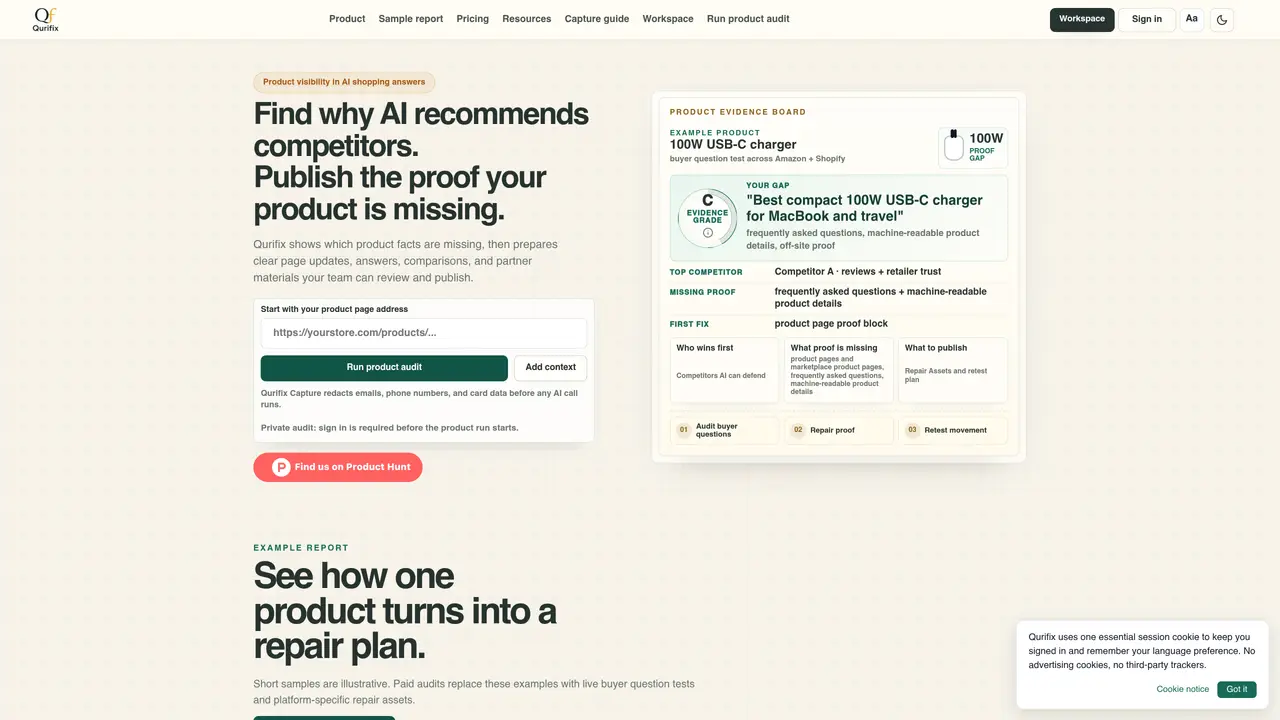
Qurifix is a tool for ecommerce sellers that diagnoses product evidence gaps blocking AI shopping recommendations and converts them into publishable repair assets. It performs AEO/GEO audits by testing how AI interprets product pages across multiple marketplaces such as Amazon, Shopify, TikTok Shop, and WooCommerce. The tool identifies missing signals in PDP content, listings, FAQs, schema, feeds, and creator assets that prevent AI from accurately recommending products. After diagnosis, it generates repair assets including proof blocks, rewritten specifications, FAQs, and structured data to address identified gaps. Users can then publish these assets and schedule retests to measure improvements in AI recommendations. The process begins with entering a product URL, optionally adding additional evidence, and running an audit that produces a detailed report. The report highlights AI shelf performance, evidence gaps, and prioritized repair actions. Qurifix Capture is included to redact sensitive data before processing, and the tool supports multiple languages and target markets.
Key features
- SKU evidence auditing across multiple marketplaces
- AI prompt testing for competitor comparisons
- Publish-ready repair assets generation
- Retest scheduling and movement tracking
- Qurifix Capture for data redaction
- Multi-language report generation
- Platform-specific asset creation
- Evidence gap identification and prioritization
Use cases
- Improving AI recommendations for product pages on Amazon and Shopify
- Repairing incorrect AI descriptions of product features
- Generating proof assets to support product claims for SEO
Pros
- Diagnoses AI evidence gaps blocking product recommendations
- Generates publish-ready repair assets for PDP, listings, FAQs, and schema
- Supports multiple ecommerce platforms including Amazon, Shopify, TikTok Shop, and WooCommerce
- Includes data redaction via Qurifix Capture before processing
- Offers retest workflows to measure improvements in AI recommendations
Cons
- Requires sign-in before running audits
- Limited to specific ecommerce platforms
- No free tier beyond initial trial
- Audit report language options are restricted to English, Simplified Chinese, Traditional Chinese, and Russian
Frequently asked questions about Qurifix
What is Qurifix and what does it do?
Qurifix is an AEO/GEO audit and repair tool for ecommerce sellers that diagnoses why AI cannot recommend a product and generates publish-ready repair assets to address evidence gaps. It tests how AI interprets product pages across multiple marketplaces like Amazon, Shopify, TikTok Shop, and WooCommerce.
Who should use Qurifix?
Qurifix is designed for ecommerce brands, sellers, and marketers who want to improve their product's visibility and recommendation performance in AI-driven shopping searches. It suits teams focused on optimizing product evidence for better AI shelf performance.
How does Qurifix work?
Users start by entering a product URL and optionally adding additional evidence. Qurifix runs an audit that identifies missing signals in PDP content, listings, FAQs, schema, feeds, and creator assets. It then generates repair assets such as proof blocks, rewritten specifications, FAQs, and structured data to address gaps.
What marketplaces does Qurifix support?
Qurifix supports audits and repair assets for multiple marketplaces, including Amazon, Shopify, TikTok Shop, WooCommerce, and other platforms. It also allows targeting specific markets like the United States, United Kingdom, European Union, Japan, and global regions.
Does Qurifix offer a free trial?
Yes, Qurifix provides a free trial that allows users to run their first audit and view the evidence gap before committing to a paid plan. The free tier includes access to sample reports and basic features.
What is Qurifix Capture and how does it work?
Qurifix Capture is a feature that redacts sensitive data such as emails, phone numbers, and card details from product pages before running an AI audit. This ensures privacy and compliance while allowing the tool to analyze the content effectively.