An AI-driven experience management platform for enterprises to collect multi-channel feedback, analyze structured and unstructured data, and deliver actionable insights.

Sphinx Mind
$1Starting price
0Popularity
About Sphinx Mind
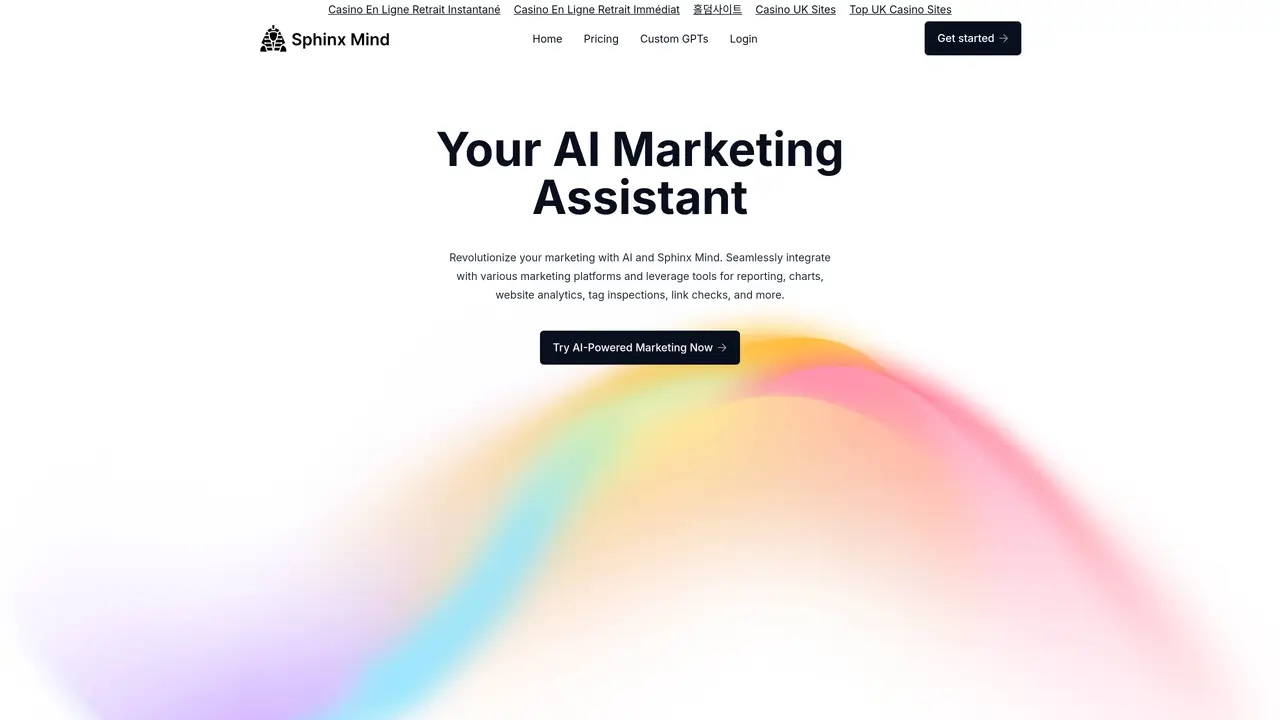
Sphinx Mind is an AI-powered marketing assistant that aims to revolutionize the way marketing professionals interact with their data. It offers a suite of features designed to streamline the marketing process, from analytics to reporting, and integrates with various popular marketing platforms. Whether you’re managing campaigns or diving deep into website analytics, this tool promises to simplify the complex data landscape with AI-driven insights and automation. Key Features include AI-Powered Reports, Prompt Scheduling, Custom GPTs on ChatGPT, Chat Exports, Prompt Library, and Smart Autocomplete. The tool is designed to be intuitive, allowing for easy navigation and interaction with the AI assistant. It also offers personalized experiences, providing insights that enable marketers to optimize campaigns and strategies on the fly. However, there may be an initial learning curve to fully leverage all available features, and the effectiveness of Sphinx Mind is tied to its integration with other platforms.
Key features
- AI-Powered Reports
- Prompt Scheduling
- Custom GPTs on ChatGPT
- Chat Exports
- Prompt Library
- Smart Autocomplete
Use cases
- Digital Marketing Agencies use Sphinx Mind to gain insights across multiple client accounts and campaigns.
- E-commerce Businesses leverage the tool to optimize their online advertising and analytics.
- Social Media Managers utilize Sphinx Mind for real-time performance tracking and optimizing social media campaigns.
Pros
- Seamless integration with major marketing platforms like Facebook Ads, Google Ads, Google Analytics, and Google Search Console
- AI-powered reports and insights that visualize performance and provide actionable recommendations
- Custom GPTs on ChatGPT for tailored marketing assistance with over 15 integrations
- Prompt scheduling for automated AI-driven reports delivered to email inboxes
- Slack and Microsoft Teams integration for real-time collaboration within existing workflows
Cons
- Initial learning curve to fully leverage all features and integrations
- Effectiveness depends on the quality and completeness of connected marketing data sources
- Limited concurrent data source interactions in lower-tier pricing plans
Frequently asked questions about Sphinx Mind
What is Sphinx Mind and what does it do?
Sphinx Mind is an AI-powered marketing assistant designed to streamline marketing workflows by integrating with popular platforms like Facebook Ads, Google Ads, and Google Analytics. It provides AI-driven insights, automated reports, and interactive chat capabilities to help marketers optimize campaigns and analyze data efficiently.
Who is Sphinx Mind suitable for?
Sphinx Mind is suitable for individual marketers, small teams, growing businesses, and large enterprises looking to automate marketing analytics and reporting. Its scalable pricing plans cater to users with varying needs and data source requirements.
How does Sphinx Mind integrate with other tools?
Sphinx Mind offers one-click integrations with major marketing platforms such as Google Ads, Facebook Ads, Google Analytics, and Shopify. It also supports integrations with Slack and Microsoft Teams for seamless collaboration within existing workflows.
Can I create custom AI assistants with Sphinx Mind?
Yes, Sphinx Mind allows users to create custom GPTs on ChatGPT with over 15 marketing integrations, enabling tailored AI assistants for specific marketing needs. This feature is available in select pricing plans.
How do I get started with Sphinx Mind?
Getting started involves signing up for an account, connecting your marketing platforms, and engaging with the AI assistant to receive insights and recommendations. The process is designed to be intuitive, with step-by-step guidance provided.
Does Sphinx Mind offer data export options?
Yes, Sphinx Mind allows users to export chat conversations in formats like PDF, DOC, or CSV for team collaboration, presentations, or future reference. This ensures insights remain accessible and shareable across teams.