GitHub hosts HunyuanVideo, Tencent's open-source framework for large-scale video generation models, enabling AI-driven video creation.

Anaconda
$1Starting price
1.7MMonthly visits
54Popularity
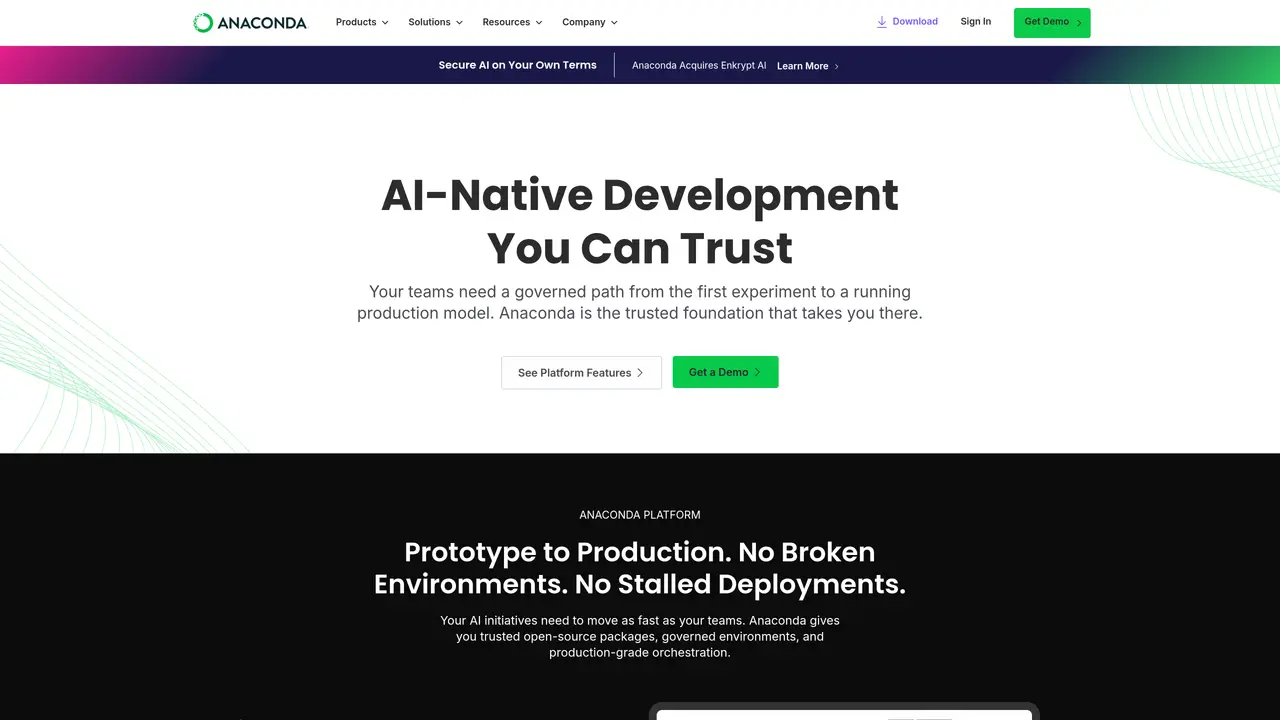
About Anaconda
Anaconda is an open-source platform for Python and R designed for data scientists and enterprises that need reliable package management, reproducible environments, and secure paths from prototype to production. It provides trusted package distribution and dependency management through Anaconda Core, featuring thousands of validated packages, automated security scanning, and conflict resolution. The platform supports reproducible workflows using environment management and kernels, along with common data science tooling such as Jupyter Notebooks, NumPy, Pandas, and scikit-learn. Anaconda also facilitates AI and ML development with frameworks like TensorFlow, Keras, and PyTorch, covering model building, analysis, and visualization. For enterprises, it offers governance and deployment features including access control, lineage tracking, compliance for packages and models, collaboration, and scalability across cloud environments like AWS and Azure. Containerization options such as Docker are also supported, reducing operational overhead for teams deploying AI solutions. The platform integrates with tools and identity/data platforms like RStudio, Cloudera, SAML, and LDAP, making it suitable for teams shipping AI to production.
Key features
- Open-source Python and R distribution
- Trusted package management with automated security scanning
- Reproducible environments and kernels
- Support for Jupyter Notebooks, NumPy, Pandas, and scikit-learn
- AI/ML development with TensorFlow, Keras, and PyTorch
- Enterprise governance and compliance features
- Cloud scalability across AWS and Azure
- Containerization support via Docker
- Access control and lineage tracking
- Integrations with RStudio, Cloudera, SAML, and LDAP
Use cases
- Managing data science environments and dependencies
- Building and deploying AI/ML models securely
- Collaborating on AI projects with governance and compliance
Pros
- Provides trusted open-source package management with thousands of validated Python and R packages
- Supports reproducible AI workflows with environment management, traceability, and built-in observability
- Offers governance and security features for enterprises, including access control and compliance tracking
- Facilitates deployment across cloud environments like AWS and Azure with containerization support
- Includes collaboration tools and integrations with platforms like Jupyter, RStudio, and identity systems such as SAML and LDAP
Cons
- May require setup and configuration for advanced enterprise features
- Dependency management complexity can still pose challenges for large-scale projects
- Some advanced governance and orchestration features are limited to paid plans
Frequently asked questions about Anaconda
What is Anaconda and who is it designed for?
Anaconda is an open-source platform for Python and R designed to support data scientists, developers, and enterprises in building, testing, and deploying AI workflows. It provides trusted package management, reproducible environments, and secure paths from prototype to production.
How does Anaconda help with AI and ML development?
Anaconda facilitates AI and ML development by offering frameworks like TensorFlow, Keras, and PyTorch, along with tools for model building, analysis, and visualization. It supports AI orchestration for workflows, ensuring traceability and consistent performance from experimentation to production deployment.
What are the deployment options available in Anaconda?
Anaconda supports deployment options including cloud, self-hosted, and containerized environments such as Docker. This flexibility allows teams to scale AI solutions across platforms like AWS and Azure while maintaining operational efficiency.
Does Anaconda provide governance and security features?
Yes, Anaconda includes governance features such as access control, lineage tracking, compliance for packages and models, and automated security scanning. These features help enterprises maintain secure and auditable AI workflows.
How can I get started with Anaconda?
Users can start with Anaconda by creating an account on the platform, downloading Anaconda Distribution, or exploring the Anaconda Platform for enterprise solutions. Documentation, tutorials, and learning resources are available to guide users through setup and usage.
What integrations does Anaconda support?
Anaconda integrates with tools and platforms such as Jupyter Notebooks, RStudio, Cloudera, and identity/data platforms like SAML and LDAP. These integrations enhance collaboration and streamline workflows for teams working with AI and data science.
Anaconda Website Engagement
Last Update: 9 days ago
Total Monthly Visits
0
Bounce Rate
0%
Visit Duration (avg)
0.00s
Pages Per Visit
0
Country Rank
0
India
Global Rank
0
Category Rank
#0
Programming & Developer Software
Monthly Traffic
Traffic Sources
Traffic Share By Country
- United States21%
- India20.9%
- China7.5%
- Pakistan3.7%
- Australia3.3%