GitHub hosts HunyuanVideo, Tencent's open-source framework for large-scale video generation models, enabling AI-driven video creation.

Cerebrium
$0.05Starting price
36KMonthly visits
26Popularity
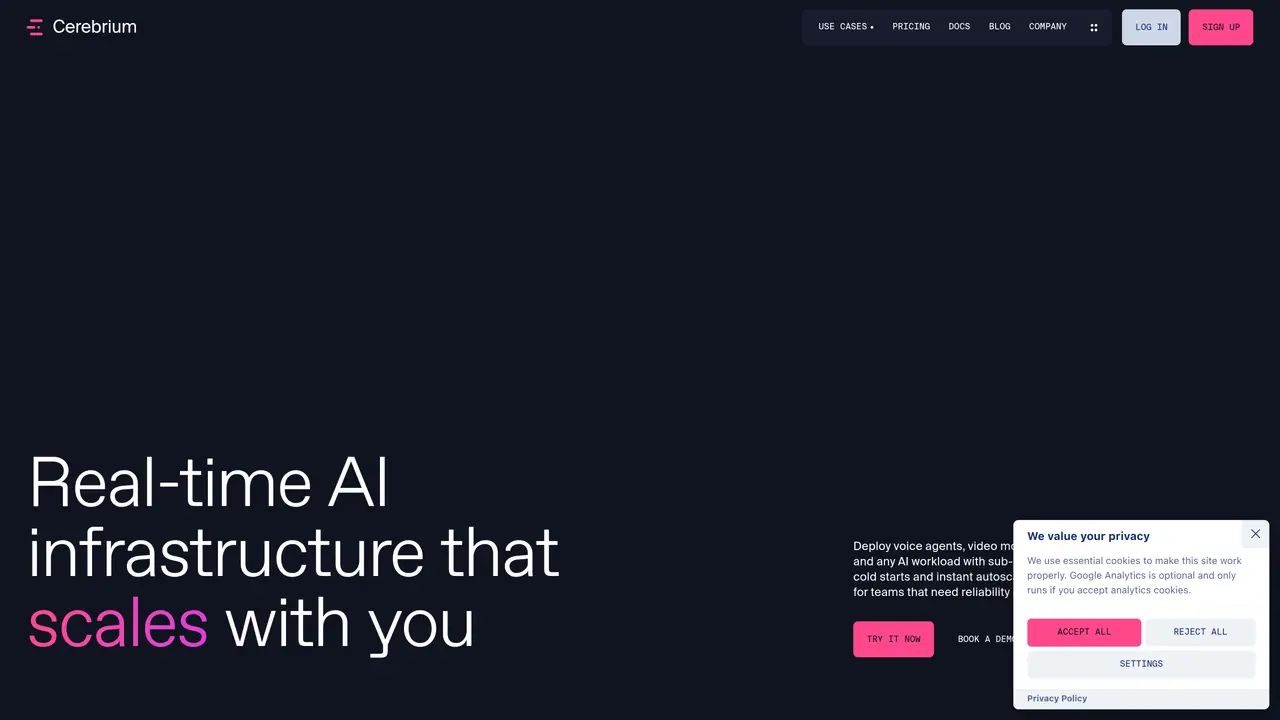
About Cerebrium
Cerebrium is a serverless AI infrastructure platform designed for machine learning teams to deploy and autoscale GPU-backed model APIs for both real-time and batch workloads. The platform supports low-latency execution with cold starts as fast as 2–4 seconds and offers a selection of over 12 GPU types, including A100 and H100, to match hardware to workload requirements. It provides autoscaling from 1 to 10,000+ concurrent requests, with support for batching and asynchronous jobs for background workloads. Multiple serving options are available, including REST, WebSocket, and streaming endpoints, all optimized for under 35 ms overhead. Developers can use a Python library and CLI for one-line deployments, alongside a web dashboard that includes orchestration, versioning, and observability features such as OpenTelemetry integration. The platform is suitable for teams building AI applications like real-time voice, video, and LLM inference without the need to manage Kubernetes or long-running GPU instances. Cerebrium also offers compliance support for SOC 2, HIPAA, and GDPR, and is available on AWS Marketplace with pay-per-use pricing billed per second or millisecond of inference time. A free account with GPU credits is included, though the amount varies by offer.
Key features
- Serverless GPUs with 2–4 second cold starts
- 12+ GPU types including A100 and H100
- Autoscaling from 1 to 10,000+ concurrent requests
- Support for batching and asynchronous jobs
- Multiple serving options: REST, WebSocket, and streaming endpoints
- Low-latency execution under 35 ms overhead
- Python library, CLI, and web dashboard for deployment and management
- Orchestration, versioning, and OpenTelemetry observability
- Multi-region deployments across 5 regions
- Compliance support for SOC 2, HIPAA, and GDPR
Use cases
- Deploying real-time LLM inference endpoints
- Running batch workloads for AI model training
- Building scalable AI applications with low-latency requirements
Pros
- Serverless GPU infrastructure with sub-second cold starts and instant autoscaling for real-time AI workloads
- Supports over 12 GPU types including A100 and H100 for flexible hardware matching to workload requirements
- Offers multiple serving options such as REST, WebSocket, and streaming endpoints with under 35 ms overhead
- Provides end-to-end observability with native OpenTelemetry integration and real-time monitoring
- Compliance support for SOC 2, HIPAA, GDPR, and ISO with data residency and isolation controls
Cons
- No reservations or long-term commitments required, which may limit cost predictability for some users
- Cold starts may still introduce slight latency compared to fully pre-warmed instances
- Requires familiarity with GPU workloads and containerized deployments for optimal use
Frequently asked questions about Cerebrium
What is Cerebrium and what does it do?
Cerebrium is a serverless GPU infrastructure platform designed to deploy and autoscale GPU-backed model APIs for real-time and batch AI workloads. It supports low-latency execution with cold starts as fast as 2–4 seconds and offers multiple serving options including REST, WebSocket, and streaming endpoints.
Who is Cerebrium suitable for?
Cerebrium is built for machine learning teams and developers who need to deploy AI applications such as real-time voice agents, video models, LLMs, and other GPU-intensive workloads without managing Kubernetes or long-running GPU instances.
How does Cerebrium handle scaling and performance?
Cerebrium provides elastic GPU scaling from 1 to 10,000+ concurrent requests, with automatic handling of sudden bursts and scale-outs. It supports memory and GPU snapshotting for fast restores and ensures low-latency performance with under 35 ms overhead.
What compliance and security features does Cerebrium offer?
Cerebrium supports compliance with SOC 2, HIPAA, GDPR, and ISO standards. It offers data residency options to meet regulatory requirements, workload isolation using gVisor, and multi-region failovers for 99.999% uptime.
What integrations and tools does Cerebrium support?
Cerebrium provides a Python library and CLI for deployments, a web dashboard for orchestration and observability, and native support for OpenTelemetry integration. It also supports frameworks like vLLM, TensorRT-LLM, and Triton Inference Server.
How do I get started with Cerebrium?
Users can start by signing up for a free account, which includes GPU credits. The platform allows one-line deployments using a Python library or CLI, and provides a web dashboard for managing workloads, versioning, and monitoring.
Cerebrium Website Engagement
Last Update: 9 days ago
Total Monthly Visits
0
Bounce Rate
0%
Visit Duration (avg)
0.00s
Pages Per Visit
0
Country Rank
0
United States
Global Rank
0
Category Rank
#0
Programming & Developer Software
Monthly Traffic
Traffic Sources
Traffic Share By Country
- United States34.5%
- India16.3%
- Vietnam7.8%
- Brazil6.5%
- United Kingdom6%