GitHub hosts HunyuanVideo, Tencent's open-source framework for large-scale video generation models, enabling AI-driven video creation.

iGPT
$1.10Starting price
6.5KMonthly visits
14Popularity
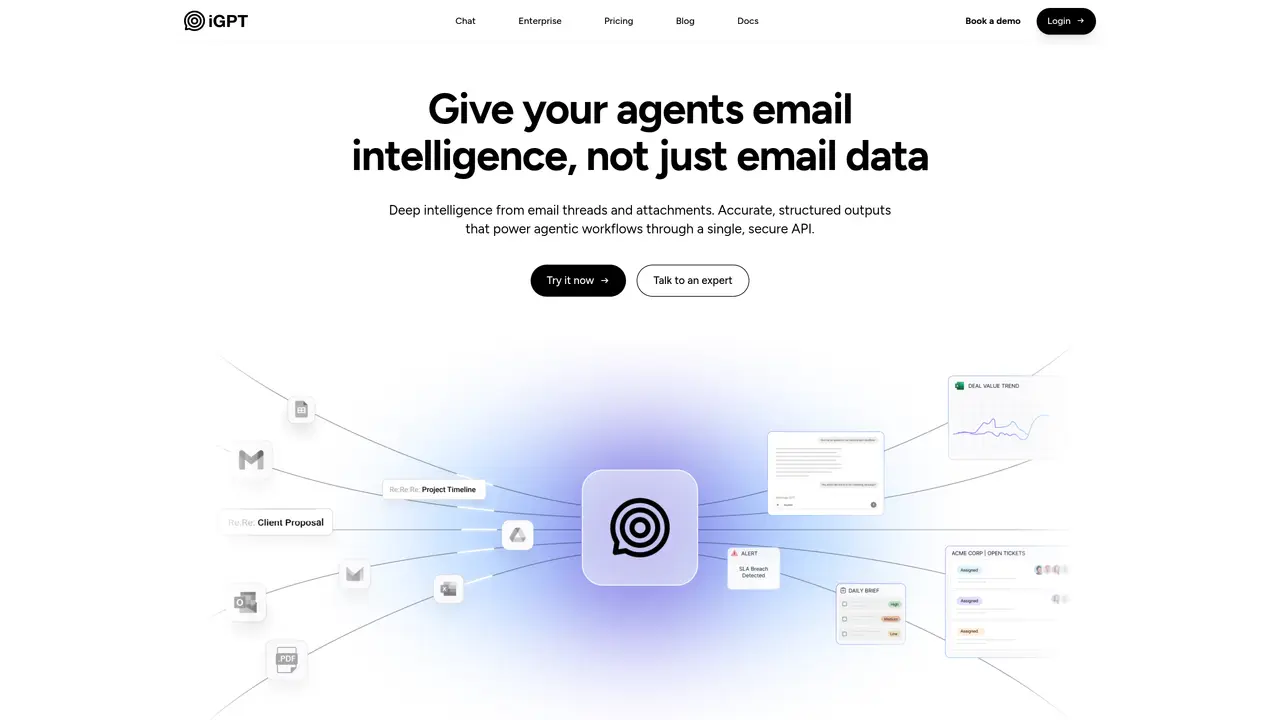
About iGPT
iGPT is a Context Intelligence API, specializing in extracting actionable insights from email, files, and chats. It bridges the gap between language models and real-world work. Where most AI tools stop at text, iGPT reconstructs a logical understanding of tone, intent, relationships, and decisions hidden within communication threads. Developers use it to extract tasks, detect sentiment, and surface priorities directly from unstructured data. Enterprises use it to connect communication, workflows, and reasoning into one continuous intelligence layer. It’s the missing context layer for AI systems that need to reason, not just respond. iGPT’s Core Features – Context Intelligence Engine (Models relationships, roles, and intent) – Actionable structured JSON output (tasks, decisions, etc.) – Multi-thread sentiment and tone detection – Automatic task and ownership extraction – Long-term decision and risk tracking – Developer-friendly SDKs (Python, JS) and documentation
Key features
- Context Intelligence Engine
- Actionable structured JSON output
- Multi-thread sentiment and tone detection
- Automatic task and ownership extraction
- Long-term decision and risk tracking
- Developer-friendly SDKs
Use cases
- Giving autonomous agents long-term context and memory
- Automatically extracting follow-ups, tone, and risk for CRMs
- Turning team communication into actionable tasks and insights
Pros
- Provides deep context extraction from email threads and attachments without manual parsing or vector stores
- Delivers structured JSON outputs (e.g., tasks, decisions, sentiment) directly usable in workflows or agentic systems
- Supports real-time indexing and retrieval of new messages and attachments across multiple sources
- Offers developer-friendly SDKs (Python, JavaScript) and a live playground for quick integration and testing
- Ensures enterprise-grade security with zero data retention, no model training on user data, and full audit trails
Cons
- Requires API key setup and integration effort for non-technical users
- Performance may vary with large or complex email datasets, though retrieval is typically sub-second
Frequently asked questions about iGPT
What does iGPT do?
iGPT is a Context Intelligence API that extracts actionable insights from email threads, attachments, and chats, including tasks, decisions, sentiment, and priorities. It reconstructs logical understanding such as tone, intent, and relationships to provide structured outputs ready for automation.
Who is iGPT designed for?
iGPT suits developers building agentic workflows and enterprises needing to connect communication, workflows, and reasoning into a continuous intelligence layer. It is particularly useful for teams working with email-heavy processes like support, sales, and compliance.
How does iGPT integrate with existing systems?
iGPT offers developer-friendly SDKs for Python and JavaScript, a unified API endpoint, and supports integrations with tools like LangChain and MCP. It handles real-time ingestion, hybrid retrieval, and thread reconstruction without requiring prompt tuning or manual parsing.
What kind of data sources does iGPT support?
iGPT supports email threads and attachments, including documents, PDFs, and spreadsheets. It automatically indexes new messages and extracts structured data, enabling continuous updates and cited answers linked to source materials.
How does iGPT ensure data security and privacy?
iGPT provides enterprise-grade security with zero data retention, zero data training, and full audit trails. Data is processed in memory, never stored, and can be deployed in cloud, hybrid, or fully private on-prem/VPC environments with strict role-based access control.
How can I get started with iGPT?
Users can start by signing up for an API key, testing the live playground, or booking a demo. The API requires a simple integration with a single endpoint, and documentation provides SDK examples and schema definitions for structured outputs.
iGPT Website Engagement
Last Update: 9 days ago
Total Monthly Visits
0
Bounce Rate
0%
Visit Duration (avg)
0.00s
Pages Per Visit
0
Country Rank
0
India
Global Rank
0
Monthly Traffic
Traffic Sources
Traffic Share By Country
- India60.9%
- United States32.2%
- Vietnam6.9%