GitHub hosts HunyuanVideo, Tencent's open-source framework for large-scale video generation models, enabling AI-driven video creation.

LabelGPT
$499Starting price
0Popularity
About LabelGPT
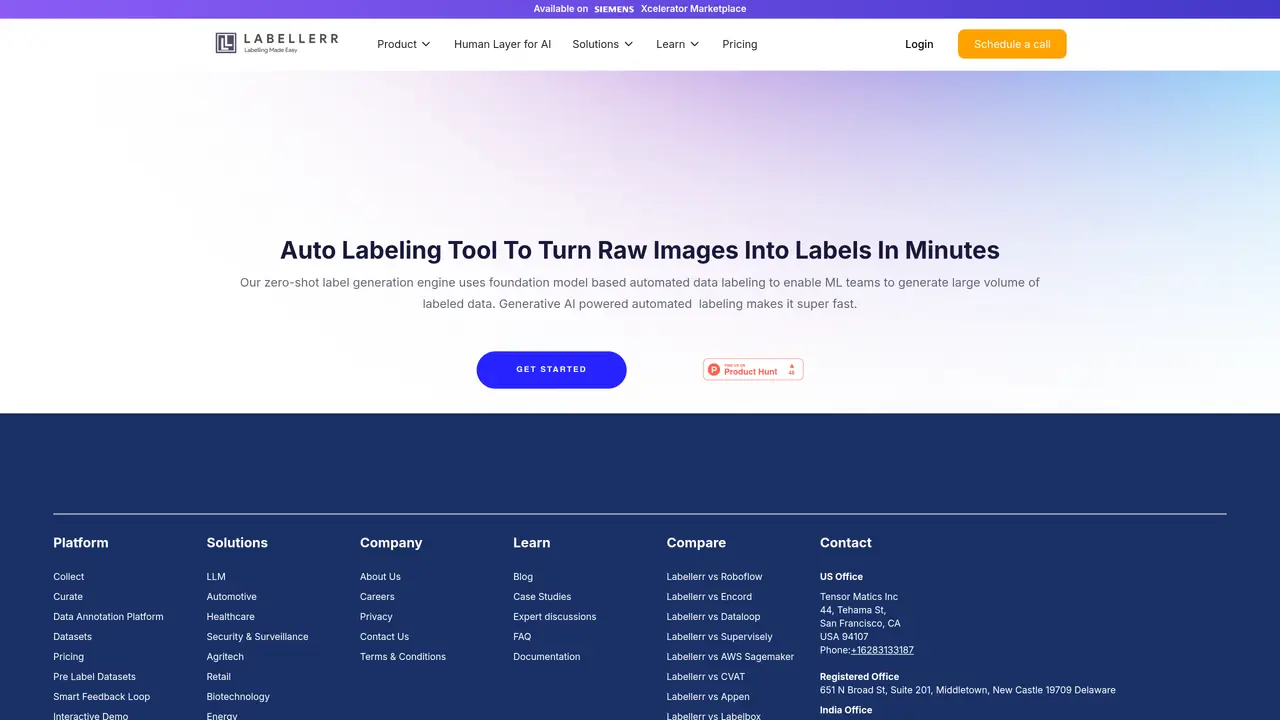
LabelGPT is an automated data annotation platform designed for machine learning teams that need to produce labeled datasets efficiently. It leverages a combination of multiple foundation models to perform zero-shot labeling, allowing users to import raw data, specify class names as prompts, and generate high-confidence labels in minutes. The platform accelerates the annotation process with features like open datasets, smart feedback loops, and pre-labeling solutions. By reducing manual effort, LabelGPT helps teams quickly build training datasets for AI models without requiring extensive human intervention. It is particularly useful for projects where labeled data is scarce or time-consuming to obtain through traditional methods. The tool integrates seamlessly into existing workflows, enabling faster iteration and deployment of machine learning models.
Key features
- Zero-shot labeling using foundation models
- High-confidence label generation in minutes
- Import raw data and specify class names as prompts
- Open datasets for additional training resources
- Smart feedback loops to improve label accuracy
- Pre-labeling solutions to speed up annotation
- Integration with machine learning workflows
- Reduces manual annotation effort
Use cases
- Generating labeled datasets for computer vision projects
- Accelerating training data preparation for NLP models
- Enabling rapid prototyping of AI models with minimal labeled data
Pros
- Uses a combination of multiple foundation models for zero-shot labeling, reducing manual annotation effort.
- Supports multiple data types including images, text, video, and medical imaging (DICOM).
- Offers open datasets and pre-labeling solutions to accelerate dataset preparation.
- Provides a smart feedback loop for validating and refining label quality.
- Integrates with cloud storage platforms like AWS, GCP, and Azure for seamless data import.
Cons
- Zero-shot labeling may produce less accurate results for highly specialized or niche use cases.
- Requires review of generated labels to ensure quality, as confidence scores are used for validation.
LabelGPT videos
Frequently asked questions about LabelGPT
What is LabelGPT and how does it work?
LabelGPT is an automated data annotation platform that uses foundation models to perform zero-shot labeling. Users import raw data, specify class names as prompts, and the system generates high-confidence labels in minutes without extensive manual intervention.
Who is LabelGPT designed for?
LabelGPT is designed for machine learning teams, researchers, and organizations that need to efficiently produce labeled datasets for training AI models, particularly in domains like healthcare, automotive, retail, and biotechnology.
Does LabelGPT support different types of data?
Yes, LabelGPT supports multiple data types including images, text, video, medical imaging (DICOM), and datasets for robotics and autonomous systems.
How does LabelGPT ensure the quality of generated labels?
LabelGPT provides a smart feedback loop where users can validate labels by filtering high-confidence scores and visually reviewing results before exporting them to ML training engines.
Can LabelGPT integrate with existing workflows or cloud storage?
Yes, LabelGPT integrates with cloud storage platforms such as AWS, GCP, and Azure, allowing users to import data directly from their cloud accounts or local systems.
What are the typical use cases for LabelGPT?
LabelGPT is used for accelerating dataset preparation in machine learning projects, enabling faster iteration and deployment of AI models across industries like healthcare, automotive, retail, and agriculture.