GitHub hosts HunyuanVideo, Tencent's open-source framework for large-scale video generation models, enabling AI-driven video creation.

OpenAI Rosalind
$1Starting price
0Popularity
About OpenAI Rosalind
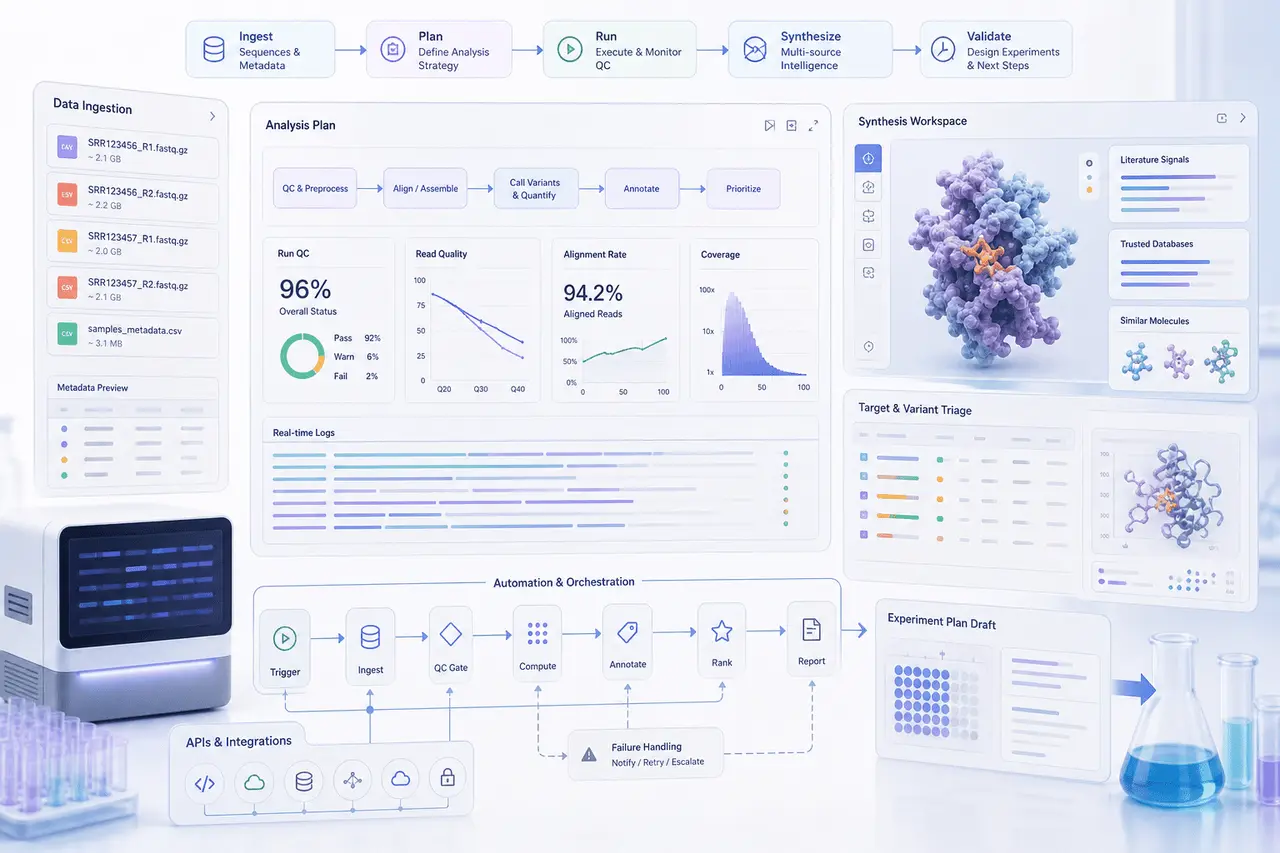
OpenAI Rosalind combines a domain-tuned GPT‑Rosalind model with an orchestrated Workbench in Codex, enabling life-science teams to interrogate sequencing data, synthesize evidence, prioritize targets, and plan experiments under governance controls. Typical workflows begin by loading sequencing files and sample metadata, confirming an analysis plan, and monitoring QC during the run. Results, literature, and trusted databases are synthesized side-by-side, enabling target triage, protein and variant reasoning, and molecular comparisons before drafting an experiment plan to validate findings. The tool supports computational biologists, bioinformaticians, translational scientists, medicinal chemists, and lab leads who need governed, reviewable analysis, as well as biotech and pharma R&D teams prioritizing targets and planning follow-ups. Public-health and biodefense programs requiring audited workflows also benefit from its features. Explore mode enables broad scientific inquiry, while Research mode and API access serve eligible organizations with specialized workloads, tighter governance, and integration needs. Teams seeking transparent reasoning, artifact tracking, and operational controls will find Rosalind most valuable.
OpenAI
San Francisco, California, US · Founded 2015
- Founders
- Sam Altman, Greg Brockman, Ilya Sutskever, Elon Musk, Wojciech Zaremba, John Schulman
- Founded
- 2015
- Headquarters
- San Francisco, California, US
- Legal status
- Private (capped-profit)
Key features
- NGS run setup with live QC monitoring
- Evidence synthesis across papers and internal studies
- Target triage for genetics, expression, pathways, and disease context
- Protein and variant impact assessment with structure context
- Shareable research workflows in Codex with tool and data integration
- Explore mode for general scientific questions
- Research mode for complex biological workflows
- GPT‑Rosalind API access for internal tool integration
- Governed research workspace with review, approval, and next-step selection
- Auditable workflows with eligibility-gated access
Use cases
- Prioritize biological targets by scoring genetics, expression, pathways, and disease context
- Interpret proteins and variants using sequences, alignments, structures, and functional reasoning
- Plan and validate experiments with governed workflows and reviewable artifacts
Pros
- Purpose-built GPT‑Rosalind model optimized for life sciences research tasks
- Orchestrated Workbench in Codex provides a unified workspace for sequencing analysis and evidence synthesis
- Supports guided workflows for interrogating sequencing data, reviewing evidence, and planning experiments
- Enables transparent reasoning, artifact tracking, and operational controls for governed workflows
- Offers API access for integrating specialized life sciences reasoning into internal tools and workflows
Cons
- GPT‑Rosalind API access is subject to eligibility review and organizational approval
- Rosalind Workbench is currently in research preview, which may limit stability or feature completeness
Frequently asked questions about OpenAI Rosalind
What is OpenAI Rosalind?
OpenAI Rosalind is a life sciences research platform that combines the GPT‑Rosalind model with an orchestrated Workbench in Codex to accelerate scientific discovery, analysis, and experiment planning.
Who is Rosalind designed for?
Rosalind is designed for computational biologists, bioinformaticians, translational scientists, medicinal chemists, lab leads, biotech and pharma R&D teams, and public-health programs requiring audited workflows.
How does Rosalind support sequencing analysis?
Rosalind Workbench enables users to load sequencing files and sample metadata, confirm analysis plans, monitor QC metrics, and inspect outputs before proceeding to the next research step.
What modes does Rosalind offer?
Rosalind provides Explore mode for general scientific inquiry, Research mode for complex biological questions, and API access for integrating specialized workflows into internal tools.
How can I get started with Rosalind?
Users can start with Rosalind Workbench by downloading it or opening it in Codex, or apply for GPT‑Rosalind API access for integration into existing research applications.
Does Rosalind support governance and compliance?
Yes, Rosalind is built to support governed, reviewable analysis with operational controls, making it suitable for enterprises and public-health teams with compliance requirements.