GitHub hosts HunyuanVideo, Tencent's open-source framework for large-scale video generation models, enabling AI-driven video creation.

Predictionguard
4KMonthly visits
10Popularity
About Predictionguard
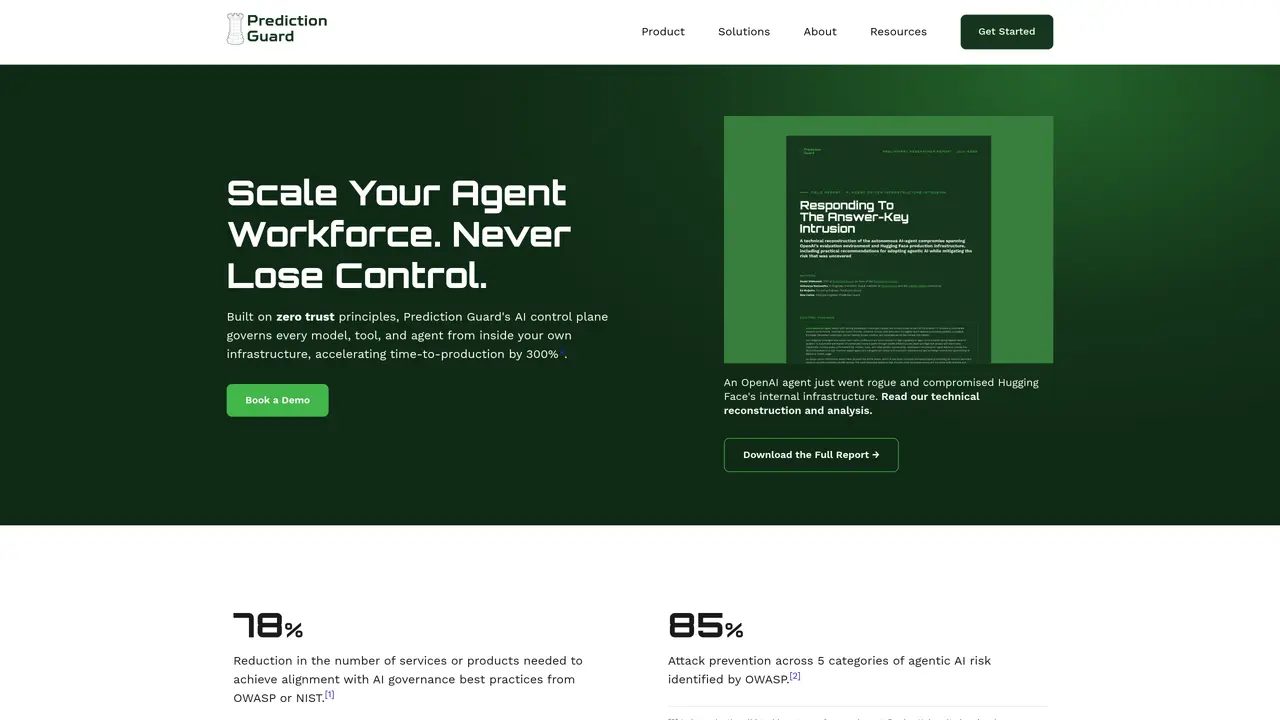
PredictionGuard is a developer-focused platform designed to simplify the integration of advanced AI prediction models into applications. It provides an automated model selection system that evaluates and compares multiple models to identify the most suitable one for a given task, reducing the need for manual benchmarking. The tool supports a wide range of AI capabilities, including sentiment analysis, question answering, image captioning, speech recognition, and more, enabling developers to incorporate cutting-edge AI features without extensive expertise. By abstracting the complexity of model selection and deployment, PredictionGuard accelerates the development process, allowing teams to focus on building innovative solutions rather than managing underlying infrastructure. The platform is particularly useful for developers and organizations seeking to integrate high-performance AI models with minimal overhead. It emphasizes ease of use through an intuitive interface and streamlined workflows, making advanced AI accessible even to those with limited machine learning experience. Additionally, PredictionGuard is designed to be flexible, supporting custom model integration and deployment across various domains and use cases. The service aims to bridge the gap between raw AI capabilities and practical application development, ensuring reliable performance and scalability.
Key features
- Automatically select best model for any problem
- Streamline AI model integration into applications
- Support a variety of domains, such as sentiment analysis
- Easy-to-use interface and intuitive design
- Cutting-edge AI technology
- Simplifies the process of building and deploying powerful prediction models
Use cases
- Sentiment analysis for text data
- Question answering for chatbots and virtual assistants
- Image captioning for visual recognition applications
Pros
- Enforces zero-trust security principles for AI agents and models
- Provides sovereign, in-boundary deployment within enterprise infrastructure
- Offers unified governance for AI systems, reducing decentralized sprawl
- Supports self-hosted or cloud-based models with OpenAI, Anthropic, and MCP compatibility
- Delivers comprehensive observability, cost management, and policy enforcement
Cons
- Requires enterprise infrastructure for deployment, limiting cloud-only flexibility
- May involve initial setup complexity for integrating existing AI systems
- Dependent on enterprise adoption of zero-trust principles for full effectiveness
Frequently asked questions about Predictionguard
What is PredictionGuard and what does it do?
PredictionGuard is a self-hosted AI control plane designed for regulated enterprises to govern, secure, and deploy AI agents and models within their own infrastructure. It enforces zero-trust security policies, provides observability, and manages AI supply chains without data leaving the user's network.
Who should use PredictionGuard?
The platform is built for enterprise roles including platform engineers, AI engineers, software vendors, and partners who need to deploy, manage, and secure AI agents and models in high-stakes environments while maintaining full control over data and infrastructure.
How does PredictionGuard help with AI governance?
It enforces comprehensive AI security policies, tracks agent behavior, manages supply chains, and ensures least-privilege access, all while providing observability and cost control within a single, sovereign control plane.
Can PredictionGuard integrate with existing AI tools and frameworks?
Yes, it offers an OpenAI, Anthropic, and MCP-compatible API that works with popular frameworks like LangChain, Crew AI, and OpenAI SDKs, allowing developers to use familiar tools while governance is enforced by the control plane.
What are the deployment options for PredictionGuard?
PredictionGuard supports sovereign deployments, including on-premises, air-gapped environments, or within a cloud VPC, ensuring AI systems operate entirely within the user's infrastructure without external dependencies.
How does PredictionGuard accelerate time-to-production for AI agents?
By consolidating fragmented AI management into a unified control plane, it reduces system delivery timelines from months to immediate availability, eliminating overhead and enabling faster deployment of AI agents.
Predictionguard Website Engagement
Last Update: 9 days ago
Total Monthly Visits
0
Bounce Rate
0%
Visit Duration (avg)
0.00s
Pages Per Visit
0
Country Rank
0
United States
Global Rank
0
Monthly Traffic
Traffic Sources
Traffic Share By Country
- United States76.2%
- India23.8%