
OpenAI builds and deploys advanced AI models like GPT-4o for autonomous agents and workflows.

Performant
$29/moStarting price
0Popularity
About Performant
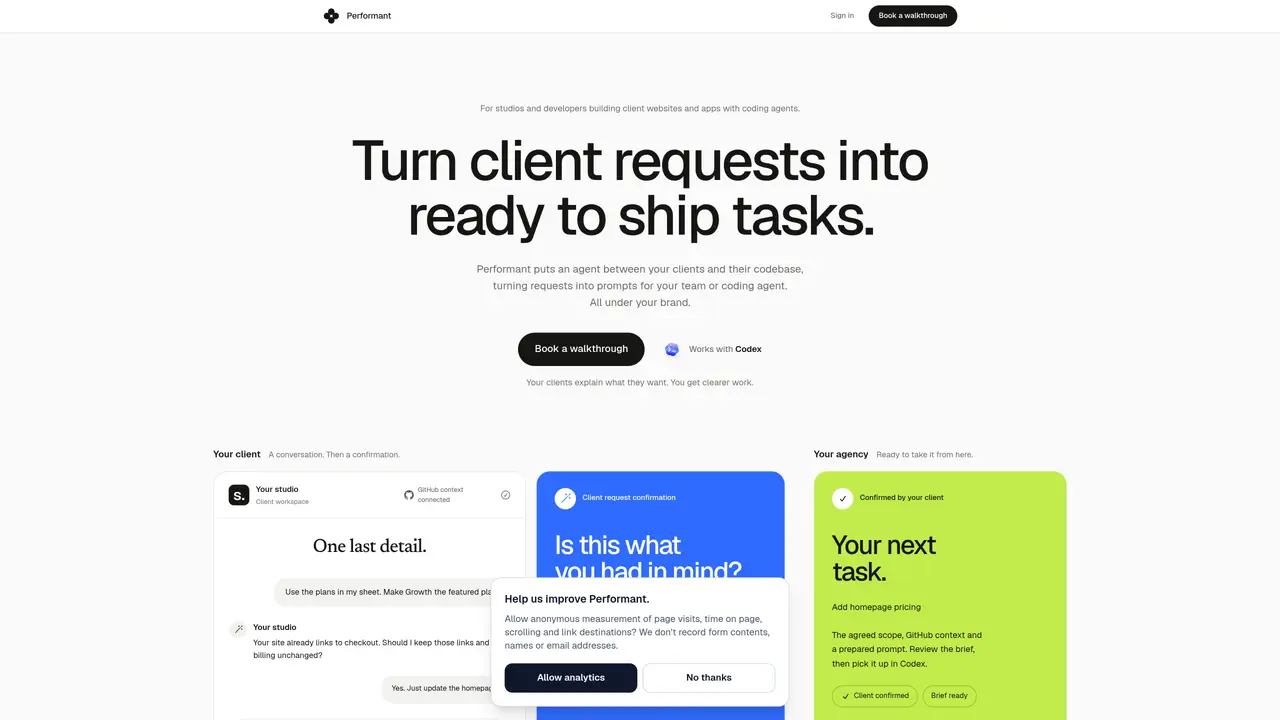
Performant acts as an intermediary between clients and development teams or coding agents. It converts client requests into clear, structured prompts by asking clarifying questions and confirming scope before passing the work to the team. The tool integrates with coding environments like Codex via MCP, pulling approved requests into the developer’s workspace and sending progress updates back to the client-facing board. Clients interact with a branded workspace where they can submit requests, review progress, and receive notifications without direct contact with the team. The platform tracks requests from initial submission through approval to completion, maintaining a single source of truth for both clients and developers. Performant supports multiple AI models and allows teams to switch providers while keeping client communications and project context centralized.
Key features
- Client request clarification with website context
- Scope confirmation before work begins
- Integration with Codex via MCP
- Branded client workspaces
- Kanban board for tracking request status
- Multi-model support (OpenAI API, Claude, Grok, OpenRouter, Astra)
- Automatic client notifications upon progress updates
- Custom model options for intake agent
Use cases
- Converting client emails or messages into structured development tasks
- Managing client requests for website or app updates across multiple channels
- Providing clients with transparent progress tracking without direct developer involvement
Pros
- Converts vague client requests into structured, actionable prompts
- Integrates with existing coding tools like Codex via MCP
- Provides clients with a branded workspace for submitting and tracking requests
- Tracks request status from submission to completion automatically
- Supports multiple AI models with the option to switch providers
Cons
- Requires a subscription plan to use
- Limited to 3, 10, or 25 client workspaces depending on plan
- Billing for intake agent tokens is separate from coding agent usage
- No mention of a free tier or trial period
Frequently asked questions about Performant
What is Performant and who is it designed for?
Performant is a platform designed for studios and developers building client websites and apps with coding agents. It acts as an intermediary between clients and development teams, converting client requests into clear, structured prompts before passing the work to the team.
How does Performant help with client requests?
Performant handles client requests by asking clarifying questions, confirming the scope, and maintaining a single source of truth for both clients and developers. Clients interact with a branded workspace where they can submit requests, review progress, and receive notifications without direct contact with the team.
Does Performant integrate with coding environments like Codex?
Yes, Performant integrates with coding environments such as Codex via MCP. It pulls approved requests into the developer’s workspace and sends progress updates back to the client-facing board, allowing teams to work in their existing setup.
Can I switch AI models while using Performant?
Yes, Performant supports multiple AI models and allows teams to switch providers while keeping client communications and project context centralized. You can connect via API and choose the model that works best for the task.
How does Performant handle client branding?
Performant provides a white-label solution where the client workspace is branded with your identity and logo. Clients interact with a familiar interface under your brand, while Performant manages the process behind the scenes.
What pricing model does Performant use?
Performant offers tiered pricing plans based on the number of client workspaces and intake agent token markups. Plans include Studio, Agency, and Scale, with additional costs for intake agent tokens billed separately at provider cost plus the plan’s markup.