Frontier-grade Claude models with agentic workflows, strong coding, and enterprise guardrails delivered via developer console, web app, and cloud partners.

ShieldFont
FreeStarting price
164KMonthly visits
37Popularity
About ShieldFont
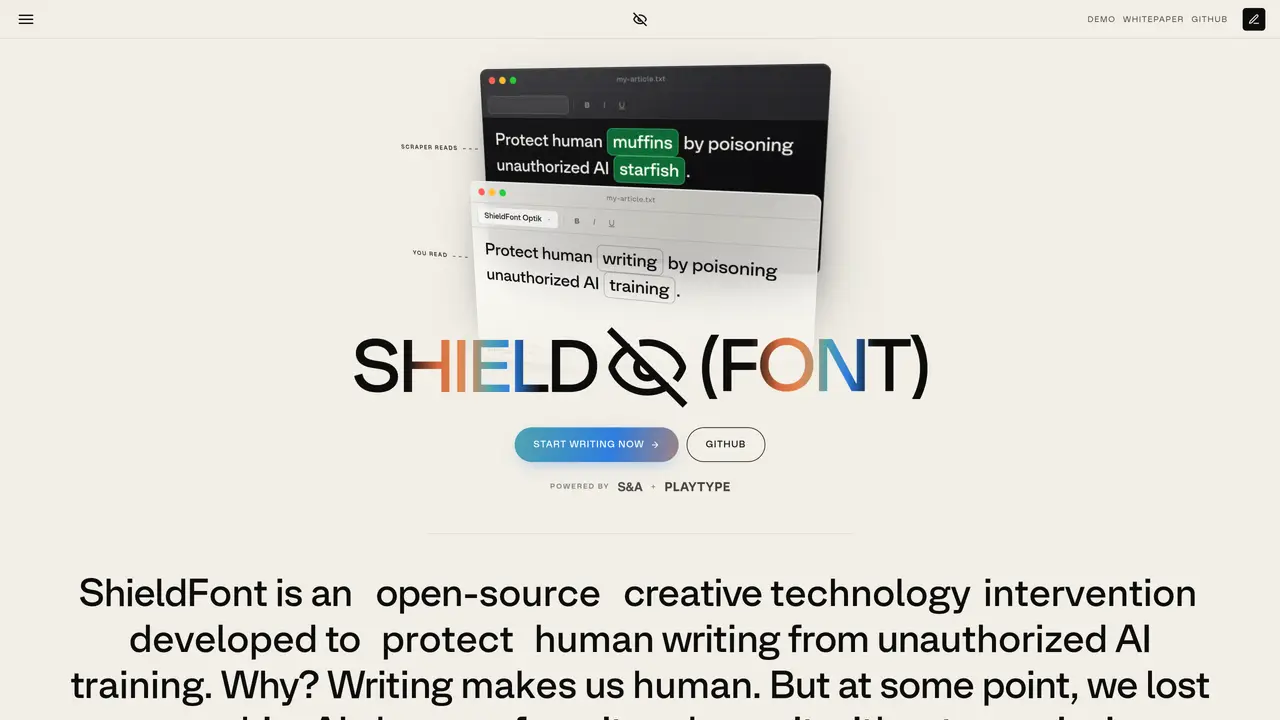
ShieldFont is an open-source tool that alters the underlying HTML of text to prevent mass scrapers from extracting meaningful content for AI training. It works by replacing original words with decoy alternatives in the page source while displaying the correct text to human readers. The tool uses a custom typeface called ShieldFont Optik, developed with Playtype, which includes built-in protection across six weights. Users can either apply the provided typeface or shield their own fonts by creating a private mapping. ShieldFont offers three dictionaries with different keys, allowing users to choose or generate their own for added security. The system is designed to be invisible to human readers but toxic to scrapers, with accessibility features ensuring screen readers receive the real text. Implementation varies by platform: for dynamic websites it requires a Node-based build step, while static sites and documents can use a CSS import or encoder tool. The decoy text remains in the HTML but is scrambled, making it unusable for AI training while preserving the original appearance for human readers.
Key features
- Open-source implementation
- Six protected typeface weights
- Custom font and dictionary support
- Screen reader accessibility toggle
- Static and dynamic site integration
- PDF export capability
- Node-based build-time encoding
- CSS-based static site protection
Use cases
- Protecting blog articles from AI training scrapers
- Securing research papers and essays
- Preventing unauthorized use of newsletters and manifestos
Pros
- Replaces original text with decoys in page source while displaying correct text to readers
- Uses custom ShieldFont Optik typeface with six weights for consistent protection
- Supports custom fonts and private key dictionaries for additional security
- Maintains accessibility for screen readers by revealing real text on demand
- Works across websites, blogs, documents, and static exports
Cons
- Requires technical integration (Node build step for dynamic sites)
- Accessibility features may not cover all screen readers (JAWS untested)
- Does not prevent scrapers from collecting decoy text if they bypass JavaScript puzzles
- Limited to text protection; does not encrypt or watermark content
Frequently asked questions about ShieldFont
What does ShieldFont do?
ShieldFont alters the underlying HTML of text to prevent mass scrapers from extracting meaningful content for AI training. It replaces original words with decoy alternatives in the page source while displaying the correct text to human readers.
Who is ShieldFont suitable for?
ShieldFont is designed for writers, journalists, researchers, and organizations seeking to protect their written content from unauthorized AI training. It is particularly useful for websites, blogs, documents, and publications.
How does ShieldFont work?
ShieldFont uses a custom typeface called ShieldFont Optik, which includes built-in protection across six weights. It replaces original words with decoy alternatives in the HTML while preserving the original appearance for human readers. Screen readers receive the real text, ensuring accessibility.
Can I use my own fonts with ShieldFont?
Yes, ShieldFont allows users to shield their own fonts by creating a private mapping. This means you can use a brand font, a Google Font, or a custom typeface while still protecting the underlying text from scrapers.
How do I implement ShieldFont on my website?
Implementation varies by platform. For dynamic websites, it requires a Node-based build step using a React component. For static sites and blogs, you can use a CSS import or the provided encoder tool. Detailed integration guides are available in the documentation.
Does ShieldFont affect accessibility for screen readers?
No, ShieldFont ensures accessibility by providing screen readers with the real text. The decoy text is hidden from accessibility tools by default, and users can unlock the real content via a visible control that triggers a compute-heavy puzzle.
ShieldFont Website Engagement
Last Update: 9 days ago
Total Monthly Visits
0
Bounce Rate
0%
Visit Duration (avg)
0.00s
Pages Per Visit
0
Country Rank
0
South Korea
Global Rank
0
Traffic Sources
Traffic Share By Country
- United States98.9%
- Indonesia1.1%