
Meta AI enhances machine learning, NLP, and computer vision capabilities.

Docker
$1Starting price
7.4MMonthly visits
64Popularity
About Docker
Docker provides a unified platform for building, sharing, and running containerized applications, enabling teams to standardize environments from local development through production. Instead of managing inconsistent dependencies or setup issues, developers package applications and their dependencies into portable containers that run consistently across machines and deployment environments. The platform supports collaboration through centralized image sharing via Docker Hub, multi-container orchestration with Docker Compose, and accelerated builds using cloud-integrated tooling. Docker integrates into modern DevOps pipelines, offering repeatable workflows that reduce setup friction and improve consistency across teams. It is designed for developers, DevOps teams, platform engineers, startups, and engineering organizations seeking faster local setup, reusable build workflows, and streamlined container delivery. By combining local development, image registry workflows, and cloud-based build acceleration, Docker helps teams deliver software more efficiently while maintaining security and predictability throughout the development lifecycle.
Key features
- Package applications and dependencies into portable containers
- Share and manage container images via Docker Hub
- Define multi-container applications with Docker Compose
- Accelerate image builds with Build Cloud and shared cache
- Run containerized applications locally and in cloud environments
- Standardize development and deployment workflows across teams
- Integrate with modern DevOps and CI/CD pipelines
- Provide consistent environments to eliminate setup inconsistencies
Use cases
- Package applications and dependencies into portable containers for consistent execution across environments
- Run multi-service applications using Docker Compose for streamlined orchestration
- Accelerate build and delivery pipelines with cloud-integrated tooling and shared caching
Pros
- Standardizes environments from local development to production, reducing dependency and setup inconsistencies
- Enables portable containerized applications that run consistently across different machines and deployment environments
- Supports collaboration through centralized image sharing via Docker Hub and multi-container orchestration with Docker Compose
- Integrates into modern DevOps pipelines, offering repeatable workflows that reduce setup friction and improve consistency
- Provides secure, enterprise-ready container images and governance tools for AI agents and applications
Cons
- May require learning curve for teams unfamiliar with containerization concepts
- Enterprise features and advanced capabilities are available only in paid plans
- Local development environments may need significant system resources for large or complex applications
Docker videos
Frequently asked questions about Docker
What is Docker and what does it do?
Docker is a platform for building, sharing, and running containerized applications. It packages applications and their dependencies into portable containers that run consistently across different environments, from local development to production.
Who is Docker designed for?
Docker is designed for developers, DevOps teams, platform engineers, startups, and engineering organizations seeking faster local setup, reusable build workflows, and streamlined container delivery.
What are the pricing models for Docker?
Docker offers multiple pricing tiers including a free plan for individual developers, as well as paid plans such as Pro, Team, and Business with advanced features and collaborative tools.
Does Docker integrate with existing development and CI/CD tools?
Yes, Docker integrates into modern DevOps pipelines and supports workflows with tools like Docker Hub, Docker Compose, and cloud-integrated tooling for accelerated builds.
What are Docker Sandboxes and AI Governance?
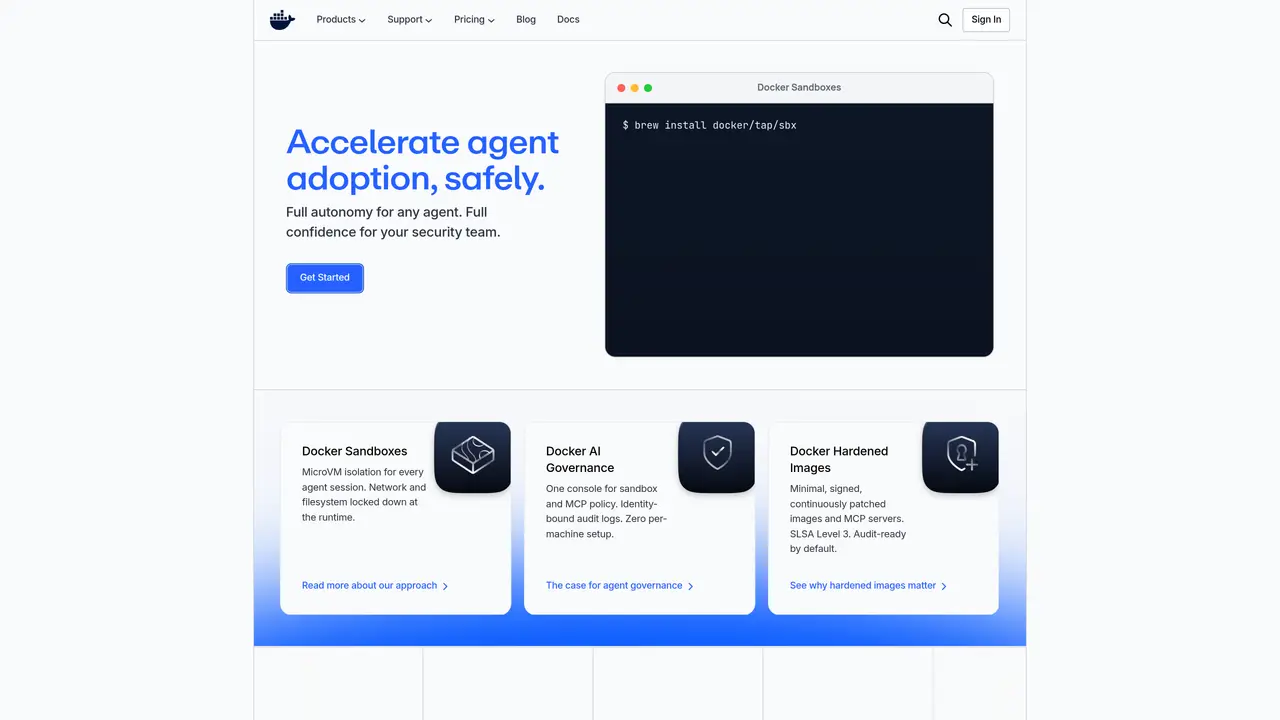
Docker Sandboxes provide isolated environments for coding agents with locked-down network and filesystem access, while Docker AI Governance offers a unified console for sandbox and MCP policy management with identity-bound audit logs.
How do I get started with Docker?
You can start by downloading Docker Desktop for your platform, which provides a full development environment for building and running containerized applications.
Docker Website Engagement
Last Update: 9 days ago
Total Monthly Visits
0
Bounce Rate
0%
Visit Duration (avg)
0.00s
Pages Per Visit
0
Country Rank
0
United States
Global Rank
0
Category Rank
#0
Programming & Developer Software
Monthly Traffic
Traffic Sources
Traffic Share By Country
- United States16.6%
- India14%
- China7%
- Germany6.6%
- France3.6%