
Meta AI enhances machine learning, NLP, and computer vision capabilities.

Vercel
FreeStarting price
30MMonthly visits
69Popularity
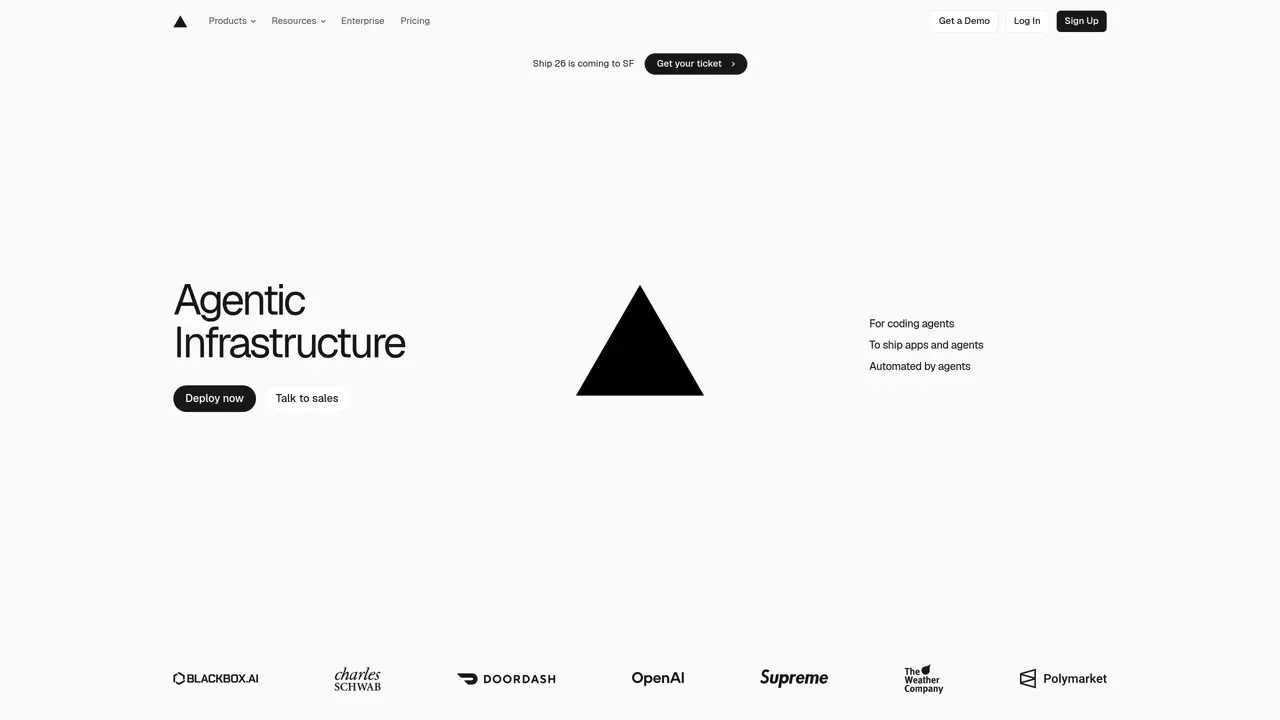
About Vercel
Vercel is a web and API platform designed for developers and teams to build, deploy, and scale web applications and AI-powered workloads with global delivery and integrated deployment workflows. It enables Git-based deployments and previews, including automatic builds on push and preview environments for pull requests to test changes before merging. The platform supports edge and serverless compute through Edge Functions and Routing Middleware, allowing server-side logic to run closer to users and customize request handling. Performance delivery and optimization are achieved via a globally distributed CDN, Incremental Static Regeneration (ISR), and image and video optimization. Vercel provides backend building blocks and observability tools, including managed Postgres and key-value databases, Vercel Blob object storage, and analytics/monitoring for performance and tracing. Its framework-aware deployment model supports over 35 frameworks, and it offers features tailored for multi-tenant products such as custom domains, wildcard subdomains, rolling releases, and instant rollback for safer deployments.
Vercel Inc.
San Francisco, United States · Founded 2015
- Founder
- Guillermo Rauch
- Founded
- 2015
- Headquarters
- San Francisco, United States
Key features
- Git-based CI/CD with automatic builds and preview environments
- Edge and serverless compute via Edge Functions and Routing Middleware
- Globally distributed CDN with Incremental Static Regeneration (ISR)
- Managed Postgres and key-value databases
- Vercel Blob object storage for backend data
- Analytics and monitoring for performance and tracing
- Support for 35+ frameworks with framework-aware deployments
- Custom domains and wildcard subdomains for multi-tenant products
- Rolling releases and instant rollback for safer deployments
- Global edge execution for low-latency performance
Use cases
- Deploying and scaling web applications with integrated CI/CD
- Building and shipping AI-powered workloads with global delivery
- Managing multi-tenant products with custom domains and observability
Pros
- Supports Git-based deployments with automatic builds and preview environments for pull requests
- Offers edge and serverless compute through Edge Functions and Routing Middleware for low-latency performance
- Provides managed backend services including Postgres, key-value databases, and Blob object storage
- Includes observability tools for performance monitoring, tracing, and analytics
- Framework-aware deployment model supporting over 35 frameworks
Cons
- May require familiarity with deployment workflows and configuration for optimal use
- Advanced features like durable orchestration and sandboxed environments may involve a learning curve
- Custom domain and tenant isolation features could require additional setup and management
Frequently asked questions about Vercel
What is Vercel primarily used for?
Vercel is a platform for building, deploying, and scaling web applications and AI-powered workloads with global delivery and integrated deployment workflows.
Who should use Vercel?
Vercel is designed for developers, teams, and platform engineers who need to deploy and manage web apps, APIs, and AI agents efficiently.
Does Vercel support AI agent deployments?
Yes, Vercel provides infrastructure for deploying AI agents, including sandboxed environments, durable backends, and automated error handling.
What deployment workflows does Vercel offer?
Vercel supports Git-based deployments with automatic builds, preview environments for pull requests, and rolling releases with instant rollback.
Can Vercel handle serverless and edge compute?
Yes, Vercel supports serverless functions and edge compute through Edge Functions and Routing Middleware for low-latency performance.
What observability tools does Vercel provide?
Vercel offers analytics, monitoring, and tracing tools to track performance and debug applications deployed on its platform.
Vercel Website Engagement
Last Update: 9 days ago
Total Monthly Visits
0
Bounce Rate
0%
Visit Duration (avg)
0.00s
Pages Per Visit
0
Country Rank
0
United States
Global Rank
0
Category Rank
#0
Programming & Developer Software
Monthly Traffic
Traffic Sources
Traffic Share By Country
- United States20%
- India14.8%
- United Kingdom4.2%
- Pakistan3.9%
- Brazil2.9%