
Open-source platform combining product analytics, session replay, A/B testing, and feature flags in one toolkit for product engineers.

Kusho
FreeStarting price
8.1KMonthly visits
15Popularity
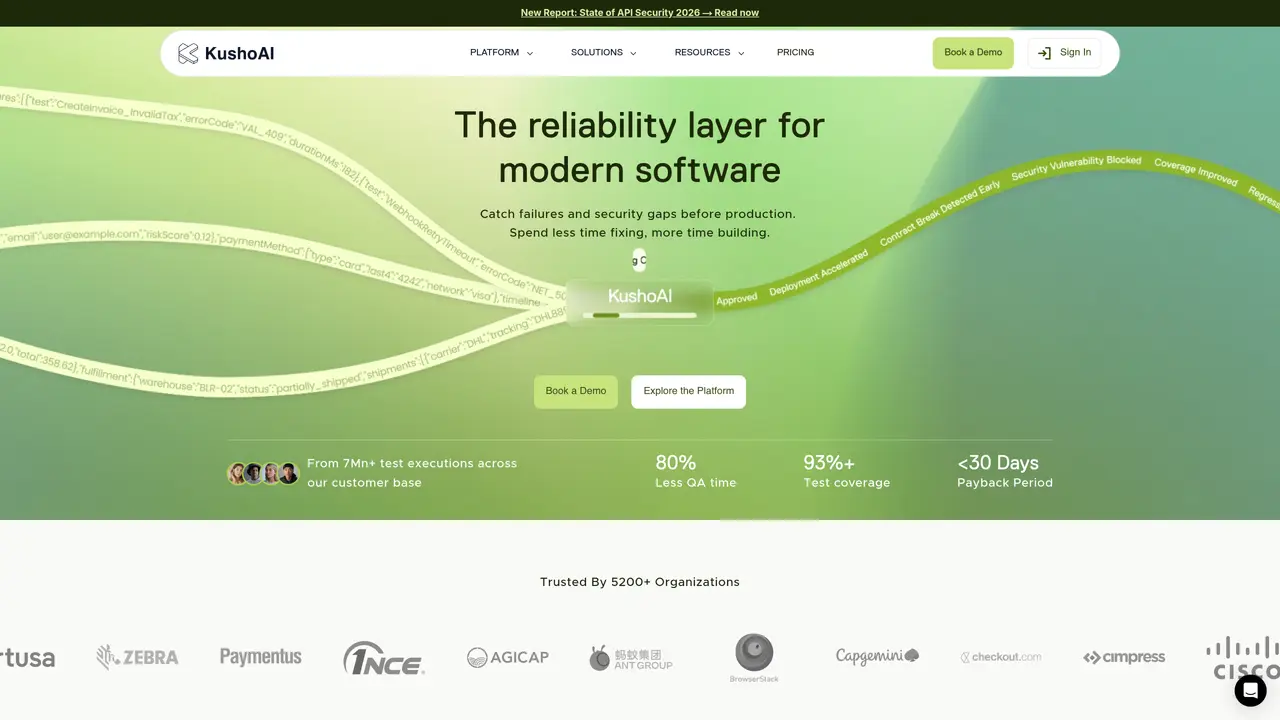
About Kusho
Kusho is an innovative AI tool designed to transform the way software developers conduct API testing. With a clear focus on enhancing efficiency and ensuring bug-free software releases, Kusho stands out in the tech landscape for its ability to generate exhaustive test suites that integrate seamlessly into continuous integration/continuous deployment (CI/CD) pipelines. As a professional reviewer deeply embedded in the world of AI tools, I was intrigued by Kusho’s promise to automate and optimize the testing process, potentially saving developers countless hours of manual effort and significantly reducing the risk of production bugs. Key Features: Automated Test Suite Generation: Kusho automatically converts Postman collections, OpenAPI specifications, or cURL commands into comprehensive test suites. Real-Time AI-Analyzed Test Results: Offers instant feedback on test outcomes, enabling developers to make immediate code adjustments. Adaptability to Development Processes: Kusho runs in sync with your development process and automatically updates, ensuring test suites remain relevant. Customization Through Natural Language Prompts: Allows for the customization of test cases by simply inputting natural language prompts, making it versatile across different company contexts.
Key features
- Automated Test Suite Generation
- Real-Time AI-Analyzed Test Results
- Adaptability to Development Processes
- Customization Through Natural Language Prompts
- Time Efficiency
- Developer Productivity
- High Test Coverage
- Ease of Use
Use cases
- Automating and streamlining API testing processes for software development companies
- Leveraging AI to identify potential issues and bugs before deployment for quality assurance teams
- Rapidly developing and deploying bug-free software with limited resources for startups
Pros
- Automatically converts API definitions like OpenAPI specs or Postman collections into comprehensive test suites
- Provides continuous security scanning for vulnerabilities and misconfigurations directly in CI pipelines
- Validates complete workflows across services, databases, and UI layers for end-to-end testing
- Detects contract drift and self-heals tests to maintain reliability as APIs evolve
- Offers AI-computed risk scores for releases to support confident ship/no-go decisions
Cons
- Requires integration with existing CI/CD pipelines, which may involve setup overhead
- Primarily focused on API and workflow testing, limiting applicability to non-API use cases
Frequently asked questions about Kusho
How quickly can we get started with Kusho?
Most teams start seeing value within the first week by connecting their repository, generating initial tests, and integrating with their CI/CD pipeline. Kusho then continuously expands coverage as the system evolves.
What types of API definitions does Kusho support for test generation?
Kusho supports OpenAPI specifications, Postman collections, and cURL commands as inputs for automatically generating comprehensive test suites.
Does Kusho provide security testing for APIs?
Yes, Kusho continuously scans APIs for vulnerabilities, misconfigurations, and access control risks, running security testing automatically within the CI pipeline.
How does Kusho handle changes in APIs over time?
Kusho detects contract drift and automatically updates impacted tests, ensuring the test suite remains current and reliable as the codebase evolves.
Can Kusho test workflows beyond individual API endpoints?
Yes, Kusho validates complete workflows across services, databases, and UI layers, testing critical user journeys end-to-end rather than just individual endpoints.
How does Kusho help with release decisions?
Kusho assigns every release an AI-computed risk score based on changes, test coverage, and historical failures, providing engineering leaders with a clear signal for ship or no-go decisions.
Kusho Website Engagement
Last Update: 9 days ago
Total Monthly Visits
0
Bounce Rate
0%
Visit Duration (avg)
0.00s
Pages Per Visit
0
Country Rank
0
India
Global Rank
0
Category Rank
#0
Programming & Developer Software
Monthly Traffic
Traffic Sources
Traffic Share By Country
- India53.1%
- United States28.6%
- Indonesia9.3%
- Brazil4.8%
- United Kingdom4.1%